Today, almost everything we do happens online. Whether it’s banking and shopping or storing personal and financial information, everything shifted on internet. While technology has made life more convenient, it has also created serious privacy and security risks. Your personal (even sensitive) data is at stake every time.
One of the biggest dangers today is ransomware. In this, hackers steal or encrypt data from individuals or organizations and demand payment to restore access just like in normal kidnapping, kidnaper asks for ransom. It has become a global threat, causing a billion-dollar loss to several businesses worldwide.
Although privacy and security tools can help protect us, understanding how ransomware groups operate is just as important. This article explores the growing ransomware threat, how these groups work, and why awareness is the first step toward protection.
Most Famous Ransomware Groups – Quick List
- LockBit: A very aggressive malware that runs on a good RaaS model.
- Qilin: This group works together with Initial Access Brokers (IABs) to purchase stolen VPN information.
- Akira: It has hit more than 250 companies and made about $42 million.
- Play: This set looks for flaws in RDP or VPN and the double-extortion method with a customised encryption.
- Medusa: A RaaS unit that attacked over 40 companies in 2025.
- Inc: Another RaaS gang that rents out their program to associates and shares the money once the ransom is paid.
- Lynx: Just like Inc, a RaaS platform that shares its program or tools with an 80/20 sharing formula.
- BlackCat/ALPHV: It has the first malware program that is written in the Rust language.
- Clop: A group that usually looks out for issues with the supply chain and is ranked as one of the top five ransomware types.
- RansonHub: First noticed in February 2024, has more than 600 victims in the world.
How Ransomware Groups are Adapting
A report shows ransomware is a major “shareholder,” making up to 24% of such threats in 2024.
At first glance, cybersecurity reports over the past three years suggest that ransomware attacks are slowing down. But that’s not the reality. Such attacks are growing rapidly on the dark web (the hidden and shady part of the internet).
Between July and September 2025 alone, ransomware activity on the dark web increased by 33% compared to the same period in 2024. A major reason behind this rise is the growing popularity of Ransomware-as-a-Service (RaaS), a model similar to Software-as-a-Service (SaaS).
Through RaaS, cybercriminal groups rent out ransomware tools, infrastructure, and even support services to affiliates who want to launch attacks. In some cases, they also provide information about vulnerabilities within targeted organizations and businesses.
Once an attack succeeds, the ransom payment is shared between the attackers and the RaaS operators. This system has made ransomware attacks cheaper, easier, and more accessible for criminals.
These groups are also becoming far more advanced. Modern ransomware attacks now target Windows, Linux, and FreeBSD, while techniques like BYOVD help bypass security defenses. Groups such as Play, Akira, Lynx, Qilin, Medusa, and DragonForce have become especially active in recent years. Ransomware attacks may seem less visible today, but attackers are getting better at hiding and avoiding detection.
Cyber threats aren’t limited to financial extortion. A recent Iran-linked campaign targeted hundreds of organizations across the Middle East, demonstrating how state-sponsored actors are increasingly active in the region.
Ransomware Methods to Watch
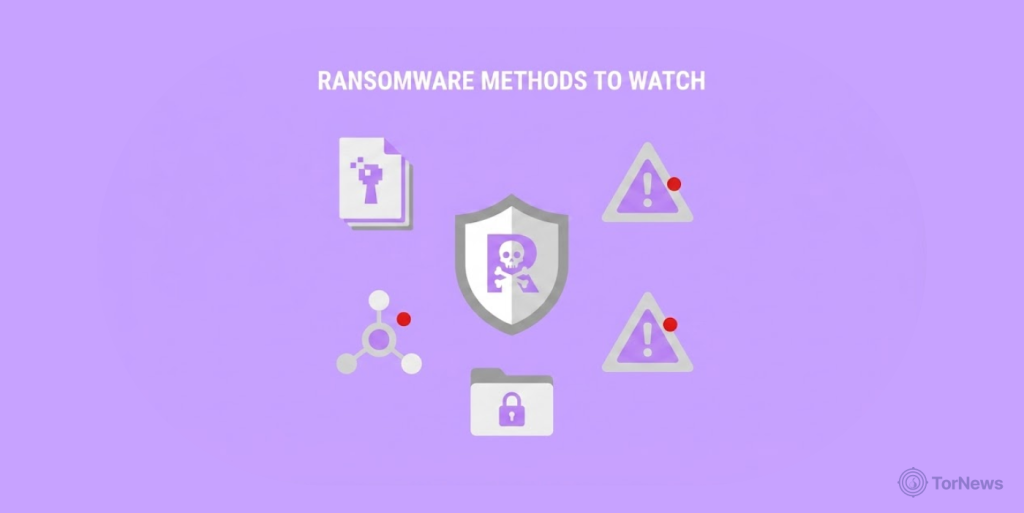
The mode of attacks by these groups is growing and evolving. To understand them deeply, we first need to know what they actually are. Let’s explore:
- Cross-platform attacks: Once limited to Windows, ransomware now targets FreeBSD, Linux, and even ESXi virtual machines, making attacks more versatile.
- Multiple extortion methods: This is a highly dangerous technique that combines data theft, leaks, and file encryption to lock victims out of their data. At times, these attacks tarnish brand image and interrupt the operations of an organisation. For a real-world example, a new email scam threatens to sell victims’ data unless they pay $640 in Bitcoin, demonstrating how cybercriminals use the fear of data exposure to force payments.
- Bring-your-own-vulnerable-driver (BYOVD) method: This technique uses a seemingly legitimate drive to infiltrate devices by bypassing detection systems. They also shut down response tools and enter the network of an organisation with nobody noticing them.
- RaaS: A platform where malware code developers rent out their tools to interested parties. They even rank attacks and simplify them so affiliates need very few skills to launch one.
- Infostealer malware surges through phishing: Criminals typically spread it via email, designed to secretly collect sensitive information. They use software, like Stealerium, Lumma, and Redline. Without anybody detecting them, these malware will silently go through session data, browser cookies, and other sensitive files. It has led to a high rise in session takeovers, account hijacking, and, later on, a ransom demand.
- AI-assisted attacks: Now, we have cloned websites, phishing emails, and fake profiles that look very convincing. And guess what, AI generates them. We consider this one of the most dangerous developments because most experienced users can’t tell that they are fake.
Most Notorious Ransomware Groups – Detailed List
Now that we’ve covered how these attacks work, let’s look at the top ransomware groups active today:
1. LockBit
It is an improved version of Ransom-as-a-service(RaaS). The group has continued to be a success in the world of internet fraudsters since 2019, when it was first noticed. It works with tools that have continuous technical updates, fast encryption, and even a professional attitude that’s so business-like.
LockBit stands out for its fast encryption, making it one of today’s most dangerous malware threats. It can encrypt critical files in seconds and complete attacks quickly to avoid detection. Their code versions have seen many changes since 2019. Let’s take a look.
Stand-out Features
- LockBit (ABCD): The very first version appeared in 2019. The owners got the name from their .abcd file extension.
- LockBit 2.0 (Red): In 2021, they launched this custom tool that came with StealBit, and they used it for nonstop and unauthorised paths to information.
- LockBit 3.0 (Black): This type first appeared in 2022 and came with the first ransomware bug bounty program that gives rewards up to $1 million dollars to anyone or any group who can find faults in their code.
- LockBit 4.0: A more recent version that was introduced in 2025 with an evasion method like proxy DLL loading, so advanced that it can enter any network without detection.
The most worrying aspect of LockBit is that when it infects a single host, it automatically spreads to other areas of the network without needing manual handling. This is so unlike other variants.
2. Qilin
Previously known as Agenda, this group is an active and deadly Ransom-as-a-service (RaaS) system that bounced into the game in July 2022. Later in 2025, it became one of the “top dogs” of ransomware groups, especially when they took in members from other groups no longer functional.
Criminals can customize their malware tools to use on many operating systems, giving them extensive coverage. The platform usually goes for high-value industries such as government, you heard us right, manufacturing, and health care sectors. The double extortion method is their favourite mode of attack.
Stand-out Features
- “Call Lawyer” feature: There is a panel from their associates where the victim is connected to a supposed lawyer to talk with them. These so-called lawyers help to increase pressure on the victims to pay the ransom to the platform. A very aggressive attack method.
- Ransomware-as-a-Service (RaaS): The platform works with a certain business-like attitude. Their experts develop software codes to create malware tools and later rent them out to their associates, who go about initiating the attacks on organisations. The platform gets a commission of between 15 to 20% after doing the job.
- Evasion techniques: It gets rid of security tools, clears shadow copies/logs, and interrupts recovery. By following these steps, Qilin leaves no traces of itself in the victim’s network. The first thing most victims do when thieves steal their information is do a recovery from their backups. Qulin also attacks the victim’s backup, making sure recovery is not done. This helps to put more pressure on the victim to pay.
- Cross-platform threat: Qilin has some variants that work on cloud storage, Linux, ESXi, and Windows. In some cases, it could use the subsystem of Windows for Linux to dish out Linux attacks on Windows.
- Double extortion: It requires combining both encryption of the victim’s device or system and information theft. In Qilin’s case, data theft is the first form of attack, followed by encryption. The victim pays money before they get back their sensitive information. They will pay another sum for the thieves to decrypt their system.
- Good encryption system: Qilin makes use of ChaCha20, the next is RSA-4096, and finally AES-256 encryption. They help the platform because it’s very difficult to unlock them without the needed key.
Engineers don’t usually spot Qilin in time, and that’s what makes it very dangerous.
3. Akira
Akira is a dangerously active Ransom-as-a-Service group. It was first noticed in March 2023 and has become a major threat on the internet especially for small and medium-sized businesses.
They don’t spare the big companies and industries either, like healthcare, manufacturing, education, and finance. They wreak havoc wherever they visit, leaving behind their trails of more than 350 organisations as victims while making more than $244 million in late 2025. Akira bagged the fourth most active ransomware group in the world in 2024, with a record of more than 300 attacks in November 2024.
Reports showed they stole data from 30 victims at the same time in a single day. Their ability to reach out to many victims makes them a serious concern for most organisations. In fact, it will be smart for each organisation to assume they are Akira targets and prepare their defenses accordingly.
Stand-out Features
- Invasion method: They use phishing to steal information, entering through unpatched weak points such as CVE-2024-40766, or CVE-2023-20269, and through compromised VPN information.
- Double extortion: Usually, the first course of action is to steal sensitive information before encrypting the entire system of the victim. They also compromise the backup storage of the victim. This is because some victims refuse to pay ransom and opt to do a recovery from their backup and pick up operations from there. They threaten the victim with leaking the information to the public if they don’t pay the ransom. Failure to comply, Akira will leak the information to their Tor-based leak site.
- Quick evolution: The developers in the Akira platform always update their code from Megazord and C++ variants to avoid being detected. This is one of their most dangerous aspects because the victims never see the attack coming until it’s too late.
- The continuity: There has been convincing evidence to prove that Akira has connections to the defunct Conti ransomware group because their programs and codes keep overlapping, and their cryptocurrency wallets.
- Infrastructure targets: Although their codes were previously designed to hit Windows operating systems, their developers quickly advanced to Nutanix AHV and VMware ESXi virtual machines (VMs).
4. Play
The ransomware group also goes by PlayCript and has been bothering companies since 2022. The group has become so loud and dangerous that many fear it due to the nature of the attack. What makes this platform different from most is the fact that it’s not a Ransom-as-a-service platform. Rather, it’s exclusive, meaning they don’t allow outsiders.
They do it themselves with their eyes on industries like technology, business services, and manufacturing types in Canada or America. The Play handlers are stubborn because they can stay in the victim’s network for a very long time, looking at every piece of information to know which ones are valuable to the victim before attacking.
Stand-out Features
- Aggressive methods: The platform, just like most ransomware groups, steals the victims’ important information and asks for a ransom. When the victim resists, the hackers will threaten to release the information to the public. Trust us, they have a website for that.
- Always active: Play is one of the busiest ransomware groups online, with a record of more than 900 successful attacks in only 2025.
- Close Communications: Unlike some other groups, this platform does not leave a ransom message to the victims. Instead, they tell the victim to go to an email address.
- A closed platform: They don’t mingle with any other ransomware groups and keep their activities very well hidden. To protect their illegal activities, Play knows the kind of companies to hit to both achieve successful payment without revealing their identity.
- Double extortion: They first steal sensitive information before locking the victim off their device. If the victim refuses to pay the ransom, the hacker will threaten to release the valuable information to the public.
- Target selection: When choosing their victims, they usually go for those who can afford to pay huge amounts of money or have cyber insurance.
5. Medusa
Not the one in the movies, but this is another Ransom-as-a-service group with parties who carry out the attacks on victims. It first came on board in 2021 and continued to be a problem till 2024. The attacks grew by 42%. They often follow CISA, Living Off the Land (LOTL) methods, ProxyShell exploits, and RMM tools.
Their demands have reached millions of dollars. Medusa has links with Spearwing, making them more of a problem on the internet with ransom demands ranging from the least $100,000 to $15 million.
Stand-out Features
- No detection: They usually use a method “Living-off-the-land (LOTL)” to avoid watchful eyes by using default tools that exist inside the organisation’s network. This way, they hide their codes inside these tools and pretend to be part of the system, making it very difficult to see.
- Extortion method: They have a website where they leak sensitive information when the victims refuse to pay. In some cases, they will use DDoS in triple extortion tactics or directly call the victims.
- Point of entry: Medusa usually enters unnoticed through Remote Monitoring and Management(RMM) abuse, stolen information, and unpatched weak points in the company’s network, like the Microsoft ProxyShell/Exchange.
- Target: Medusa attacks any company that’s in technology, healthcare, manufacturing, and the education categories.
6. Inc
Inc ransomware group was first noticed in 2023, and since then, it has become a major concern for organisations online. Although it is a late addition, it has quickly made a name for itself in a short while as a ransom-as-a-service (RaaS). When it comes to the double extortion method, this group is at the top for how they worry their victims into paying the moment they breach their network or device.
Their primary targets are government institutions, education, and health organisations. They use the spray-and-pray method, where they attack both small and average-sized companies. It’s also known as INC Ransomware or Inc Ransom and has become popular by pushing their victims very hard for payment, always changing to beat new security tools.
Stand-out Features
- Focus on Windows/Linux: When it first became active, it was designed only for the Windows operating system, but has evolved to a Linux/ESXi version that was released in the latter part of 2023, meant to hit virtual machines.
- Entry point: Inc gets into organisations’ networks through unpatched weak points, CVE-2023-3519, which is found in Citrix NetScaler, phishing, brute-forcing RDP/VPN information, and buying access from IABs (Initial Access Brokers).
- High pressure: The group is known for its speedy and high-pressure method of extorting money from victims, even going as far as printing their demand on.
- Double extortion: Just like most Ransom-as-a-Service (RaaS) platforms, they combine data theft with data encryption to put more pressure on the victims.
- Evasion and lateral movement: The moment they gain access into a network or system, they use traditional tools like Mimikatz, Cobalt Strike, and PsExec, which are used for privilege escalation.
7. Lynx
Lynx is a Ransom-as-a-service (RaaS) platform that is part of the most dangerous ransomware groups in the world. It came on board in the year 2024, and most experts believe it was a successor of the Inc ransomware group and has almost the same things as extortion by force, identical codes about 90% in some of their variants.
Lynx improved the way it operates and, just like Inc group, prefers those that are small or medium in Europe and North America. They usually go for companies in construction, Those one in manufacturing, retail, and finance institutions. They even use a double extortion style, just like one they are succeeding, Inc.
In the first quarter of 2025, the group targeted close to 300 organisations, and some of their targets were those in manufacturing, energy providers, and law firms.
Stand-out Features
- Alleged ethical behaviour: The group claims they don’t attack important institutions like hospitals, non-profit platforms, and government institutions. They only show interest in commercial organisations. Well, people say they actually went after some in the energy distributors sector.
- Claims of rebranding: Most analysts say about 48 to 90 percent of their codes appear like that of the Inc ransomware group. It’s possible they changed a few things in the Inc code to serve a different purpose or bought it. Likely the first option.
- Ransomware-as-a-Service (RaaS): Lynx creates code that criminals can use to attack people online & they rent it to those who want to try. The group brought in this style of doing business in May 2024 on a RAMP forum. Lynx takes 20% of the profits, while the huge part, 80%, goes to people who were at the forefront of the attacks. Such a sharing ratio is interesting, and many people don’t want to lose out, so they join.
- Double extortion: This group uses this style to make their victims pay what they ask for.
8. BlackCat/ALPHV
BlackCat, also goes by the name ALPHV, and is a group that speaks Russian & experts in RaaS ransomware, which joined the flow in late 2021. Currently, BlackCat has become one of those terrible groups that makes people shake in their socks.
Did you know they were the very first group to use “Rust Programming Language”? The people who work with their tools keep 80% or 90% of the money from victims, while they give the remaining to the group.
They aggressively put pressure on their victims & won’t think twice to leak the information they steal to a leaked website. Trust us, they have a lot of company names on those websites.
Stand-out Features
- Direct disclosure: Their methods can scare even the worst persons because they will reach those who employed the victims, their customers & partners, putting them on a hot seat until they pay the ransom.
- Cross-platform support: If you remember, they were the first to use ‘Rust,” which has helped them to own sophisticated & adaptive software that attacks both Linux & Windows operating systems (OS).
- Triple extortion: The group has an aggressive approach, and that’s why they use many extortion methods, including locking the victim’s information, removing sensitive information from the victim’s device, and possibly publicising such information if nobody meets their demands.
9. Clop
Clop, or Cl0p, became active in 2019 when there was a boom in remote work during the COVID-19 pandemic period. Of course, the social distancing policies also helped them.
Many believe these groups work from outside Russia, and the platform has become another thing and no longer uses the normal encryption attack tactics. They are now stealing information and hitting high-profile people hard, and using force to get what they want from people.
One thing you must know about Clop is that they use zero-day vulnerabilities, which move well in third-party information transfer applications to enter networks, and no one will find out.
Stand-out Features
- No encryption policy: Most of their attacks between 2023 and 2024 did not include locking out the victims from their information. Instead, their eyes were on collecting information that the victims have in their networks, so the prey they have in their net will grow in number.
- Targets active directory: In most cases, they use Active Directory (AD) to hit networks hard and grab control without the owners even knowing.
- Regional evasion: The group is known to avoid hitting targets in places like Russia and other CIS countries, perhaps dodging legal problems from local authorities.
- Ransomware-as-a-Service (RaaS): Although they have been linked to the TA505 threat group, Clop works as a unique RaaS platform that gives a web shell known as DEWMODE, designed solely for the extraction of information from the victim’s network.
- Quadruple extortion: Yes, they make use of the double extraction method, which involves encryption and extraction of sensitive information with a threat to leak it if payment is not made, but that’s not where they stop. In some cases, the platform goes as far as getting in touch with customers and partners of the victims to put pressure on the victims.
- Zero-day exploits: The platform is known to seek out weak points in MFT(Managed File Transfer) operations, which involve MOVEit, Accellion FTA, GoAnywhere MFT, and SolarWinds Serv-U.
10. RansonHub
Starting their operations in February 2024, RansomHub quickly rose to one of the most dangerous ransomware groups on the internet that uses the Ransom-as-a-Service (RaaS) style of operation.
The populace mostly considers them to be successors to the defunct Cyclops and Knight ransomware groups. In mid 2024, they built a reputation as the leading threat platform, hitting high-profile victims.
We need to point out that although they continue to be a threat, their major public operations have gone quiet or inactive from the 1st of April in 2025 because of rumours of a possible takeover by the DragonForce ransomware group.
Stand-out Features
- Target Exclusions: The group does not attack the Commonwealth of Independent States (CIS), China, Cuba, or North Korea.
- Ransomware-as-a-Service (RaaS): Probably the most sought-after ransom group by associates or interested parties. That’s probably because when leasing out their tools to parties that will carry out the attack, the said party is allowed to walk away with 90% of the ransom money, leaving just 10% for the RansomHub group.
- Advanced evasion: The ransomware used can automatically restart the victim’s device into safe mode. In this mode, it’s easy to bypass any active anti-virus or other security checks. They also use the “living off the land” method of evasion by using inbuilt tools within the victims system. Some of these tools malware groups use include Rclone, Atera, and Splashtop for information extraction and lateral movement.
- Uncommon partnership with associates: RansomHub allows their associates to negotiate the price of the ransom and wallet which most platforms rarely do. It helps to build trust, which is not common in the internet criminal community.
- Technology: This malware is written mostly in GoLang and is used to encrypt ESXi, Linux, and Windows operating systems. Players believe that RansonHub is a successor to or a rebrand of the “Knight” ransomware group, which people also call Cyclops.
These are the major Top hacker groups in the world, and one needs to know them and the threat they pose to know how to manage them.
New Ransomware Gangs Emerging as Key Players
1. The Gentlemen
Making a name for themselves in 2025, The Gentlemen have already attacked more than 30 institutions across 17 countries.
The combination of advanced evasion methods and customised tools makes them a dangerous “new player” on the field. As if that’s not enough, they structured their attack pattern very well. Their technicality of operations shows they have come of age in the game.
Their brand identity appears very polished and professional, with matching motto and logos used on their leak-website in the darknet, gives the impression of something like the Guy Ritchie movie. The US and Thailand have suffered the most at the hands of these platforms, followed by Colombia, Mexico, and India.
2. DragonForce
A ransom-as-a-service (RaaS) group that made its entry in 2025 has turned heads with its aggressive recruiting method, which includes even advertising their need for new members on the dark web forums.
It allows their associates to enjoy 80% of the ransom pay while they are ok with just 20%. The software used can operate on NAS, Linux, ESXi, and Windows.
The platform has reused Conti and LockBit codes, changed attack techniques to bypass security checks, and deactivated security tools with Bring‑Your‑Own‑Vulnerable‑Driver (BYOVD). By the middle of 2025, the platform rebranded to become a ransomware cartel where associates can create their own brand while still using DragonForce tools.
This creates the problem of tracing where the attack is coming from, as multiple brands are operating within the DragonForce platform.
3. BlackLock
Mamona (the other name) is another Ransom-as-a-service (RaaS) group that came up in 2024 and didn’t waste time linking up with the DragonForce. With this association, BlackLock gets to enjoy the infrastructure from DragonForce, their tools, their developers, and associates. A smart move by this newcomer.
They usually hit targets in manufacturing, healthcare, and government platforms. They choose their victims by checking which companies depend mostly on operations. By encrypting the company’s information, operations will stop until the management pays the ransom before the criminals give them access to get their information.
The downtime experience puts pressure on the company as it is losing money. They will naturally want to get operations back as soon as possible. BlackLock depends on this sort of pressure to force the victim to pay the ransom.
Operating under the DragonForce platform provides BlackLock a lot of firepower that helps it hit targets that would normally have been above its reach and also makes it difficult to pin attacks on them.
How to Protect Your Company from Ransomware Attacks
Nobody or institution is safe from ransomware attacks so long as they have important information online. From one person including family businesses to organisations, everyone has something to lose. So now that we know the dangers on the internet.
Before implementing specific defenses, it helps to understand the bigger picture. Our guide on what cyber threat management is covers the strategic framework that makes ransomware protection possible, from threat detection to incident response. Let’s see how we can manage them:
1. Use Advanced Security Checks
These malware keep changing their codes to bypass new security checks. It is important to keep updating your security tools to close up weak points that can be exploited by these malicious groups.
There are so many good security tools out there, but we recommend the automated types that support AI as they keep analysing your network weak points and patching them up in real-time. Not occasionally but continuously for 24 hours, non-stop. Some of the good security tools in this category include:
- Microsoft Defender XDR: Buried deeply into the Microsoft system(Office 365 and Azure), uses AI to detect attacks and stop them before they cause damage.
- SentinelOne (Singularity Platform): Experts consider it to be the leading platform in the SIEM & XDR tools working with AI that gives analyses of the organisation’s network, continuous check for threats, and a quick response to attacks to prevent information loss or encryption.
- Darktrace: The engineers have programmed the AI to learn patterns in an organisation’s network, which includes how people move information from one point to another, and also the activities of staff in the company when they are online. Once there is a change in these patterns, the AI flags it, and the engineer checks it for possible threats.
- CrowdStrike (Falcon Platform): This AI-driven tool focuses on protection between the user’s device and cloud environments from ransomware attacks.
2. Staff Training
One of the best measures to take to counter ransomware attacks is creating awareness of such threats among your staff and showing them how to manage the security measures put in place.
Information leak is one of the common ways that companies lose data and finally, criminals own them. Most times, human error causes such things to happen, which means it’s unintentional. Companies must train workers on how to be careful to eliminate such mistakes.
Also, your staff needs to be able to identify possible red flags, including the ones that come through phishing, links with traps in them, and emails. Your workers are your best human firewall.
3. Incident Response Plan
This is also part of the awareness training for your staff. There should be a plan on how to respond to threats when the engineers spot them. The management should tell every staff member what they must do when the bad eggs come calling.
It isn’t enough to just show them; they should practice what they see. The company should conduct drills now and then. It’s important they learn this well, as it helps the response time to be short.
4. Backups and Segmentation
Be smart with your backups. These ransomware groups have found a way to compromise most organisations’ backup and recovery plans when they initiate attacks.
That’s because in the past, some victims refused to pay the ransom. After all, they had a backup of the information that the attackers stole. They simply restored and continued from where their operations stopped.
To put more pressure, hackers now attack backups too to force the victim into paying the ransom. So the best thing you can do is to make a backup plan that is outside your organisation’s network or offline. Save them on hard drives or some other storage tools that you didn’t connect to either your company’s network or your device. Always have a good backup plan.
You should separate your network with important information from others. It will slow down the spread of the virus when it gets behind the security checks. Hopefully, it will give the security team time to respond.
5. News on Current Threats
It is important to know about the new trends of attacks. There are threat intelligence tools that inform the user of threats that occur and new variants when they spot them. It will help to keep you ahead of others in preparing for new threats and patching up vulnerabilities that are still open.
6. Tighten End User Security
Also called endpoints, these are devices the user operates on, like smartphones, laptops, desktops, and servers. A serious organization should install a good security tool like anti-virus software to spot these threats in time.
Why these Ransomware Groups Remain Difficult to Stop
The ransomware groups have been able to survive so far because of a lot of factors that help them to adapt to new security checks. Because of the decentralised nature of most of these platforms, it has become very difficult to track these groups and shut them down, and as a result, they operate with a certain level of boldness, even going as far as contacting people associated with the victims. Let’s look at some of these factors:
- The human factor: Most people don’t use strong passwords, and it helps hackers to easily get the users’ credentials by guessing them or buying them from Initial Access Brokers (IAB). By having the user’s password information, they can enter a network without triggering the security checks that have been installed. Also, authorities have told organisations not to pay ransoms as this encourages ransomware groups to keep plying their trade.
- The Ransom-as-a-service (RaaS) system: This process involves division of labor. The developers on major ransomware platforms create a tool that they then lease to interested parties who, in turn, initiate the attacks. There are many associates or smaller platforms that use these tools to attack organisations, making it difficult to track the culprits. Most of these associates are hackers with low skills who use sophisticated tools that require very little manual handling.
- Sharing of resources: Most times, hackers share tools and infrastructure that’s usually gotten from “Initial Access Brokers”, including stolen information and leaked codes. That is shared and tweaked to serve new purpose, leading to the creation of other ransomware platforms that pop up every now and then. Also, in some cases, replacing major platforms that have been taken down by law enforcement agencies. All these make it difficult to shut down these illegal activities.
- Low standards for entry: Because some of these tools developed are so advanced that little skills are needed to launch an attack. It’s more or less like “plug and play”. In some cases, these tools run themselves when the owners set them to be automatic or have AI in the system. Due to the lower skill requirement, it encourages every “tomorrow, dick and Harry” to see it as a lucrative activity. It’s more encouraging to potential hackers than discouraging.
- Fast execution: Once security is bypassed, these tools rapidly scan the network and extract sensitive data, often within hours. One can say these tools are user-friendly to the bad actors.
- Ripple effect weak points: Once a trusted tool is compromised, attackers can also spread the infection to connected companies. It spreads like cancer.
- Living-off-the-land: Using existing network tools makes it harder for security systems to detect the malware and trigger alerts. They go about carrying out their devastating operations while remaining in the dark places. Due to the fact that nobody usually notices these actions, it encourages would-be hackers to kick off their illegal activities.
- Untraceable transactions: To avoid being traced, these hackers usually insist the victim pay through cryptocurrencies. They are very much aware of the dangers of using traditional payment methods. It further encourages new players in the game.
- Assured payments: Despite law enforcement advising against it, victims often feel forced to pay to reduce downtime. Victims lose revenue with downtime.
- Safe from law enforcement: Most of these hackers operate from countries that aren’t very friendly with countries in the West. This lets hackers target the West without fear of being traced or caught by their own authorities.
- Compromising backups: Modern ransomware often targets backups to limit recovery options and increase downtime. They actually do this with so much ease.
- Adaptive extortion methods: These hackers have moved from simply encrypting the victims’ files to extracting vital information from their network. We are talking about the double and triple extortion methods. This evolution isn’t limited to ransomware groups. Data leaks in India have sparked a new wave of extortion scams where criminals threaten to sell or misuse stolen personal data, a reminder that any data breach can become an extortion opportunity.
- Low risk and high financial gain: Its high profit and low risk make it highly attractive to cybercriminals. The “industry” keeps growing.
These factors are the reason why “new players” keep getting into the ransomware business. It’s not encouraging that victims almost always pay these ransoms. There is little deterrence to these illegal activities.
Conclusion
Ransomware groups are growing and have no plans to slow down soon. Instead, they are choosing to be creative in the ways to make a joke of traditional security checks. As if that’s not enough, new platforms keep coming up as the government shuts down some major groups.
To counter these threats, you must first understand how they work and their latest tactics before choosing the right protections. Being intimate with these most famous ransomware groups is very important. Some of the most dangerous ransomware groups are those that use the Living-off-the-land method of evasion. When you know there is a problem, you quickly seek solutions.
But what happens when there is a problem, and you aren’t aware of it yet? Using built-in network tools makes malware harder for security checks to detect.
One of the most feared aspects of ransomware attacks among the world’s most dangerous groups. Fortunately, most of these groups have source codes that overlap. Means with the right security tool, you can manage most of the attacks.
FAQs
Yes. Reinfection is likely if the entry point, such as unpatched vulnerabilities, isn’t fixed.
They spread through malicious websites, phishing through emails, downloading infected softwares and unpatched weak points in the network vulnerabilities.
There are two main factors that decide what companies to hit. The first is organisations with valuable information, and the second is the number of weak points in their network. Also, they could hit organisations that have suffered attacks previously, either by them or other ransomware groups.
No, don’t do that, or you will become their meal ticket and special motivator to pursue their net meal ticket. It not only fails to guarantee your data’s safe return but also marks your company for future attacks. There are high tendency to hit organisations that have been attacked before.
Immediately disconnect those devices and isolate them from the company network to prevent malware from spreading. Then use tools like the No More Ransom Project to identify the encryption type and find possible decryption options. Then contact any law enforcement agency, like the FBI or other available local cybersecurity outfits.