Cybercrime is no longer rare or distant; it’s happening every day, affecting individuals, companies, and even governments across the world. From massive data breaches to sophisticated scams and targeted hacks, these incidents show just how vulnerable the digital world has become.
What often feels like “just another online story” can quickly turn into a real-life financial loss or data disaster. The truth is, no one is truly out of reach; anyone can become a victim, often without realizing it until it’s too late.
As the number of internet-connected devices continues to grow, so do the opportunities for attackers to strike. Whether through personal targeting or large-scale breaches, the threat landscape is expanding fast.
That’s why looking at real cybercrime stories matters. Each case reveals something important about how these attacks happen and how you can avoid becoming the next headline.
Top Cybercrime Stories – Quick List
- A mom was catfished on a dating site: A scammer built a fake romantic relationship online to gain trust and extract money.
- An ethical hacker gained control over Sophie’s PC: This story shows how weak security settings can be exploited to access personal computers.
- A gamer’s WoW account got hacked: A hacker took over a gaming account, stealing progress, items, and in-game currency.
- Company’s customer support was phished: Attackers impersonated users to trick support staff into granting account access.
- A ransomware attack on a mom’s laptop: Malware locked a personal laptop and demanded payment to restore access to files.
- Academic papers lost to ransomware: A student lost critical coursework after a ransomware attack hit just before submission.
- Andy’s car was remotely hacked: Security flaws allowed hackers to control a car remotely.
- Hillary Clinton’s leaked emails: A phishing attack led to the exposure of sensitive political communication.
- An identity theft case: Criminals used stolen personal data to impersonate someone and commit fraud.
- The Sony hack story from an employee’s perspective: A major corporate breach exposed internal data, emails.
- Tom was blackmailed after the Ashley Madison breach: Leaked user data from a dating site was used to extort this user.
Why the Internet Crime Continues to Grow
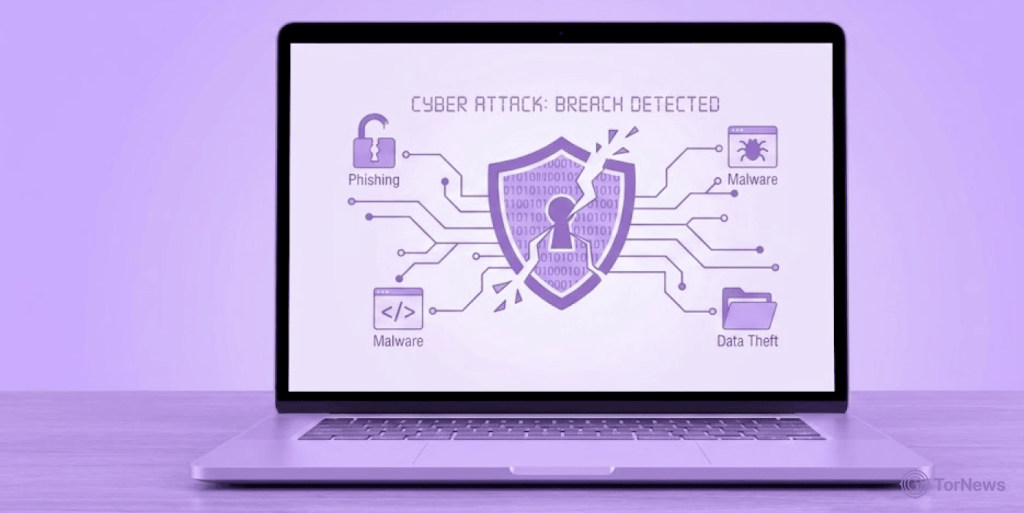
Here are some of the reasons why cybercrime has continued to grow in the recent past:
1. High Financial Rewards
The potential payout for cybercrime is huge. Ransomware payments, personal data, and corporate secrets are very profitable. Attackers can target both individuals and large organizations with minimal upfront investment and make big money.
The attack on Russian security systems firm Delta illustrates this point; hackers breached a company that provides security infrastructure, demonstrating that even firms built to protect others can become lucrative targets for cybercriminals seeking sensitive data and ransom payments.
2. Low Barrier to Entry
These days, you don’t need to be a hacking expert to execute an attack. Ready-made malware, tools, phishing kits, and even cybercrime-as-a-service (CaaS) allow inexperienced individuals to carry out attacks with little technical skill.
The democratization of hacking tools is a key theme in The New Hacker Playbook, which explores how identity theft, AI-powered attacks, and a record-breaking year of data breaches have fundamentally changed the cybercrime landscape, making sophisticated attacks accessible to almost anyone.
3. Human Error Remains Common
People are often the weakest link in cybersecurity. Weak passwords, reused credentials, and falling for phishing or social engineering attacks give cybercriminals direct access to sensitive data and systems. Even a small mistake can open the door to large-scale breaches.
4. Expanding Attack Surface
The increase in internet-connected devices creates more entry points for attackers. Laptops, smartphones, cloud servers, IoT devices, and remote work setups all increase exposure. Unfortunately, many of them lack proper security, giving cybercriminals easy access.
5. Anonymity and Weak Enforcement
Cybercriminals can hide their identities using VPNs, proxies, and the dark web. Also, they often operate from countries with weak cyber laws or limited international cooperation.
To truly understand the scale and nature of criminal activity in these hidden online spaces, exploring real dark web stories can provide valuable insights into how hackers, scammers, and other threat actors operate, the methods they use, and the consequences for those who fall victim.
Top Cybercrime Stories and Lessons Learned – Detailed List

1. A Mom Catfished on a Dating Site
Sometimes a hack doesn’t involve malware or links; it can come from someone trying to gain your trust and affection. In this major web crime case, a journalist’s mother joined Match.com and eventually connected with a ‘soldier’ serving in Afghanistan.
After interacting for a short while, the ‘soldier’ requested a $30,000 loan to clear a large inheritance of gold and jewelry through US customs. The journalist and her brother intervened after suspecting their mother was a victim of catfishing. This is where a person impersonates someone else for nefarious purposes.
After being confronted, the ‘soldier’ admitted to being a man from Ghana, whose parents had died, and was trying to support his sisters.
2. An Ethical Hacker Gained Control Over Sophie’s PC
Sophie, a tech reporter at the Daily Telegraph, agreed to participate in an ethical hacking experiment. Essentially, a group of ethical hackers was to attempt to breach her systems without her knowing the time, method, or place. The ethical hackers spent time researching her, searching through her social media accounts and Daily Telegraph articles.
After about two months, the hackers launched their attack, posing as whistleblowers and sending sensitive information through email. Sophie’s systems were infected when she opened the attached files, allowing the attackers to access almost everything in her system.
3. A Gamer’s WoW Account Got Hacked
Gamers are prime targets for cybercriminals because they are likely to pay to recover accounts they’ve invested time and money in. This particular guy fell for a phishing scam, and his World of Warcraft (WoW) account was hacked, wiping all his progress. This happened to him twice.
Making it worse, the hacker created a character named ‘Thanx’ to mock the victim. Fortunately, Blizzard support responded promptly and restored his account along with all its progress. This is common with most popular online games. For example, League of Legends faces many phishing attempts.
4. Customer Support Can Get Phished
Imagine a customer support system falling prey to a social engineering hack and giving away your information. This is what happened to an Amazon user.
A hacker discovered the fake information Erick used to register a website by checking a public WHOIS database for website owners. He then used the fake information to lure an Amazon customer support representative into revealing Eric’s real address and phone number.
The hacker used Eric’s real information to contact various services and even got a credit card in Eric’s name. Unfortunately, Amazon ignored Eric’s repeated warning about the issue, so he decided to switch to Google.
5. A Ransomware Attack on a Mom’s Laptop
Inna Simone’s (mother to journalist Alina Simone) laptop was hit by a ransomware attack, where over 5,000 files were locked by a CryptoWall malware. The hackers demanded $500 in Bitcoin, increasing to $1000 if not paid within a week.
Although she had backed up the files six months earlier, she decided to pay the ransom to avoid losing years’ worth of documents, photos, and other files. Surprisingly, she had never used cryptocurrency and had to learn it quickly.
Due to a heavy sandstorm, she couldn’t access the banks to pay the ransom and had to plead with the attacker not to increase it to $1000. Thankfully, he accepted and unlocked her files.
6. Academic Papers Lost to Ransomware
Most people panic during a malware attack and immediately turn to dedicated forums for help. However, for this particular user, it was a bit late. Academic papers he had worked on for 2 years were encrypted with ransomware.
The timing was awful as the papers were due, and unfortunately, he didn’t have a backup. Also, the antivirus on his PC didn’t help. We don’t know whether he paid the ransom to recover the files, but hopefully, he didn’t pay.
One thing is certain, though: ransomware attacks are far more common, targeting individuals and businesses alike.
7. Andy’s Car was Remotely Hacked
Andy Greenberg, a senior writer at Wired, participated in an experiment to test car hacking. It involved remotely hacking his car while he was driving.
The hackers gradually took control of the car. First, they activated the windshield wipers and the air vents. Next, they cut off the transmission and finally deployed the brakes.
This experiment exposed a major flaw in Jeep cars, which was subsequently fixed. Today, remote car hacking is easier due to the rise of electric cars and autonomous vehicles.
8. Hillary Clinton’s Leaked Emails
The email leak scandal was a major contributing factor to Hillary Clinton’s 2016 loss to Donald Trump.
Do you know what caused it? Apparently, John Podesta, Clinton’s campaign chairman, was targeted in a phishing attack. He received a suspicious email but marked it as ‘legitimate’ instead of ‘illegitimate’, giving Russian hackers access to over 60,000 emails from his private Gmail account.
Due to the FBI’s slow response, the Russian hackers roamed inside the DNC’s systems for nearly 7 months.
9. A Case of Identity Theft
Laura received a call from her credit card company reporting an attempt to apply for a credit card using her details. Before contacting authorities, she decided to review her credit reports to assess the damage.
She discovered the impersonator had gone so deep into the systems and even changed her security question answers. Laura managed to guess the answers and uncovered the full extent of the damage.
The impersonator had opened over 50 accounts in her name for various fraudulent utilities and a newspaper subscription. In fact, some of the companies were coming after Laura to reclaim their money.
After alerting the police and tracking the impersonator, she obtained a court order and managed to fix some of the damage.
10. The Sony Hack Story from an Employee’s Perspective
In 2014, Sony was hit with one of the biggest and most expensive hacks in history. It took like a week for employees to understand what was going on.
The attack affected 6,800 computers and servers, and all of their information was stolen or deleted. As a result, the employees had to revert to pre-PC practices. For example, they rewrote lost files by hand, and paper became the main form of communication.
The hackers even stole employees’ personal information. The source of the article even had to change passwords for her credit card and online accounts.
11. Tom Blackmailed After the Ashley Madison Breach
This one is last on our list, but is among the darkest cybercrime cases. Tom turned to Ashley Madison to cope with his troubled marriage. The platform was hacked in 2015, and the attackers demanded $500 to remove his name from a public registry. Otherwise, they would inform his family about the affair.
He refused to pay, fearing it could lead to more blackmail. While it was wise not to pay, Tom had to live knowing that the hackers could reveal his interactions with Ashley Madison at any time.
The Impact of Artificial Intelligence on Cybercrime

Here is how Artificial Intelligence (AI) is contributing to the growth of cybercrime:
- Faster password cracking: Machine learning models can analyze password patterns and predict common password structures, allowing attackers to guess passwords more efficiently than brute-force methods.
- More convincing scams: AI tools can generate highly realistic emails, messages, and even voice recordings that closely mimic real people. Attackers can imitate writing style, tone, and context, making scams feel legitimate. While AI enhances scam sophistication, simpler extortion emails remain effective. A new scam demands $640 in Bitcoin under the threat of selling personal data on the dark web, proving that even without AI, fear-based tactics can successfully pressure victims into paying.
- Automated attacks: AI enables attackers to automate malicious tasks like phishing campaigns, credential stuffing, and vulnerability scanning. Attackers can now execute large-scale operations with little effort and resources.
- Evasion of security systems: AI can observe how security systems detect threats and adjust its behavior to avoid triggering alerts. For example, malware can change its activity patterns and timing to blend in with normal user behavior, making it hard to detect.
- Deepfakes and impersonation: AI-generated audio and video can convincingly replicate a person’s voice or appearance. Nowadays, attackers impersonate individuals to request sensitive data or payments. These attacks are highly sophisticated to bypass standard verification processes.
With personal data increasingly being stolen and traded on underground forums, knowing whether your information is on the dark web has become an essential part of modern digital hygiene. Our guide shows you how to run a dark web scan and what to do if your data appears.
FAQs
The most common cybercrimes in 2026 include ransomware attacks, phishing scams, data breaches, identity theft, and state-sponsored cyber espionage targeting governments and critical infrastructure.
Cybercrime is rising due to increased internet connectivity, more digital devices, and the growing value of personal and corporate data. Attackers are also using more advanced tools, including AI, to automate and scale their attacks.
Users can protect themselves by using strong and unique passwords, enabling two-factor authentication, avoiding suspicious links or emails, keeping software updated, and using trusted security tools like VPNs and antivirus software.