-
Cybersecurity researchers warn that large language models (LLMs) which are up for purchase on the dark web are making it easy for attackers to launch distributed denial-of-service (DDoS) attacks successfully.
-
Tools powered by AI like malicious chatbots make it easy for bad actors to generate attack scripts & coordinate botnets with simple text prompts bringing technical barriers to cybercrime to almost ground level.
-
According to an assessment on security by the Government, AI will push cyber threats to the rooftops by 2027, helping attackers to make their intrusion techniques run on automatic mode and aim their attacks on sensitive infrastructure.
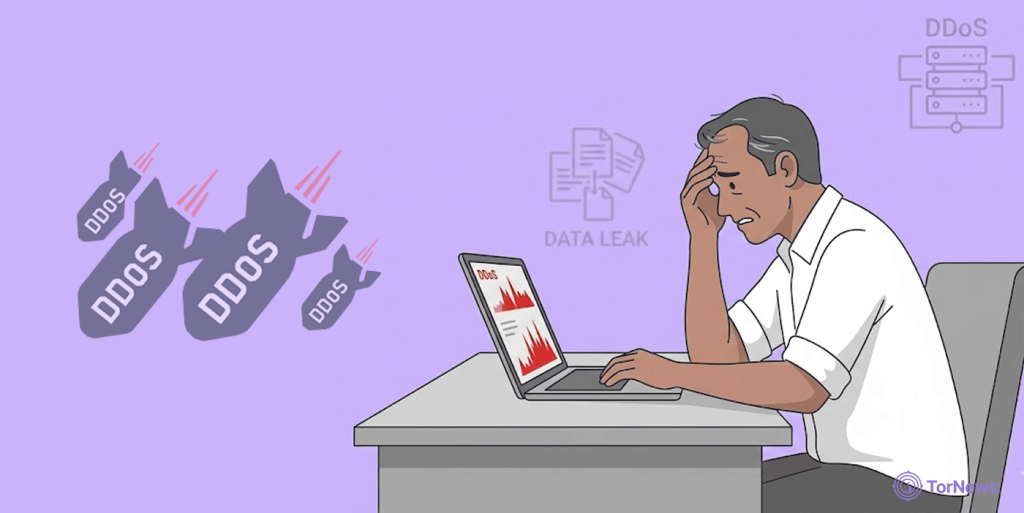
Artificial intelligence AI is gradually causing more harm than good in the digital world, where many things happen these days. While it can make digital strength stronger, researchers now warn that cybercriminals are weaponizing the same technology.
An example of such technology cybercriminals are weaponizing is Large Language Models, which is now available on the dark web and helps attackers to make complex cyber operations to run automatically.
They use this technology to automate distributed denial-of-service DDoS attacks because these tools can generate scripts, discover where vulnerabilities exist and even help criminals carry out large botnet campaigns only using simple natural-language prompts.
Dark Web AI Models are Powering a New Wave of DDoS Attacks, Experts
According to a report by the cybersecurity firm recorded over 8 million DDoS attacks all over the world in the second half of 2025. DDoS attacks overwhelm websites, services or networks with large internet traffic volumes making the target crash or slow down.
The report from NetScout showed the details of how cybercriminals carried out millions of attacks easily due to the use of sophisticated AI tools & dark-web LLMs.
In a statement, NetScout’s Richard Hummel, the usual traditional defenses governments and organizations used in the past are no longer working in the face of this malady. This is because attackers are hitting ‘new attack size & complexity ceiling.”
The NetScout report showed that in the summer of 2025, there were more than 20,000 attacks that were successful due to the deployment of botnets.
The main ones that soared in usage were the Aisuru & TurboMirai variants surging HTTP/2 (H2)to 30 Tbps & 4 Gpps which is a force that makes attacks on transportation, finance, and governments very successful.
Even though international law enforcement actions brought many platforms that offer DDoS for hire down in 2025, the attacks have continued rising.
NetScout revealed that botnets and hacktivist groups have continued keeping things on the rise, with the popular NoName57(16) taking responsibility for over 200 attacks in July 2025, even though they lost some of their infrastructure in a government clampdown.
Governments Warn AI Could Accelerate Cyber Threats
Governments & cybersecurity agencies are regularly warning that artificial intelligence AI could change the global cyber threat narrative. Even though AI could make cyber defences stronger, officials say it is also helping attackers to carry out their activities easily.
Before now, criminals needed more technical knowledge, experience in how network infrastructures work, and access to botnets to carry out such attacks successfully. But with the advent of AI now, those barriers are no longer an issue.
Nowadays, anybody can visit underground forums and buy malicious LLMs such as WormGPT & FraudGPT with just $60 per month. These AI tools only require an attacker to type instructions of the attack they have in mind and the model will generate the technical script configuration for the infrastructure and the right instructions that will execute it.
This means that even new entrants into the dark world without technical knowledge can complete disruptive attacks by just describing their target and what they aim to achieve with simple English sentences, and AI will do the rest.
According to the UK’s National Cyber Security Centre (NCSC), the speed of AI developments may increase the scale and level of sophistication in the nature of cyberattacks.
Also, cybersecurity experts warn that sensitive national infrastructure like energy grids, telecommunications networks, transportation services, and financial systems could be the main port of call for criminals because these are the sectors that use digital connectivity more than others.
The recent DDoS attacks on Israeli targets by pro-Russian hacktivists illustrate exactly this threat: sophisticated, politically motivated attacks using AI-enhanced tools to disrupt critical services and sow chaos.
