-
Ukrainian police and the FBI arrested four suspected members of a ransomware gang tied to $40.5 million in ransom payments.
-
The group used AI-generated voice messages to pose as IT staff and trick workers into giving access.
-
Officers searched 66 locations, seized cash and devices, and say the investigation is still active.
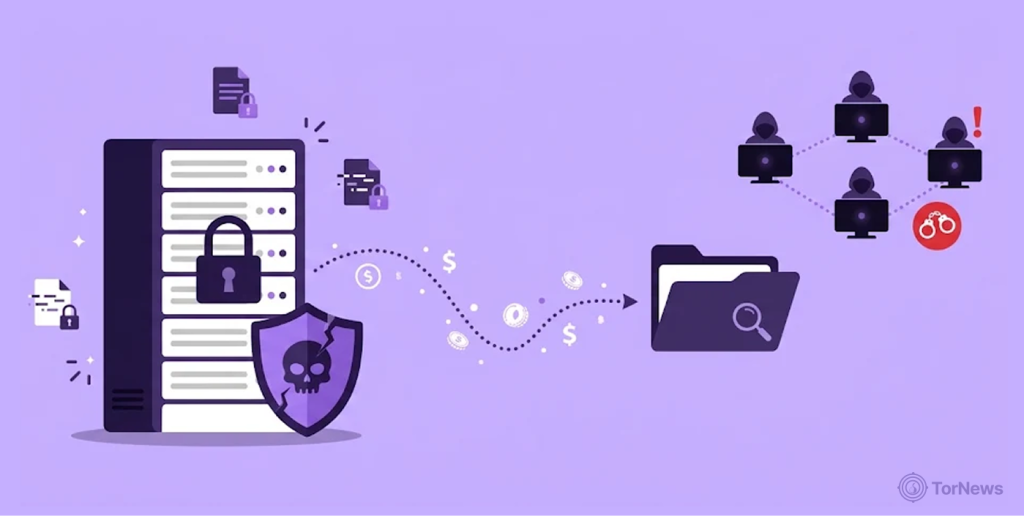
Ukrainian police, working with the FBI, have arrested four suspected members of an international ransomware gang. The FBI is the main federal police agency of the United States. Ransomware is harmful software that locks company files until someone pays.
Investigators link the group to more than $40.5 million in ransom payments. They say it hit at least 28 companies worldwide. The attackers stole private data and disrupted daily business work.
Two-Year Probe Uncovers a Network Across Eight Jurisdictions
The arrests came after a two-year investigation into a criminal group with members in several countries. According to Ukrainian authorities, detectives identified at least 27 people inside the group. Those people connect to a wider network of more than 60 members. That network spans eight jurisdictions, meaning eight separate legal regions. Reports say it included former members of the notorious Conti ransomware operation.
The $40.5 million figure covers only the payments investigators have found so far. It does not show the final damage. Ukrainian authorities say they are still working out the full losses. Investigators say the group’s reach was global. Its victims were not limited to one country or one industry.
Fake IT Calls With AI Voices Open the Door to Company Systems
Investigators say the suspects built their own platform with AI-generated voice messages. The platform helped them pose as IT support workers inside real companies. They called employees and offered technical help. Then they persuaded workers to share login details or install remote-access software.
Hackers can also exploit trusted communication channels to spread misinformation. In one incident, attackers hijacked emergency alert apps in Ukraine and Russia to send fake nuclear warnings. Read more about the incident in our report. That kind of software lets a person control a computer from far away. Either step gave the criminals a way into company systems.
According to acting National Police chief Maksym Tsutskiridze, the criminals sometimes worked in pairs. One attacker kept an employee talking on the phone. Another tried to enter the company’s internal systems at the same time. Internal systems are a company’s private computer networks. The pair split the job in two. One person handled the talking, and the other handled the break-in. In an interview, Tsutskiridze described one recorded call. It lasted until the attackers confirmed they had broken into the company network.
Once inside, the criminals allegedly stole private files. They locked company data with a method called encryption. Encrypted files stay unreadable until someone unlocks them with a special key. Then they demanded payment in cryptocurrency, which is digital money sent online. They also threatened to publish the stolen information if victims refused to pay.
The attackers reportedly studied each company before they struck. Their targets included firms in oil and gas, medicine, manufacturing, shipping, and finance. Organisations that run critical infrastructure were also among the alleged targets. That term covers systems a country relies on every day.
One recorded attack hit a company in the United States. The hackers reportedly took 1.4 terabytes of data from it. A terabyte is a very large amount of digital storage. They first asked for $10 million. After talks with the company, they reportedly accepted $5 million.
The case shows how attackers can mix social engineering, voice technology, and ransomware. Social engineering means tricking people instead of breaking into systems. An employee who trusts a fake IT caller can hand over access without knowing it. Companies should check surprise support calls through trusted internal channels.
They should also use multi-factor authentication, which adds an extra step at login. Limiting remote-access tools helps too. Training staff to spot odd requests is another key step. An employee who gets an unexpected call from “IT” should not share passwords right away. A quick check through a trusted channel can stop the attack before it starts.
66 Searches Across Kyiv and 11 Regions End With Four Suspects in Custody
According to Ukraine’s National Police, officers carried out 66 coordinated searches in Kyiv and 11 other regions. Representatives of US law enforcement joined the operation. Ukrainian special police units also took part. Kyiv is the capital of Ukraine.
Officers seized computers, mobile phones, and bank cards. They also took nearly $370,000 in cash. Officers found another €20,000 as well. Police formally notified four suspected key members of the group that they are under suspicion. Those four now sit in custody, which means police are holding them.
The suspects face two sets of charges. The first covers taking part in a criminal organisation, meaning a group that plans crimes together. The second covers interfering with information systems without permission. Ukrainian law allows prison sentences of up to 15 years if a court convicts them. For now, the four remain suspects. Courts must decide whether they are guilty.
Ukrainian authorities say the investigation remains active. Officers are working to identify other members of the group. They also want to link those people to more attacks.
