-
The FBI says attackers used ARTEX to reach privileged access in under three hours.
-
Researchers found more than 1,600 publicly exposed ARTEX consoles in early November 2026.
-
Microsoft links the tool to attacks on hundreds of organisations, including the ConnectWise supply-chain incident.
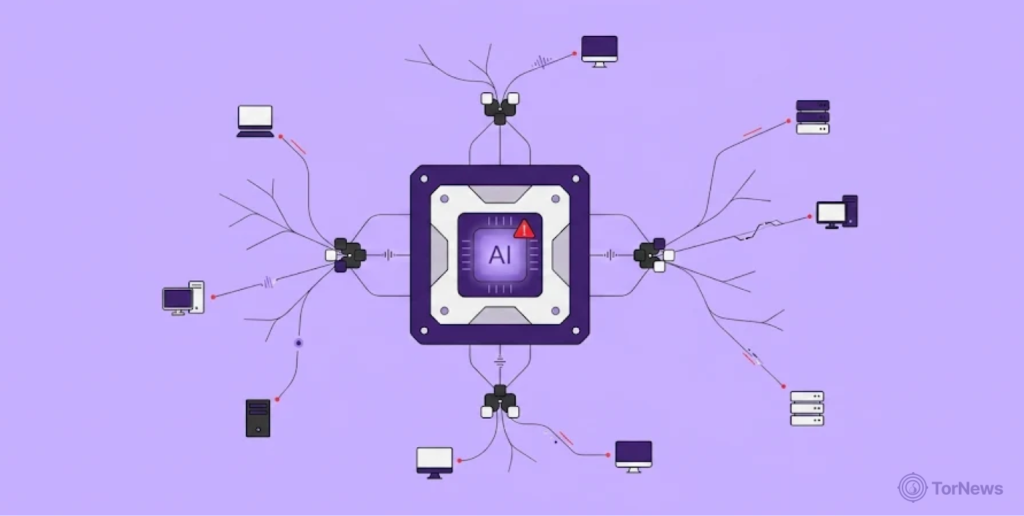
A Chinese-made AI tool called ARTEX is worrying cybersecurity experts. Criminals now use it to automate complex cyberattacks. Operators type simple instructions, and AI agents do the work. Skilled penetration testers normally handle these tasks.
The change has raised fears about how easily attackers can run advanced operations. According to a November 13 FBI advisory, attackers used ARTEX against organisations in several industries. Some break-ins went from first targeting to privileged access in under three hours.
ARTEX first appeared on GitHub in July 2026. A developer known as Autumn-27 posted it as an open-source tool for authorised security testing. Reports of criminal misuse soon followed. The developer removed the repository on October 8. That did not stop the spread. Copies, forks and changed versions stayed online.
ARTEX Sends AI Agents to Do the Hacking
ARTEX does not work like a normal chatbot. It links outside large language models to existing cybersecurity tools. Then it manages several AI agents at the same time. Users describe their goals in plain words. The agents split the work and handle each stage of an attack.
Those stages include mapping a network, scanning for weak spots and attacking login details. The agents also raise their access level, which experts call privilege escalation. They then prepare stolen data so it can be pulled out. When they hit a problem, they change their approach. Humans do not need to guide every step.
Think of a boss who hands jobs to a team of workers. The boss only states the goal. The workers figure out the steps and finish the task. ARTEX gives attackers that kind of team, built from AI.
Researchers say this makes offensive tools much easier to use. According to a report, Jacob Larsen, an offensive security researcher and founder of Cypen, called ARTEX an all-in-one product. Guillaume Valadon of GitGuardian said its simple design helps beginners. In his view, it lowers the skill level an attacker needs.
CJ Moses, the chief information security officer at Amazon Integrated Security, gave a wider warning. He wrote that these AI frameworks have left the testing stage. They now support long attacks that need very little human help.
ARTEX does not need an iPhone or any special phone model. Its web page lets operators manage activity from far away. That makes phone access possible wherever the right setup exists. Reports also say a Chinese developer has made the ARTEX AI agent closed-source.
Microsoft Ties the Tool to the ConnectWise Breach
One major case involves Storm-0940, a China-aligned hacking group that Microsoft tracks. In October 2026, Microsoft reported that the group used ARTEX in a supply-chain attack on ConnectWise Cloud Backup. In this kind of attack, hackers hit a trusted supplier to reach its customers.
The attackers misused stolen app login details. They aimed at Microsoft 365 setups owned by ConnectWise customers. Microsoft reported attempts to enter more than 2,250 tenants. A tenant is one customer’s account space in the cloud. Microsoft also saw odd activity around app credentials, cloud scouting and attempts to gain extra access.
Microsoft found that some attacks reached privileged cloud access in under three hours. It also stressed that most attempts failed. The 2,250 figure counts targeted tenants. It does not count confirmed break-ins.
ConnectWise CEO Manny Rivelo said the company had cut off the affected app connections. It is now bringing services back in careful stages. He warned that these steps cannot remove access attackers already gained inside customer systems.
The Chinese Embassy in Washington rejected the blame. A spokesperson said China opposes hacking. The spokesperson also rejected what it called politically motivated accusations. Microsoft still links the group to the attack.
The case shows how one weak point can spread trouble to many companies. Each customer had its own cloud setup. The attackers tried to reach all of them through one shared app.
FBI and Google Warn the Threat Is Spreading
The FBI’s November advisory places ARTEX inside a growing wave of AI-assisted cybercrime. The agency found more than 1,600 publicly exposed ARTEX consoles in early November. A console is the control screen attackers use to run the tool. The FBI warned that the real number could be higher.
Google Threat Intelligence Group also saw several threat actors using ARTEX and similar tools. Its October 30 research explained how these tools automate different stages of an attack. Those stages include lateral movement, which means hopping from one system to another, and data theft. ARTEX is not the only AI tool linked to attacks on sensitive systems. Researchers have also reported hackers using Claude Code and DeepSeek AI in attacks against government systems.
ARTEX has not invented new hacking methods. Instead, it makes known methods faster and easier to coordinate. Less experienced attackers can now use them too. Security experts say the main worry is speed and ease. A task that once took a skilled team can now start with a few typed lines. That puts more companies in the path of attackers.
Organisations should therefore tighten access controls and protect their login details. They should watch for unusual activity. They should also limit app permissions they do not need. These steps make it harder for fast, automated attacks to succeed.
