-
U.S. ports are facing more and more cyberattacks nowadays. In August alone, Los Angeles blocked 120 million attempts.
-
One viral post on X claims all 12 primary US ports share remote access links with seven Israeli companies. But no real proof validates the claim.
-
Covered port facilities must send the Coast Guard a cyber plan by July 16, 2027.
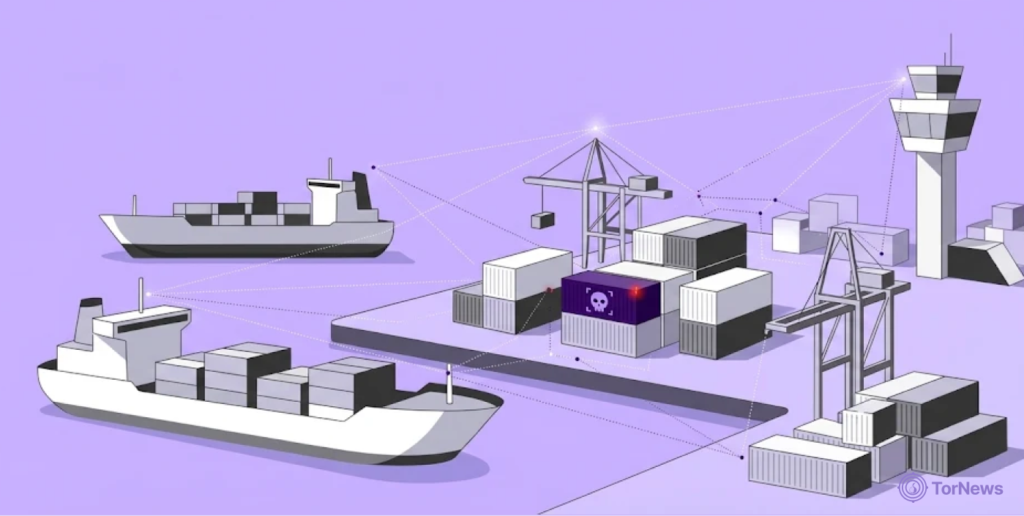
The cybercriminals are attacking U.S. ports fiercely. The Financial Times published its findings on Sunday, and shortly afterward, a post appeared on X, claiming something much larger.
It claimed that all twelve primary U.S. ports are connected via remote software to seven firms. Reports have confirmed the attacks, but so far, the company claims don’t hold up.
How Bad are the Attacks?
About 2.3 million barrels of crude oil are shipped daily from the Port of Corpus Christi in Texas, according to CEO Kent Britton. Britton also noted that hackers frequently attack the ports’ cyber systems and use phishing attempts with fake emails sent to port officials requesting access privileges. The number of attacks reaches hundreds, if not thousands, each day.
A similar trend can be observed in Los Angeles, where over 120 million attacks were recorded in August, which is about twice as many as in the monthly average for the current year. Many attacks were automated, which explains the number of attacks without the necessity to resort to the analysis of their productivity.
Some attacks were successful. For instance, on August 4, cybercriminals attacked three ports in North Carolina (Wilmington, Morehead City and Charlotte Inland Port). Gates shifted to manual processing and opened late. A spokesperson said the breach was contained. Normal gate hours returned Aug. 6, but staff kept processing work by hand.
Possible Culprit Behind the Attacks
No one has pointed out who orchestrated these assaults. Specialists in the field of cybersecurity have tied Iran, North Korea, and China to similar attacks against shipping companies. Nevertheless, cybercriminals often try to cover their tracks by acting from other countries. Therefore, it is very hard to identify the actual perpetrators.
In a related event, on April 8, 2026, US authorities warned that Iran-linked hackers are targeting critical infrastructure, raising security concerns.
The FBI warned last week that hackers use an AI tool to automate attacks. According to Britton, AI will only complicate the issue even more. Meanwhile, Corpus Christi declined to discuss its recent incidents.
What the Viral Post Says
The post from an X user, @RabbiJeffx, mentions “documented links” tying all 12 major ports in the USA to seven names. Next, it throws the question to Grok and asks where these names originate from. The answer is Israel in all cases.
Here are the names of the companies:
- Claroty is an Israeli that helps factories and critical infrastructure protect from hackers. One of its clients is the Port Authority of New York and New Jersey.
- NICE is based in Ra’anana. It develops software for customer service and fraud prevention.
- Waterfall Security is located in Rosh Ha’ayin. In 2024, the company signed a contract to protect cranes located at the Port of Miami.
- DockTech is an Israeli startup that delivers technology for monitoring water depth at ports. It has a contract with the Port of Houston.
- ECOncrete, established in Tel Aviv, produces eco-friendly marine concrete.
- Ashdod Port is an Israeli government-owned port.
- ZIM is a shipping company operated from Haifa. Hapag-Lloyd of Germany acquired the firm for approximately $4.2 billion.
Evidence Points to Something Different
Some of the companies collaborate with US ports, but that doesn’t mean they all fit into the “remote access” label. ECOncrete is a vendor that sells concrete. Ashdod is a port. And ZIM transports containers. We found no evidence connecting any of the companies to the recent attack.
However, that doesn’t mean there’s no remote access risk. The House investigation showed that Chinese crane manufacturer ZPMC has been trying to convince port managers to permit remote access.
Therefore, the main question is about who can access the ports, and how the ports in question control this access. A company’s home country has nothing to do with any of that.
So What’s Next?
The US Coast Guard cyber regulations went into effect on July 16, 2025. The rules demand the reporting of cyber-related incidents and annual training requirements. By July 16, 2027, at-risk organizations must appoint a cyber officer, conduct an evaluation, and submit a plan to the relevant authorities.
Moreover, in August, the Coast Guard and the FBI boarded two foreign ships heading to US ports due to a possible cyber infiltration.
Monitor two important things:
- Breach confirmation from Corpus Christi port or any other port
- Any published proof confirming the vendor links.
