-
Iran-linked hackers hit Stryker’s Microsoft infrastructure Wednesday, wiping device data and knocking out company phones across global operations.
-
NBC News reports the strike marks Iran’s first major cyberoffensive against a US corporation since the war began.
-
Stryker’s SEC filing confirms operational and financial damage remains unknown, with no restoration timeline in sight.
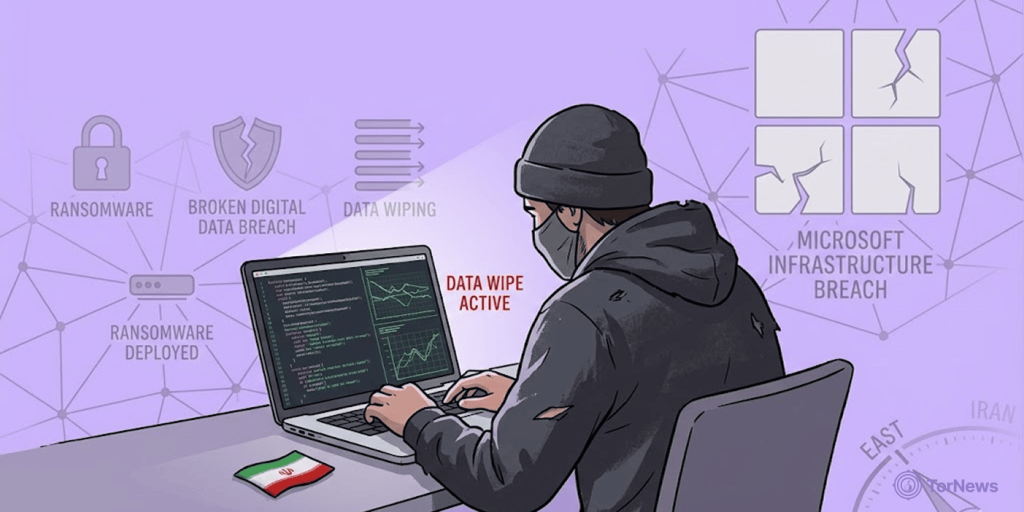
Iran-linked hackers just turned one of America’s biggest medical device companies into a war zone. On Wednesday, attackers tore through Stryker’s Microsoft environment, erased data from employee devices, and knocked company phones offline across global operations.
Internal Communications of Stryker Gets Paralyzed, Data Lost
Stryker forges the surgical tools as well as orthopedic implants that health facilities across the globe depend on every day. Now, its own internal systems can barely function.
The attack paralyzed internal communications almost immediately. One Stryker employee told NBC News that phones stopped working without warning and data simply vanished from devices. Teams across the company lost access to critical tools mid-workday. Everything ground to a halt.
Stryker filed an emergency 8-K disclosure with the SEC acknowledging that the “full scope” of operational and financial damage is not yet known. The firm also gave no time window for when it anticipates restoration of regular operations.
Iran’s Opening Shot at Corporate America
This attack is not from a regular routine cybercrime. Security analysts monitoring the incident spell it out as Iran’s first big cyberoffensive against a US-centered firm since military tensions between both nations heightened. Iran didn’t pick a defense contractor or a power grid. It picked a healthcare technology company, and that choice matters.
State-supported hackers normally go after data theft, disruption, or political messaging. Here, the attackers chose destruction. They didn’t encrypt files and demanded ransom. They deleted data outright.
That approach signals a deliberate strategy to cause maximum damage and make recovery as difficult as possible, the signature of a nation-state operation designed to send a message rather than collect a payday.
The decision to target healthcare infrastructure instead of defense or energy marks a possible shift in Iran’s cyber warfare playbook. If that shift holds, no industry is off-limits.
Microsoft hasn’t issued a public statement about the breach. But Stryker’s specific identification of its Microsoft environment as the attack vector raises immediate questions.
Thousands of companies run their critical operations on Microsoft’s cloud infrastructure. Any security gap exploited here could have implications well beyond one company’s crisis.
What Stryker Still Doesn’t Know
As of early Thursday, Stryker hadn’t confirmed whether attackers accessed patient data or compromised medical devices already deployed at healthcare facilities. These will determine the scale and severity of this incident as the investigation continues.
Stryker powers medical facilities and hospitals all over the world. A prolonged disruption to its operations doesn’t stay contained inside corporate headquarters. It reaches into supply chains, technical support lines, and potentially the care that patients receive at facilities, depending on Stryker’s equipment and expertise.
Cybersecurity professionals have spent months warning that geopolitical friction would increasingly show up inside corporate networks rather than on traditional battlefields. Stryker just became the proof of concept.
This warning applies globally. In the Middle East, pro-Russian hacktivists have been launching DDoS attacks on Israeli targets for months, demonstrating that the lines between cybercrime, hacktivism, and state-sponsored warfare are increasingly blurred.
Even with presumably sturdy security systems, the firm could not terminate the infiltration or stop the data destruction that came alongside.
The broader warning here isn’t subtle. If Iran has genuinely shifted its focus toward targeting US commercial entities, every major American company needs to revisit its threat model immediately.
Nation-state cyber warfare has expanded beyond government systems and defense contractors. It now reaches into any high-profile company that can serve as a visible, damaging target.
Stryker still can’t estimate its total losses or put a date on recovery. That alone tells the story. When a $20 billion company with global reach can’t answer basic questions about damage and timeline two days after an attack, the attack was devastating.
Corporate America just got a very loud signal about what the next phase of geopolitical conflict looks like, and it looks a lot like Wednesday at Stryker.
