The dark web is often associated with all sorts of stuff, both good and dangerous. Besides, it forms the larger part of the internet, and hence sparks curiosity among online users. In fact, for most users, the dark web is an exciting adventure. Unfortunately, there are several hidden risks in this underground portion of the internet, like harmful sites that can track your online activities and even expose you to a plethora of online scams.
Therefore, you need to explore the dark with a lot of caution, and the best way to do that is to use security tools like Ahmia, the best entry point to the dark web that lets you access the dark web via the Tor browser. Ideally, Ahmia is designed to offer users the safest route to search the dark web.
Is Ahmia safe? Well, in this article, we’ve done the legwork and looked at all the aspects of this private search engine and whether you’re at risk when you use Ahmia.
What’s Ahmia?

Ahmia is a specialized search engine that helps you find hidden sites on the Tor network. Ideally, it helps to make the hidden services more accessible, which are usually not available on traditional search engines like Google.
Interestingly, Ahmia works on both the dark web and the normal web, meaning you can use it even when you’re not on a dark web browser. Besides, it’s a free as well as open-source project that was developed in 2014 by a security researcher, Juha Nurmi.
Ahmia is specifically designed for the Tor browser, which uses onion routing to encrypt all users’ online traffic in several layers and then route it via a plethora of volunteer-operated servers. When on the Tor network, you can be assured of more privacy compared with the Clearnet whenever you communicate and roam online.
What’s Ahmia Used for?
The dark web can be a dangerous place to explore, especially when you don’t know what to look for. In fact, when you visit the dark web, you’re always one click away from stumbling across harmful or shady websites. That’s where Ahmia comes in; it gives you a safer way to explore the dark web.
The best part: unlike other tools you can use to browse the dark web, which show everything, Ahmia literally filters out harmful content. Apparently, it collects the public onion addresses, then organizes them, and makes searching easier. Perhaps one of the major purposes of Ahmia is to make searches for desired material on the onion network easier. For those wondering where to start, we’ve curated a list of interesting and legitimate destinations in our guide to the best dark web sites.
Moreover, it enables the onion service operators to register websites so that search engines can find them easily. Also, it has a ban of fake or dangerous servers that it updates regularly and gets rid of anything that’s flagged as abusive.
Another use of Ahmia is for research and journalism. Researchers and journalists use Ahmia to explore various topics that are related to cybersecurity, digital rights, and privacy. It offers access to an array of information that’s usually not available via the traditional search engines, and hence helps in academic studies and investigative reporting.
The fact that Ahmia focuses on content filtering, transparency, and user accessibility makes it one of the best options for users who want to explore the Tor network responsibly.
How Does Ahmia Work?
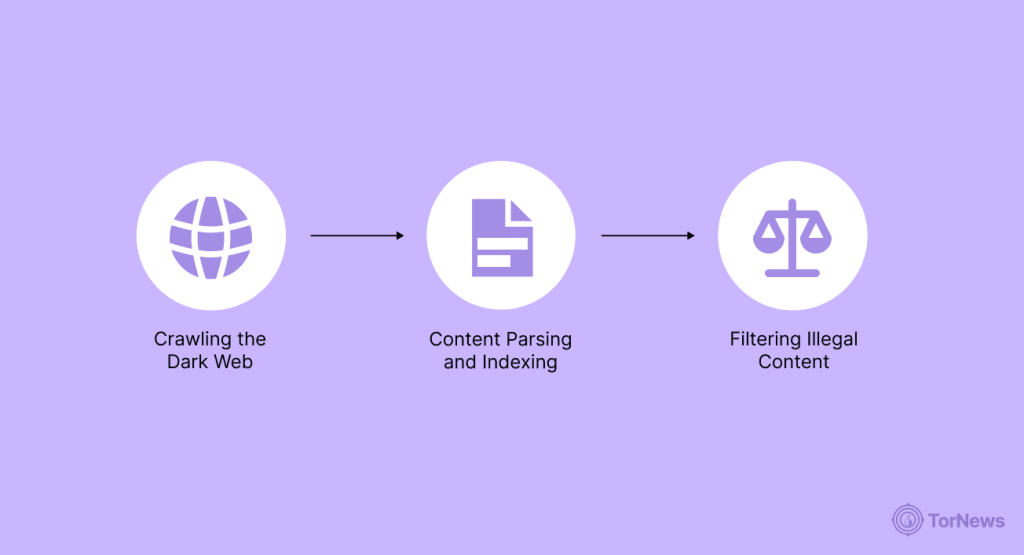
Ahmia works differently from other search engines. Besides, the dark web doesn’t align with standard indexing, and hence it needs some steps to find websites that run on .onion addresses.
Here’s a breakdown of Ahmia’s core functionality:
Crawling the Dark Web
Ahmia uses a specialized tool known as OnionBot to navigate the dark web. The tool is built with a specific framework known as Scrapy, and it connects directly via Tor. Ideally, the dark web websites don’t follow the typical web patterns, and hence, OnionBot must approach every site carefully.
How to Discover New Sites With Ahmia
One thing is for sure; it’s not easy to find dark websites, given that you can’t only click through pages. Instead, Ahmia search engine uses three methods to find .onion addresses:
- The first method checks all the directories inside the Tor network. The directories are literally one of the rare areas where public .onion links are often shared.
- The second method happens when it lands on the website, and the crawler scans through the pages for other links. Several darknet sites link to one another, and hence following the paths might lead to several discoveries.
- Finally, Ahmia uses the seed nodes to locate .onion addresses. Perhaps, they’re known entry points in the Tor network and help the crawler to start with reliable leads and wander around aimlessly.
Content Parsing and Indexing
The extracted data from discovered hidden services usually isn’t merely stored verbatim. Instead, Ahmia’s crawlers scan it to extract all the relevant information like descriptions, titles, and keywords. Once that’s done, the information is now stored in the searchable database.
The searchable index connects every content with its .onion link, meaning when one searches on Ahmia, the system doesn’t match exact words. Instead, it searches all the stored data and comes up with the relevant result based on the information the crawler collected.
Filtering Illegal Content
Also, Ahmia works in a way that it blocks harmful and illegal material from appearing in the search results. The filtering process involves boycott matching; Ahmia has banned known keywords associated with illegal material or malicious URLs. With that in place, crawlers are programmed in a way that they avoid indexing material that matches such black listed entries.
Also, it involves automated analysis where Ahmia uses automated analysis tools that scan content from discovered hidden services and then identify the red flags of illegal activity. Any content flagged is excluded from Ahmia’s search results.
Respecting Site Rules
Just like the clear web, most hidden services use the robots.txt file to direct crawlers on the type of content to avoid and index. Ahmia’s crawlers follow those instructions to ensure that they respect all privacy preferences of the hidden service operators.
Is Ahmia Safe?

When talking about safety, Ahmia is one of the safest search engines for users who want to explore hidden services on Tor, thanks to its robust policies regarding abusive content online. Perhaps, it claims to block all the illegal as well as malware-ridden sites and those that are full of abusive content from search results.
Ahmia is undeniably a safe search engine, but users should be aware of the inherent risks of the Tor network. Understanding this environment is crucial, and we cover the essential safety knowledge in our Dark Web 101: The no-nonsense guide to the hidden internet.
For example, the Tor network hosts many malicious websites designed to steal personal data or infect devices with malware. Therefore, you need to be vigilant and only access the trusted hidden services.
Also, you should be aware of the illegal activities on the Tor network. While Ahmia is exceptional in filtering out illegal content, you can easily stumble upon such content as you explore the dark web. Therefore, it’s well upon you to exercise caution all the time, as one wrong click could get you in real danger.
Why Use Ahmia?
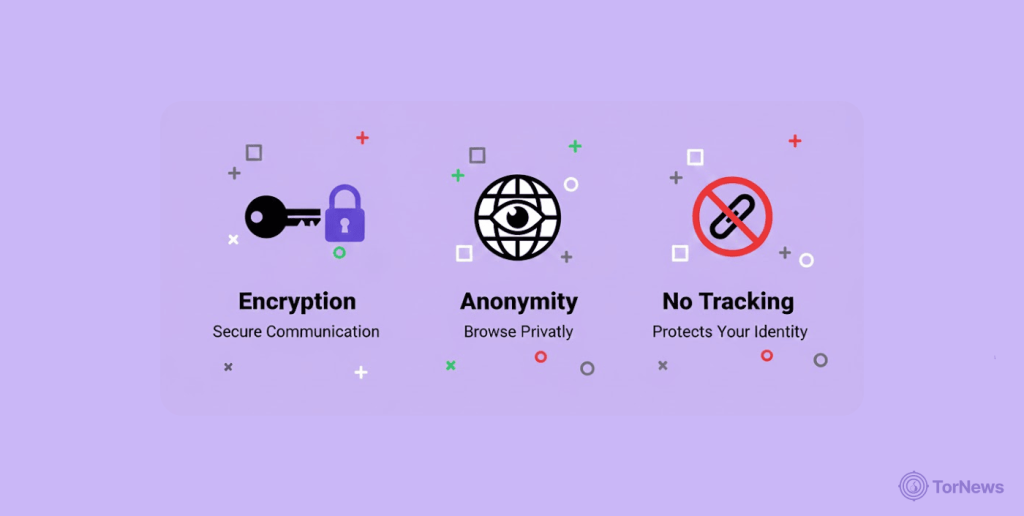
There are several search engines that you can use to access the dark web, but Ahmia stands out as one of the best options for a variety of reasons. Here are some of the reasons that you need to consider using Ahmia to access the dark web:
- Simple and private: Ahmia filters out junk, loads fast, and works exceptionally with the Tor browser. Adding a VPN ensures your anonymity while you browse.
- Supports research: Another reason to use Ahmia is that you can easily find working links to privacy tools, forums, and hidden services. Researchers, activists, and journalists use Ahmia to explore Tor without stumbling into unsafe spaces.
- Safer access: Ahmia gets rid of links that can lead you to illegal content or scams. Therefore, you can be sure that it’s not easy to stumble on dangerous pages.
Features of Ahmia
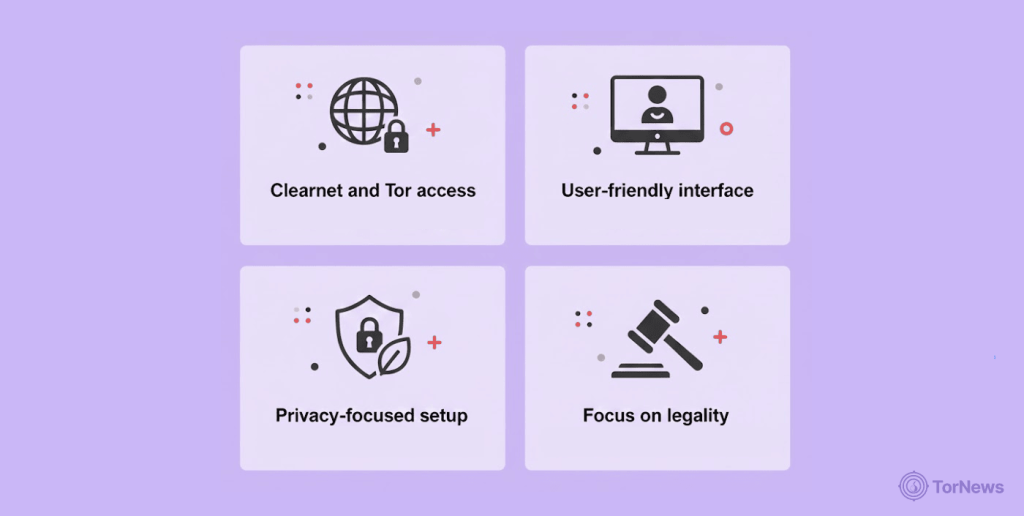
Ahmia offers a variety of exceptional features that enhance user experience. Some of the top features include:
- Clearnet and Tor access: Ahmia offers accessibility from both the Tor network and the clear web (regular internet). Therefore, it means that you can access Ahmia via the “.fi” domain on the dedicated Tor onion address or on the clear web. It’s a feature that allows users to select the access option that suits their needs.
- User-friendly interface: Ahmia’s home page is very simple; you simply land on the search bar and type whatever you want, and you’ll get the list of sites with small descriptions. The best part is that you won’t come across pop-ups, ads, or any other extra clutter. The simple layout helps users find results fast.
- Privacy-focused setup: Ahmia ensures that it does not store your searches or link them to your IP. Therefore, it’s an excellent feature when you want to explore sensitive topics or when you want your search history to remain private.
- Focus on legality: Ahmia uses content filtering to ensure that users don’t stumble on harmful or illegal content as they search the Tor network. The filtering relies on automated techniques as well as human oversight to have a legal and safe search environment. Perhaps it might not be 100% foolproof, but it greatly reduces user chances of users encountering illegal or disturbing content.
- Community features: A hmia doesn’t have inbuilt user forums or other social media functionalities, but it has a sense of community with the security researcher as well as privacy advocate communities. Besides, the open-source nature allows open discussion as well as collaboration on its improvement and development.
- Regular updates: Ahmia regularly publishes reports on newly indexed sites, filtered sites, and other updates. Therefore, you can easily check every progress on the backend that helps build confidence in how it works.
- Security integration: You can easily integrate Ahmia with extra security tools such as HTTPS Everywhere, which enforces secure connections whenever possible. The integration adds a layer of security when you access hidden services via Ahmia.
Is Ahmia Legit or a Scam?
Experts highly regard Ahmia as a legitimate tool for accessing hidden services on the Tor network. In fact, its major goal is to offer a safer browsing experience as it filters harmful content via its banned.
The effort to ensure that it maintains a cleaner and more secure environment has made it rank highly among users who want to explore the underground world responsibly.
Besides, Ahmia is open-source, meaning you can review its code anytime. Researchers and developers usually audit the platform for privacy concerns or security flaws.
However, just like any tool that offers access to the dark web, you should always exercise caution. Ahmia itself isn’t a scam, but the hidden services that it indexes might vary in terms of legality and safety. Therefore, you should always remain vigilant and employ extra security measures like using a reliable VPN.
Safe Dark Web Search Engines Similar to Ahmia
The dark web can be an exciting place to explore, but it can also be a dangerous place if you don’t approach it with caution. Perhaps you need specialized search engines to explore this hidden part of the internet. Ahmia prioritizes user privacy, which is why it filters out illegal or harmful content and offers reliable options to browse the dark web.
Fortunately, there are other alternative search engines that work similarly to Ahmia that you can consider. Here are the top Ahmia alternatives that you can consider:
1.DuckDuckGo

Pros
- No tracking or ID profiling
- Anonymous browsing features
Cons
- Limited local search results
DuckDuckGo is another top search engine that has an extensive attention to privacy and doesn’t track your activity or even store any personal information. In fact, DuckDuckGo is the default search engine on Tor and offers access to both onion sites and the surface web while offering robust privacy protections.
However, it’s not specifically meant as a dark web search engine, meaning it doesn’t index a lot of onion sites as most dedicated deep web search engines do.
2. OnionFind

Pros
- Allows accessing dark web sites even from clearnet
- Advanced automatic filtering
- Integrated features
Cons
- Lacks advanced filters
OnionFind boasts arguably the largest number of indexed onion sites, more than 200,000 pages, meaning it offers a plethora of search results on any search term one can think of. It’s also one of the user-friendly, and it has made its name for its amazing speed as well as comprehensive coverage of the onion sites.
The best thing is that it automatically filters out harmful or illegal content, and hence decreases your risk of stumbling onto dangerous sites. Nevertheless, you still need to be vigilant when using it to find any website on the darknet, as the hidden part of the internet has inherent security threats.
3. Haystak

The search engine has more than 1.5 billion indexed pages, which makes it rank among the top dark web engines. It offers both premium and free versions with extra features, as well as better search capabilities on its premium version.
The free version features a lot of ads, which makes the premium version a preferred option for most users for the best experience. Also, as much as Haystack prioritizes privacy, it’s not the best option for users who are looking for highly curated content.
4. Tordex

Pros
- Open and user-driven model
- Access to a wide range of sites
Cons
- Low-quality results
Tordex has an extensive database of onion sites, and it offers a wide variety of indexed content. This search engine focuses on legitimate content as well as avoids all links to harmful or illegal activities. Therefore, it’s one of the safest options to browse the dark web.
However, while it has an extensive index, the relevancy and quality of your search results might vary. Moreover, it doesn’t have advanced filtering options that require you to manually verify the legitimacy of some sites.
5. VormWeb

Pros
- Focused and targeted results
- Open-source
Cons
- High risk for users
This is another powerful search engine that you can use to access the deep web and darknet. It’s the best option to find data about individuals and browse the dark web content that you won’t find on regular search engines. Perhaps it’s one of the best search engines for researchers or investigators.
Unfortunately, given that it focuses more on people searches means that it’s not the best to find a wide range of dark web content. Also, you should be mindful of ethical and privacy considerations when you use it.
How to Use Ahmia Safely
If you want to have a safer browsing experience when you use Ahmia, it’s significant that you adopt various security practices. The extra measures will ensure that you have complete privacy to navigate the Tor network.
Here are the top safety measures that you should follow when using Ahmia:
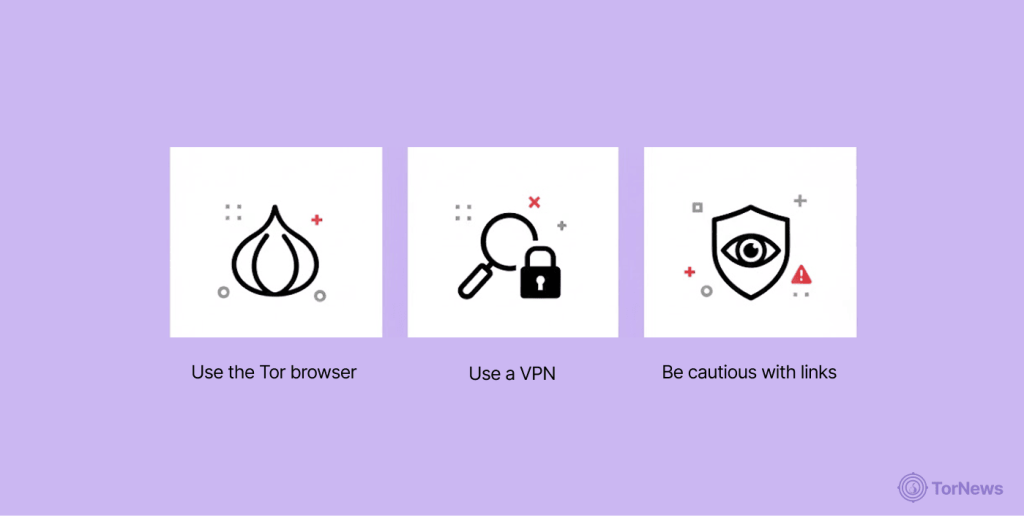
- Use the Tor browser: Ensure that you never access Ahmia or simply the Tor network with a regular web browser. All the time use the Tor browser that anonymizes traffic and ensures that your identity is private.
- Use a VPN: Always start by installing a reliable VPN like NordVPN. A trusted VPN helps to mask your real IP address and keeps all your online activity from prying eyes. In fact, a good VPN is handy, especially when using public Wi-Fi.
- Be cautious with links: Never click on links that you’re not aware of. Ensure that you always verify the legitimacy of links before you click on Ahmia. That way, you can always avoid malicious sites and any potential scams.
- Update Ahmia regularly: Always keep Ahmia and the Tor browser up-to-date to ensure that you benefit from all the latest security improvements and patches.
- Use a strong password: The first step to staying safe online in general is to always employ strong and unique passwords for your online accounts. Avoid using a similar password for several accounts.
- Never share personal information: Ahmia can do its part to make you as secure and private as possible. However, you should also ensure that you don’t share your personal data, no matter the site you visit. The dark web is a hotbed of cybercriminals, meaning you’re always closer to danger than you think, and you should be even more cautious than you already are.
FAQs
Ahmia specifically designs its search engine for the Tor network. It helps to find sites with .onion addresses that are often accessible via the Tor browser.
Ahmia is safe to use when compared to other options, as it filters and blocks illegal and harmful content from search results.
Security researcher Juha Murmi initiated Ahmia and launched it on GitHub in 2014. It’s a free and open-source project.
Ahmia isn’t the only option to explore the dark web. Other search engines like OnionFind, Haystack, DuckDuckGo, Pipl, Torch, Open Index, and Grams exist and can do the job. The best option depends on your needs, including content, safety, and anonymity.