In today’s world, your digital footprint is everywhere. Every post, message, and email leaves a trace — tracked, analyzed, and monetized by countless companies.
But when it comes to your private conversations with family or friends, you deserve the freedom to speak openly without worrying about eavesdroppers. That’s where encrypted messaging apps come in. They’re no longer just a bonus feature; they act as your digital armor in an increasingly connected world.
We’ll break down the key features to look for, from encryption protocols to data logging policies, so by the end, you’ll know exactly how to choose the right private messaging app, whether it’s for couples, close friends, or your most sensitive conversations.
In this guide, we list the 10 best secure encrypted messaging apps and explain what makes them truly safe, and why some popular ones could be a privacy nightmare.
A quick privacy pro-tip before we dive in: A secure messaging app protects your chats, but your IP and internet traffic still need a shield. That’s why we pair ours with NordVPN (currently, at over 70% off )—a fast, audited, and trusted VPN we actually use.
Top Private Messaging Apps – Quick List
- Signal: Often dubbed the king of privacy; it has strong, open-source encryption, and a foundation committed to security.
- WhatsApp: The world’s most popular messenger that is owned by Meta (formerly Facebook), but the app uses Signal’s encryption protocol.
- Telegram: The app is feature-rich, and has large communities, but you do have to enable “Secret Chats” for actual end-to-end encryption.
- Threema: Anonymous paid app you can use with no phone number to create an account.
- Viber: The application is a secure voice and messaging app that is easy to use and chats indicate levels of encryption with colour coding.
- Facebook Messenger: The most popular chat application in the West that at least has end-to-end encryption turned on by default recently, but you are still using a data-gobbling corporation’s app.
- Wickr: Extremely anonymous messenger which has self-destructing messages and a “shredder” feature.
- Wire: Easy-to-use platform that provides both personal and business usage and does an exceptional job of focusing on privacy.
- iMessage: Apple’s built-in messenger, with end-to-end encryption for conversation on Apple devices by default, but not secure when messaging users of Android.
- Silence: Open source SMS/MMS app for Android that provides end-to-end encryption for text conversations.
Does One Really Need an Encrypted Messaging App Today?
The answer is, without a doubt, absolutely yes. The age of simply sending a text and hoping it is private is over. Unless it uses end-to-end encryption, anything you message is accessible to read by anyone who packages it along the way – the metaphor is, a postcard.
It’s not just about protecting yourself from hackers. And that’s because you want to protect your privacy from corporations, governments, and just about anyone else that’s looking to sneak in on your discussions.
Using an app that is secure is no longer an option; it is a requirement of digital self-defense. Think about it for a moment; you would never leave your front door unlocked? You shouldn’t be leaving your personal discussions out in the open like that either. (And seriously, it takes only one small mistake to have your personal data public.)
Best Encrypted Messaging Apps Today – Detailed List
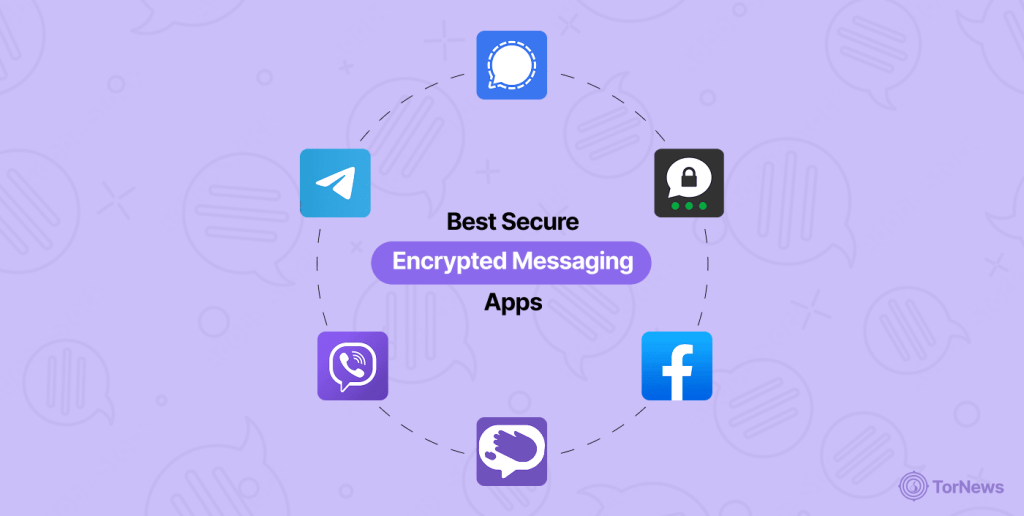
In an age of mass data collection, securing your private conversations is no longer optional. It’s critical. Here are the most secure encrypted messaging apps available today.
1. Signal
- Website: https://signal.org
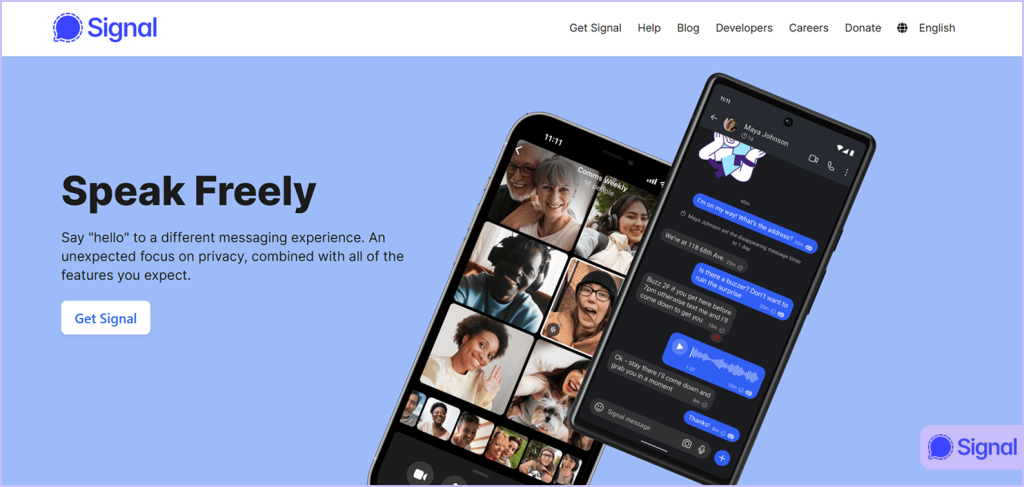
Signal stands out as a top example of privacy in messaging and is widely regarded as the gold standard for secure communication. Privacy experts, journalists, and cybersecurity researchers often recommend it as their top choice.
The non-profit foundation behind Signal, along with its practices of transparency, is what differentiates Signal from other free encrypted messaging apps.
Signal’s ecosystem runs on its open-source Signal Protocol, providing strong end-to-end encryption for all communication types, including one-on-one chats, group chats, voice calls, and file transfers.
The app minimizes data collection by storing all messages and information locally on your device.
2. WhatsApp
- Website: https://www.whatsapp.com/
WhatsApp is a messaging service owned by Meta (formerly Facebook) that has become a go-to messaging service for billions around the world. With a big corporation as a parent company that built its business on targeting ads to users, WhatsApp has at least implemented a very strong privacy feature—end-to-end encryption—that makes it a serious player in the security world.
WhatsApp utilizes the Signal Protocol for default end-to-end encryption; therefore, all of your messaging and calling activity on the app won’t be accessible to Meta. Note that WhatsApp, while secure a chat, will also maintain lots of data collection of some elements (when, with whom, for how long, etc.) of said chat.
With that many users, it only becomes easier to connect with friends around the world. You have the option of doing a backup of all of your chats in the cloud (Google Drive or iCloud), which is also end-to-end encrypted.
3. Telegram
- Website: https://telegram.org/
Telegram is an end-to-end encrypted messenger known for speed and large scale in the communication space. It is a cloud-based messaging architecture that has developed a reputation as a secure alternative to WhatsApp, but it is a little bit more nuanced than that.
All messages are encrypted from client to server and stored in the cloud, allowing Telegram to work seamlessly across multiple devices. However, in the case of end-to-end encryption, users must create a “Secret Chat” manually. Additionally, with Secret Chats, content stays off the cloud and remains tied to a single device.
Telegram has a large group chat limit of 200,000 members and unlimited subscribers in broadcast channels. Users can send files up to 2GB in size, providing a file-sharing bonus.
It’s this powerful combination of large channels, anonymity (through only the usernames), and “Secret Chats” that has made Telegram a double-edged sword in the privacy world. While it’s a great tool for public communities and private family chats, these same features have also made it a popular hub for more clandestine activities. In fact, we took a deep dive into this very phenomenon in our separate guide to the top dark web Telegram channels and chat groups (exploring how the platform’s architecture lends itself to uses far beyond the mainstream).
4. Threema
- Threema: https://threema.ch/en
Threema is a great option for users who want to be completely anonymous, no matter what. Based in Switzerland, this is a paid app, but many users believe the emphasis on privacy makes it worthwhile, and it’s the best for secure messaging.
Threema has its own, open-source cryptographic library. It does not require a phone number to register, and it also does not require an email address. By simply downloading it, it will generate a random Threema ID, and this will be your unique identifier.
Threema doesn’t store anything on its servers; all your data and messages remain locally on your device.
Being a platform that enables encrypted messaging, Threema allows you to have truly anonymous communications and does not take any personally identifiable information from you. Threema recommends and utilizes a color-coding system that verifies the trust level of your contacts, ranging from unverified to personally verified.
5. Viber
- Viber: https://www.viber.com/en/
Viber has been an established voice and messaging app that has a large user base in Eastern Europe and Asia. A VoIP service originally, it has become a full-featured, secure messaging app of interoperable capability that takes user privacy seriously.
For all one-on-one chats and group chats, Viber provides end-to-end encryption. The app uses a color-coded trust indicator that denotes levels of trust in the conversation.
In chats, a green lock indicates a fully trusted conversation, a grey lock shows a partially trusted conversation, and a red lock signals an insecure conversation, helping users quickly gauge security.
Individual chats can be hidden from the main chat line and later accessed with a PIN. It provides a trust system that gives a visual way to see how secure a conversation is.
6. Facebook Messenger
- Website: https://www.messenger.com/
Facebook Messenger was previously a cause for privacy concern (because it is part of a business model that involves user chat data collection for advertising purposes), but the service has made an intentional effort in terms of value in recent years.
Messenger recently enabled end-to-end encryption by default on all conversations, making it a much more functional option for people who want to keep things simple and talk to their Facebook friends.
Facebook Messenger has launched a new safer messaging protocol that allows for end-to-end encryption for all messaging, so third-party Meta cannot access the message contents. They do, however, collect a troubling amount of metadata pertaining to your usage of the app, including who you are messaging, when you are messaging, and even where you are sending the message from.
Messenger integrates with Facebook and Instagram, making it easy to chat with a large number of people. The Messenger app has built-in functionality for polls and games; it can also support video conferences, all of which are fun elements for group chats.
7. Wickr
- Website: https://aws.amazon.com/wickr/
Wickr is an anonymous and secure messaging application gaining traction with journalists and activists who need a private means of communication. The idea of the app is to make messages unrecoverable and leave no trace behind.
Wickr provides robust anonymity, as you do not give a phone number or email to sign up. It has a strong open source encryption protocol. The killer feature is the shredder that will erase messages so they become unrecoverable once your chosen time expires.
You can set the read receipt to self-clear, allowing the sender to control when the message is removed from the recipient’s device after it’s opened.
The “shredder” feature makes sure there is no recovery of the data from their device. The app is designed to leave nearly no trace and collects virtually no metadata. Amazon’s cloud services, Amazon Web Services (AWS), acquired it in 2021 and seemingly keeps pushing the boundaries to make Wicker the leading secure messaging platform for enterprises, but it is still good for personal chats.
8. Wire
- Website: https://wire.com/en/
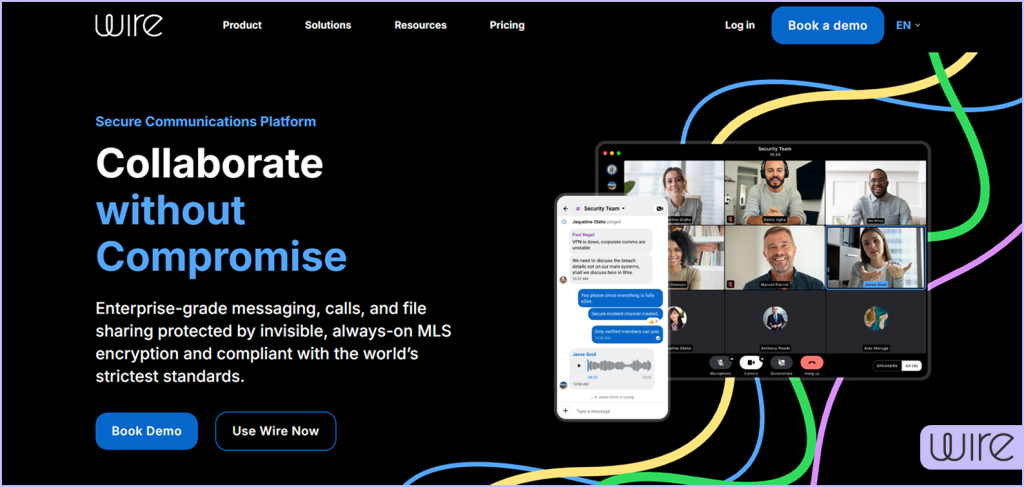
Wire is a secure and simple app that is perfect for personal or business usage. Wire’s home office is in Switzerland, which has very tough regulations protecting people’s privacy. It claims to offer enterprise-grade messaging, file sharing, and calls.
Wire uses its open-source encryption protocol, Proteus, ensuring that all messages, voice calls, and video calls are end-to-end encrypted by default. It is designed as a highly secure, collaborative platform for team communication and file sharing.
Being based in Switzerland means it is outside the U.S. or U.K. surveillance law. Wire’s code is open source and has undergone public expert audits.
9. iMessage
- Website: https://support.apple.com/messages
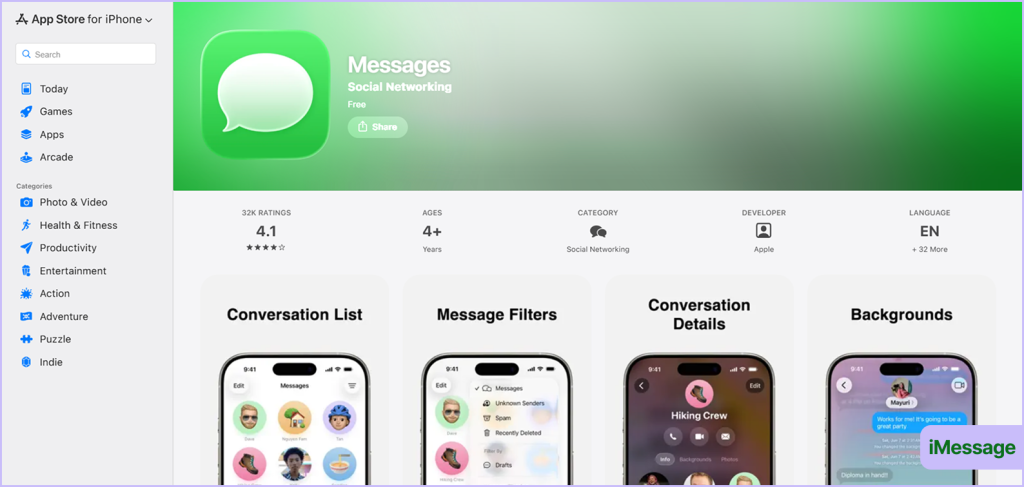
For Apple users, iMessage is a secure and easy-to-use solution. However, it has the biggest downside in its security: iMessage only works when you are texting Apple users. If you message an Android user, it will be a plain, unencrypted SMS.
When you send someone a message from an Apple device, it is end-to-end encrypted, and even Apple can’t read your messages. But if you message a user on a device that is not an Apple device, then the message defaults to an SMS (and is unencrypted, so it could be intercepted).
It’s really well integrated into the Apple ecosystem, and it works across all your Apple devices very well. There are several built-in features, such as disappearing messages, backup security, and a wide selection of stickers and special effects.
10. Silence
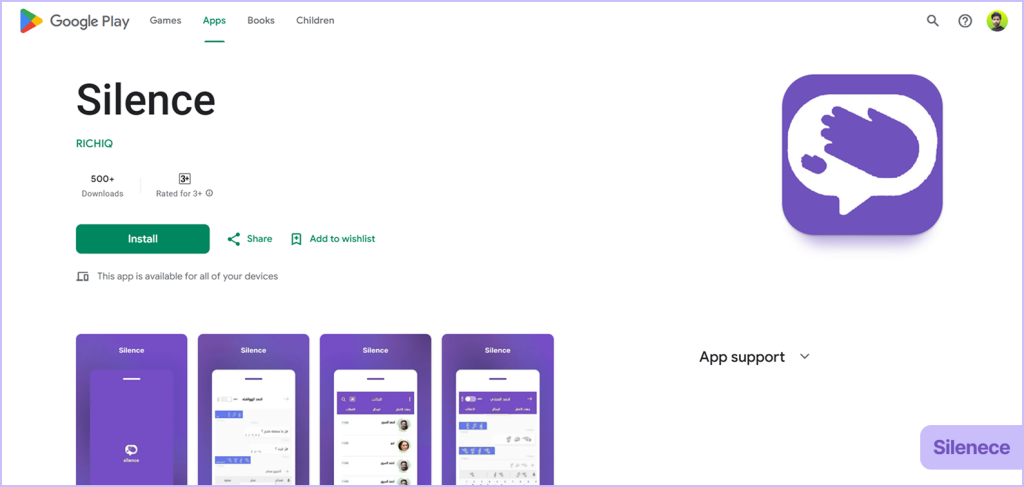
- Website: Silence on Google Play
Silence is a minimalistic Android messaging app that has one job: to securely encrypt your standard text messages (SMS/MMS). It works very well for those who want to send an encrypted message but are not connected to the internet.
The secure texting app works by replacing your phone’s default messaging service. It utilizes a strong encryption protocol in order to encrypt your messages. If the person you message also has Silence, the messages will be encrypted. If they don’t, the message will go through as a typical, unencrypted text.
The app has a unique selling point for people who travel to areas with poor service. The app is open source so that your favorite security researchers can look through the source code to identify weaknesses.
Best Private and Secure Messaging Apps: Comparison Table
| Feature | Signal | Telegram | Threema | Viber | Facebook Messenger | Wickr | Wire | iMessage | Silence | |
|---|---|---|---|---|---|---|---|---|---|---|
| End-to-End Encryption | Default | Default | Optional (secret chats) | Default | Default | Default | Default | Default | Default | Default |
| Open source | Yes | No | Client only | Yes | No | No | Yes | Yes | No | Yes |
| Requires phone number? | Yes | Yes | Yes | No | Yes | Yes | No | Yes | Yes | Yes |
| Provides transparency reports? | Yes | Yes | Yes | No | No | Yes | Yes | No | Yes | No |
| Collects user data? | No | Yes | Yes | No | Yes | Yes | No | Yes | Yes | No |
| Has hashed personal info? | Yes | No | No | Yes | No | No | Yes | No | Yes | Yes |
How to Choose a Secure Messaging App
Choosing a messaging app boils down to simply not choosing one with a sleek design or that your friends are using; it is about security! It is identifying what apps are genuinely protecting your privacy, and the ones that give false hope of security.
- Look for end-to-end encryption (E2EE): This is the most important non-negotiability! In other words, only you and the person you’re messaging with can read your messages.
- Check app jurisdiction: The jurisdiction of the company could matter when it comes to your privacy. Look for companies based in countries with privacy laws, such as Switzerland.
- Use one with open-source code: An open-source app means security professionals can analyze the code for concerns like vulnerabilities and backdoor-breach targets, rather than having to trust that the company “says” there aren’t.
- Mind the metadata: It is still easy to collect lots of data about who you talk to, even when E2EE is in place. A genuinely private app allows for this “metadata” to be captured as little as possible.
- Require transparency reports: A reliable company should regularly publish ongoing transparency reports that explain how it reacted to the government requests for user data.
- Think of anonymity: Some apps, such as Threema, are registered with no phone number or email sign-up, which adds another layer of privacy.
What Characterizes a Messaging App as Secure?
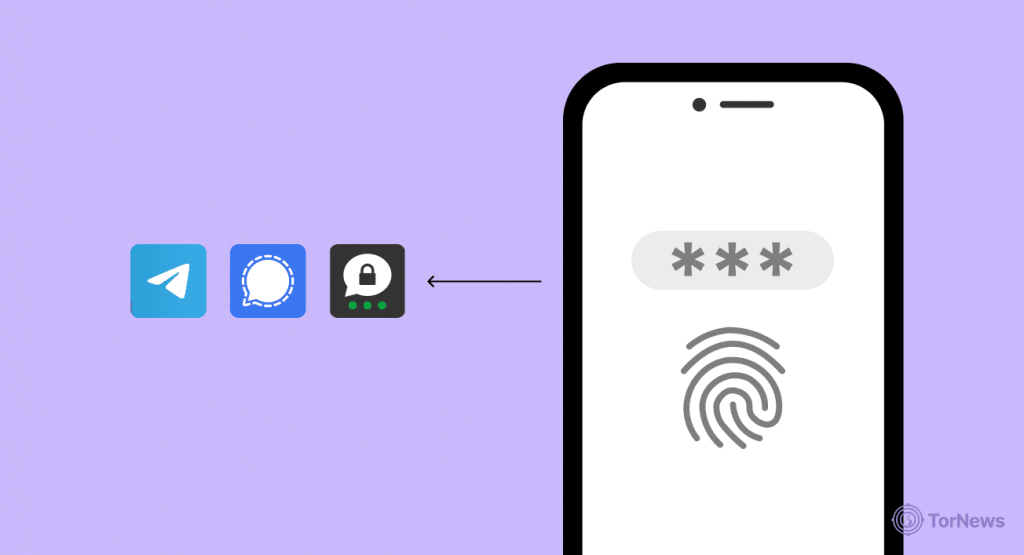
Having identified these variances, it’s time to discuss the technical aspects of messaging applications that would need to be secured in a technical sense. This is a set of features that will differentiate them from mere chat apps, with the “security word” in it.
End-to-End Encryption (E2EE)
This feature is too important and must be present in a secure messaging App so users will have confidence when sending messages. It’s actually a pretty basic idea; here’s a way to think about it: you write a message, you put it in a box, and you seal the box so it cannot be opened, and the only key that could open that box is in the possession of the person you are writing to. That’s E2EE.
The message is encrypted on your device and is only decrypted on the device of the intended final recipient. No one in between can read it – not even the company that manages the app. It’s what makes your chats a private conversation rather than a public one.
Encryption Protocol
E2EE is a general concept, but what actually makes it happen is the code for an encryption protocol. The Signal Protocol is regarded as the gold standard for E2EE.
The protocol is open-source; anybody can review it to verify that it doesn’t have any backdoors or issues within it. Many of the applications on this list (including WhatsApp) are using some level of the Signal Protocol. A different, less-audited protocol is not necessarily problematic, but the Signal Protocol is the most trusted for a reason.
Metadata Collection
Even if an app has E2EE, the company that runs it could still collect a significant amount of information about you: this is called metadata. Metadata is just as bad as the contents of the message.
Metadata includes things like:
- Who you talk to
- When you talk to them
- How often do you talk to them
- Your location
- Your device information
This data can paint a disturbingly detailed picture of your life, even without the actual message content. A truly secure app collects as little metadata as possible, or none at all. It’s the difference between a quick note for a service and a constant surveillance log.
Open-Source Code
Think of an app’s code like a blueprint for a house; if the blueprints are open-source, everybody can check the blueprints to determine whether the builders put away any secret tunnels or weaknesses. Obviously, this also means that independent security researchers and third-party security experts are going to be able to review the code for issues at all times, too.
When an app is “closed-source,” you have no idea what is hidden inside the code. You have to trust the vendor that there are no backdoors in the app. That is a hard assumption, especially with companies that have yet again shown a lack of honesty.
Anonymity
Some apps, like Signal, require you to sign up with your phone number, while others let you register completely anonymously without providing a phone number or email. For example, Threema and Wickr allow you to create an account without any form of authentication.
This is a very big deal in terms of untraceable messaging app users. When you don’t provide any personally identifiable information, your account cannot be traced back to you, even if the company faces a subpoena.
Tips on Securing Your Messaging App
A secure messaging app is not everything. There are extra measures you should take to protect yourself and your information. Use these safety tips to be safe and secure:
- Avoid clicking on suspicious links: Phishing and malware are everywhere. If you get a link from a stranger or if anything seems a little sketchy, don’t click it.
- Be careful on public Wi-Fi: Many Public Wi-Fi networks are unsecured or poorly secured. Hackers love to hang out on public networks. If you use public Wi-Fi, hackers can easily intercept your data. This is where a VPN can come in handy.
- Never share sensitive information: It doesn’t matter how secure your app is; it is best to avoid sharing sensitive information, such as passwords, credit cards, and social security numbers.
- Turn on a screen lock: Most of these apps do allow you to lock the chats with a PIN, fingerprint, or even Face ID. While this is a relatively simple step, it is a very effective way to protect the information in your conversations from anyone who obtains your phone.
- You should be using a reputable password manager: If you’re using a messaging app for business use or in a professional context, you should be using a strong and unique password for every account, and a password manager allows you to do this easily and securely.
Pro tip: Educate yourself on the broader landscape.
True digital privacy means understanding all layers of the internet—not just the safe ones. If terms like “Tor,” “onion routing,” or the “dark web” spark more fear than curiosity, it might be time for a grounded explainer. We wrote a straightforward, no-nonsense guide to the dark web (the hidden internet) that cuts through the myths and explains what it actually is, why it exists, and how it relates to the privacy tools we’re discussing here. Knowledge is your best defense.
The Most Popular Chat Apps in the World
Before we examine the safest options, let’s take a look at the most popular messaging apps by monthly active users. This provides some context for everything and to determine the apps that people are actually using, no matter how secure they consider the apps to be.
- In 2026, WhatsApp remains the leading messaging app with its expected user base of over 3.1 billion monthly active users. It has a very strong user base in countries like India and Brazil, where the usage rates are nearly universal. In fact, WhatsApp has captured more than 95% market penetration in several countries.
- WhatsApp clearly stands alone as a global mapping app, and Facebook Messenger, WhatsApp’s sibling app, has far higher usage in select regions. In the United States, for example, Facebook Messenger still has over 279.8 million users and is the market leader in North America in the messaging app space. Again, this indicates that while WhatsApp has penetrated the global messaging app market share quite effectively, consumers’ preference for messaging apps remains regionalized.
- Meta (the parent company of both WhatsApp and Facebook Messenger) owns two of the most popular messaging apps in the world, which means that a significant portion of the global internet population is using a messaging service owned by this parent company.
- In China, applications like WhatsApp and Facebook Messenger are inaccessible, which has permitted the local “super-app” WeChat to thrive with no competition. WeChat has become synonymous with daily life, with over 1.3 billion users, and everything from messaging to mobile payments.
- Telegram started as a niche app focused on privacy features, but has exploded to over 1 billion monthly active users in just a few years. While Telegram has a market of users globally, a large portion of its users come from regions like India and Brazil, which are also major markets for WhatsApp. This explosive growth indicates there is also a streak of preference for alternatives that have privacy features along with a robust platform.
The conversations surrounding instant messaging have changed. The focus has moved from simple popularity and ease-of-use to security & privacy-enhancing capabilities that users expect worldwide. If you care about security before floating to popularity, then keep reading.
Some Popular Messaging Apps Ranked by Monthly Active Users (in Millions)
Below is a list of the best messaging apps, by country, with the percentage of users on the Internet:
- WhatsApp: 3,100M
- Weixin / WeChat: 1,400M
- Telegram: 950M
- Facebook Messenger: 947M
- Snapchat: 850M
- QQ: 562M
(This data highlights the brutal reality that convenience often wins out over security, as apps with major privacy concerns like Facebook Messenger still have a massive user base).
Most Popular Chat Apps by Country
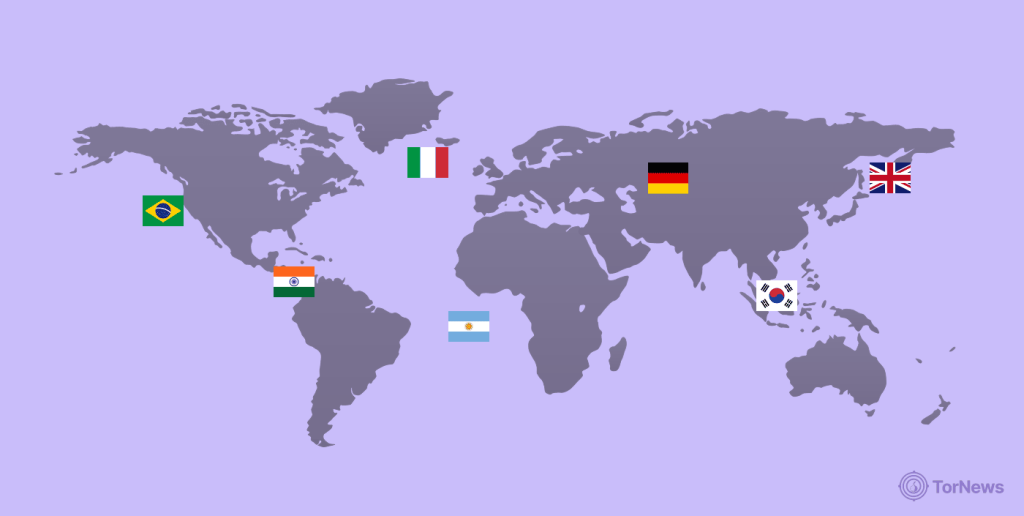
While WhatsApp has an extraordinary global reach led by a strong usage base in various geographical areas, WhatsApp is not the number one app in all of its markets. In fact, the chat app market is highly localized, with many apps thriving successfully within their specific regions. This information is useful to better understand user behavior and market dynamics.
Below, you will find the chat apps that are the most used by each country and the percentage of internet users in that country who will make use of the chat app in 2026.
WhatsApp: The clear market leader in a good number of areas:
- Brazil: 98.9% of internet users.
- India: 97.1% of internet users.
- Italy: 97.0% of internet users.
- Argentina: 96.0% of internet users.
- Germany: 95.5% of internet users.
- South Africa: 96% of internet users.
- United Kingdom: 88% of internet users.
WeChat: The super-app leader in China:
- China: has more than 1.34 billion people using it actively, especially in mainland China, with 81% of the population using WeChat.
Facebook Messenger: Popular in North America & some parts of Asia:
- United States: 58% of the population uses it, and it is the number one app for a good number of users.
- Philippines: 92% penetration and is the number one messaging app there.
- Canada: All-time high number of installs and active users.
Telegram: This has become very popular in Eastern Europe and the Middle East because of its emphasis on open channels and privacy:
- Russia: 64.4% of Internet Users.
- Iran: Still very popular even when blocked by the government.
Line: An East Asia superpower:
- Japan: With 86 million users, this is the top app, as more than 57% of Japanese smartphone users log in every day.
- Thailand: The market leader with a high user penetration rate.
The information shows the strong network effects created by these apps. When an app gets large numbers of people in a specific place, the numbers create major competitive barriers to the next hopeful player.
Why You Should Always Use a VPN with a Secure Messaging App
While end-to-end encryption is a powerful tool, it’s not a cure for all. So here’s the thing: a VPN is your tackle in the online world.
A VPN, or Virtual Private Network, encrypts the entirety of your internet connection and not just your chats. Your internet service provider (ISP), hackers, governments, etc., can’t see what you’re doing on the internet.
VPNs add an important layer of security that no amount of encryption from apps can provide. For example, if you are chatting via WhatsApp, your messages are E2EE, but your ISP can see you are connecting to WhatsApp and how often you are connecting. With a VPN, they can no longer see this information either. When you utilize a VPN, it will be nearly impossible for anyone to make your online activity a detailed chronicle.
So, no matter the encrypted messaging app you pick, just make sure you use your VPN alongside (our recommendation is NordVPN). This particular step is very important and will keep your privacy intact, especially when moving around online.
FAQs
Signal is widely regarded as the most secure messaging app because of its strong reputation for privacy and safety. Privacy experts and security advocates favor it because it uses an open-source, independently audited security protocol and collects almost no user data compared to other messaging apps.
The messaIs WhatsApp secure, even though Facebook owns it?
WhatsApp messages are secure because the app uses end-to-end encryption powered by the Signal Protocol. However, the main concern is Meta’s ownership — the company collects extensive metadata about your communications. While your chats remain encrypted, your usage data has no such protection.
Encryption is the process of scrambling data such that it is not readable. End-to-end encryption is a type of encryption that means only the sender can read a message, and the intended recipient can decrypt a message. In terms of data security, your phone encrypts everything, sends it to the intended recipient, and their device decrypts it, with no one in between holding the key.
The best private messaging app for couples is one that at least both partners are willing to use regularly. Signal is a good option with its default strong encryption, but if both of you are particular about anonymity, Threema is an even better messenger with no registration via phone. Additionally, it provides very secure communication for personal private information.
This depends upon your threat model. Some apps, like Signal, require a phone number, but do so in a way that limits the amount of metadata they collect about you. This offers a combination of importance to many users between security and usability. However, if you’re a journalist, activist, or other person who needs to hide their identity, then having even better options is key. In that case, Threema or other apps that don’t require you to register with a phone number are your best choice.
Apps like Telegram have optional E2EE because their business model has to store a chunk of user data on the server. This allows features like cloud backups and message syncing across devices, but it also weakens security because messages could be intercepted. A truly secure app will have E2EE on by default at all times for messaging and communication on the platform.