-
Police seized cryptocurrency and drugs, officers found Bitcoin, Ether, Binance Coin, Xanax, and MDMA during a search of a Saskatoon home.
-
The authorities confiscate 130 terabytes of data storage, the massive amount of digital storage suggests a large-scale operation that will take investigators months to analyze.
-
The police arrested a man for drug trafficking and possession of crime proceeds, but say the probe continues.
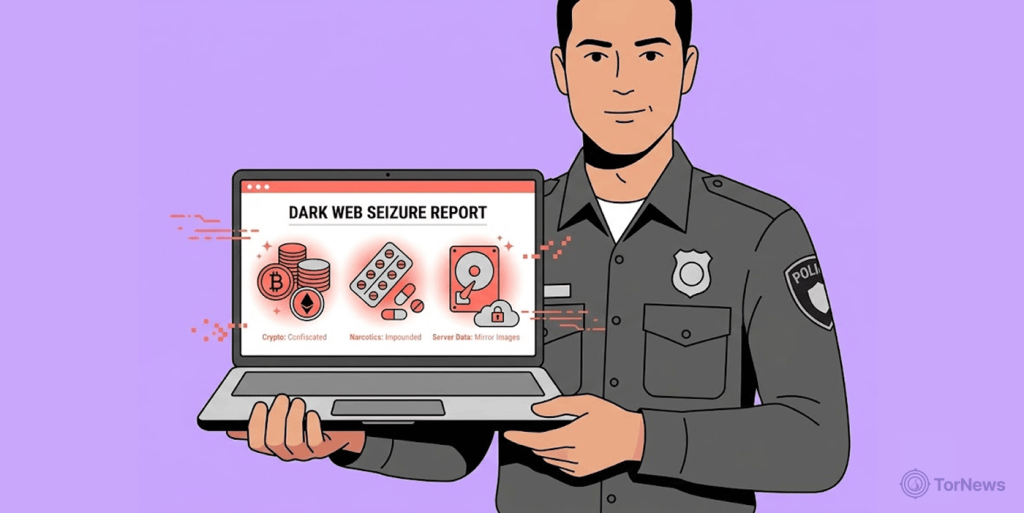
Saskatoon (the largest city in Canada’s Saskatchewan province) police have taken a 30-year-old into custody after conducting an investigation that revealed his involvement in drug deals and sales through hidden markets of the online dark web. The investigation also uncovered illegal drugs, cryptocurrency (digital currency), and a large volume of electronic data storage devices.
Members of the Cybercrime unit of the Saskatoon Police Service (SPS) carried out this operation, with assistance from patrol officers and the Digital Forensic Unit, in completing the search warrant.
The arrest occurred on March 31 at approximately 10 a.m. at a residence on Bateman Crescent – the SPS believes that the suspect was selling drugs via multiple encrypted and anonymous darknet marketplaces.
What Police Found Inside the Home
Officers walked away with a long list of seized items. They found Xanax and MDMA, two common illegal drugs. But the digital evidence tells a bigger story.
Police seized 0.447 Bitcoin, 0.007895 Ether, and 0.0989 Binance Coin; they have yet to disclose to the public the total value of this cryptocurrency. But even small amounts of Bitcoin can be worth thousands of dollars depending on when the suspect bought them.
The most unexpected seizure of all is 130 terabytes of data storage. That’s an extreme amount of data the criminals stored. To illustrate how large that is, 130 terabytes can store roughly 65,000 hours of video footage. Investigators now must sift through the totality of that data – this could possibly take several months or years to complete.
Police also grabbed assorted computer components. These likely include hard drives, laptops, and maybe even encrypted devices that dark web traders use to hide their activities.
How Dark Web Drug Sales Work
Dark web marketplaces operate like eBay or Amazon, but for illegal goods. Sellers list drugs, stolen data, and other contraband. Buyers use cryptocurrency to pay. The dark web hides both the buyer and seller through special browsers like Tor.
This case shows how police are getting better at tracking these hidden transactions. The Cybercrime Unit is specifically trained to track down the money trail made through criminal activities.
They work with highly qualified Digital forensics experts who are able to extract evidence from computers and other electronic devices, even if users of those devices attempt to delete or encrypt their files.
The 130 terabytes of data storage suggest this operation was not small. Most casual drug dealers would not need that much digital storage.
The authorities believe the suspect operated a large-scale business with client files, sales books and communication records through an extensive network of customers.
Charges and What Happens Next
Police charged the arrested suspect with two crimes, first, trafficking controlled substances, and second, possession of proceeds of crime over $5,000.
The investigation is still on. The authorities have provided no formal announcement regarding the name of the suspect. They also did not say whether they expected more arrests.
Police are still conducting their investigation, but they have not identified the suspect. There has been no indication whether or not additional charges or arrests would follow.
This bust reflects an increasing interest from law enforcement agencies to combat cybercrime that criminals perpetrate through dark web platforms.
A few years ago, there was a similar investigation in Saskatoon, it led to charges against several members of a large cocaine distribution organization operating over multiple jurisdictions through the use of encrypted phones and wiretaps.
The case involved cross-provincial coordination between Ontario and Saskatchewan and allowed the police to monitor and investigate this organization.
This pattern of multi-jurisdictional dark web drug investigations is also playing out in the United States, where four individuals were recently arrested in Indiana as part of a coordinated effort to dismantle online narcotics trafficking networks.
The case ultimately ended without a custodial disposition due to the defendants obtaining experienced legal representation. This current incident highlights how drug trafficking has now expanded beyond traditional methods of distribution to the use of online platforms.
Sellers no longer need to stand on street corners. They can operate from home, using computers and cryptocurrency. But as this arrest proves, police are learning to follow the digital trail.
