-
A court in Banda has sentenced a couple to death for sexually abusing minors and selling the records online.
-
The couple targeted young boys from poor homes and exploited their victims with food, gifts, and money.
-
In addition to the death sentence, the government is to pay ₹10 lakh to each victim.
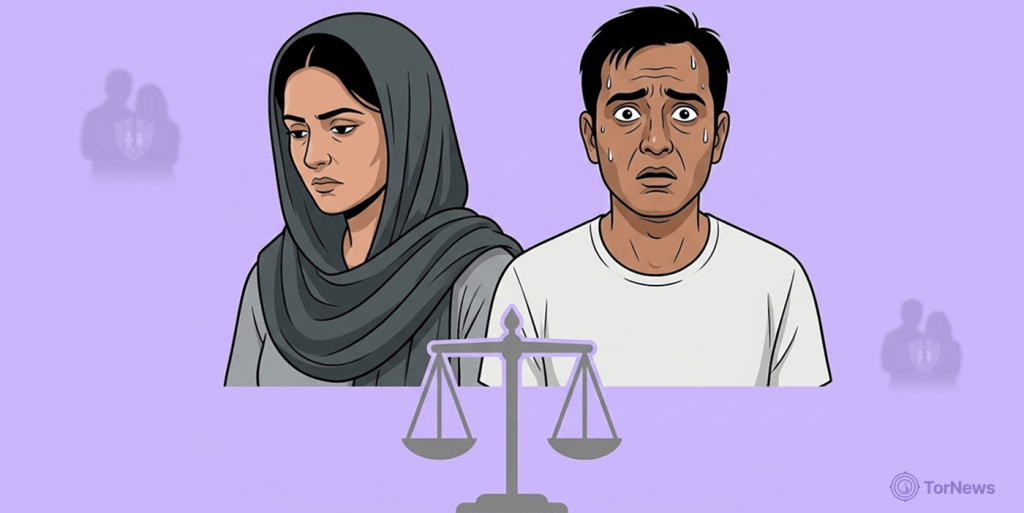
In Uttar Pradesh, a court found a former government engineer and his wife guilty of sexually abusing thirty-three minor boys for a period extending over 10 years.
In addition to abusing the children, the couple also video-recorded their heinous criminal acts and sold the videos online, including on the dark web.
The special POCSO court of Banda stated that this was a “rarest of rare” case in their opinion – a legal expression used to describe a crime that is so extreme that a punishment of life imprisonment cannot adequately punish the offender.
Between 2010 and 2020, Ram Bhawan (50) and Durgawati (47) targeted and abused boys from impoverished families in their neighborhood, some as young as just three years old.
In order to get the children to trust them first, the couple would entice them with money, food, cellular devices, and access to online video games, and then subsequently take the children into their home, where the abuse took place, while also documenting the offences via video using either cellular devices or other digital equipment.
How the Dark Web Was Used to Sell the Abuse Videos
The prosecutors proved in court that the offenders created the recordings not only for personal viewing but also to sell them for profit, widely sharing them on the internet, including on encrypted platforms and the dark web.
The dark web is a part of the internet that search engines do not index. Users access it through specialized software, and its anonymity often attracts illegal activities. Prosecutors estimated that as many as 47 individual countries had users who downloaded or accessed the recordings.
The case dates back to Interpol, the worldwide police force, when they began noticing the distribution of child sexual exploitation material on the dark web. Interpol tracked the material to a couple in the city of Banda, identifying the case as multi-jurisdictional. The Indian Central Bureau of Investigation (CBI) then took over the investigation and filed an FIR on October 31, 2020.
During the investigation, police collected digital evidence and electronic records. Doctors conducted medical evaluations on the victims, and authorities recorded their statements. The CBI filed its chargesheet for the couple on February 10, 2021.
Why the Court Called It a “Rarest of Rare” Case
According to the judge’s rationale regarding the conviction of the offenders, the prosecution included evidence from victim-survivors, medical professionals, and recovered digital media from the devices seized. The court found that the couple caused severe and significant physical and/or emotional harm to the victims through the use of abusive actions.
Several victims required medical attention due to the severity of their injuries, while many others suffered lasting complications, including crossed eyes and impaired vision.
The judge noted that all offenders committed their actions over an extended period of time, approximately. 10 years) against many child victims, describing the offences as systematic and extremely exploitative of the victims.
On February 20-21, 2026, the special POCSO court convicted the offenders of multiple offences under the POCSO Act and the Indian Penal Code. The judge stated he would impose the death penalty upon the offenders because there was absolutely no possibility of providing rehabilitative/reformative services; therefore, it would be one of the “rarest of rare” cases to impose the death penalty.
Compensation and What Happens Next
The Uttar Pradesh government is to pay ₹10 lakh (11,000 USD approximately) to each of the 33 victims, in addition to the death penalty to the accused. This compensation will help them recover and secure their future to some extent; however, the court applied the “rarest of rare” principle in this case, the same standard used to justify imposing the death penalty.
The case satisfied the principle’s criteria due to crimes against children, the global distribution of child sexual abuse material, and an extensive, decade-long pattern of abuse well beyond typical legal thresholds.
The accused has the right to appeal the sentence to the higher courts of India. The case highlights how dark web anonymity enables horrific crimes and reinforces the importance of cooperation between Interpol and local police to bring offenders to justice.
This international cooperation is equally vital in other dark web prosecutions, including the Florida drug trafficking case where U.S. and international agencies worked together to dismantle a criminal network and secure lengthy prison sentences.
