-
Caller-ID apps like Truecaller will share spam reports from users directly to telecommunications companies to increase the efficiency of blocking.
-
The sharing of complaints in real-time assists telecommunications companies in tracking down spammers, finding peculiarities in patterns through technology, and blocking troublemaking callers from calling people all over the country.
-
Companies that use AI-driven or automatic voice systems must register their numbers in advance; otherwise, their phone calls will be identified and marked as spam automatically.
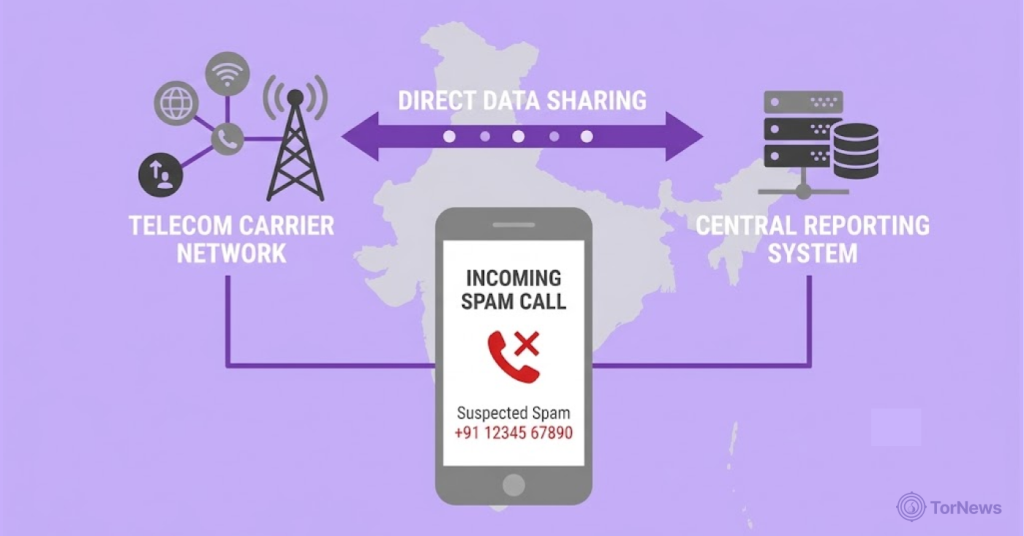
Indian telecom regulators have changed the way caller ID systems receive spam complaints from consumers. The new regulation requires popular application developers to send user-generated flagging data straight to licensed network operators.
The regulatory step seeks to unify various crowd-sourced complaint feeds into operator databases. Thus, operators will be able to monitor, identify, and stop suspicious or unwanted numbers better on their networks.
Direct Complaint Data Transfer Strengthens Carrier Anti-Spam Detection
According to amended regulatory guidelines, third-party identification services are not to store user reports in isolated databases. Organizations such as Truecaller must provide real-time flagging information to authorized network operators. As a result, engineers can quickly see the current trends in spam calls and fraud campaigns, as well as surges in unwanted commercial calls.
In addition, the combination of crowd-sourced reporting statistics with internal telecom traffic data gives birth to a trustworthy defense mechanism. Companies employ sophisticated pattern recognition methods to identify unusual call frequency and duration metrics. This allows network providers to identify dialing machines and suspicious callers even before consumers report breached incidents to regulatory organizations.
Moreover, the validation of data streams ensures spammers are unable to take advantage of information gaps between several service providers. In the past, bad actors switched network lines whenever a specific mobile provider blocked their caller identity. Now, cross-carrier data exchange ensures that reported numbers face immediate nationwide scrutiny across all active telecommunication networks.
Strict Mandatory Declarations Enforced for Automated and AI Voice Systems
The new regulatory framework covers the use of automated app-to-person voice technology solutions and voice generation systems. Companies using automated auto-dialers or automated telemarketing systems must declare their technical infrastructure with carriers. Companies must register every active outgoing number with the provider before starting their telemarketing campaigns.
Under these circumstances, any undeclared automated calls will immediately face a classification as unsolicited commercial messages. The operators will automatically block these undeclared robocalls and impose strict filtering policies. Non-compliance with the registration procedure will also result in serious administrative fines and immediate line termination.
Additionally, the regulation includes the use of AI systems for producing realistic human speech in telemarketing calls. Companies that use synthetic voice collectors are expected to indicate their automated status in the header of the system. The transparent registration process enables legitimate businesses to reach customers safely without triggering automated security blocks of the systems.
Technical Integration and Privacy Protection Protocols for Third-Party Apps
Integrating consumer apps with telecom systems requires secure data transfers and strict user privacy protections. Software developers build encrypted application programming interfaces to send spam reports without exposing personal user details. Thus, mobile users contribute to public network safety while keeping their personal contact lists confidential.
Meanwhile, centralized data sharing helps eliminate false positive flags that block legitimate business calls mistakenly. In previous years, malicious user groups could manipulate app-based voting systems to tag authentic enterprise lines as spam. Centralized verification lets carriers review actual network usage patterns before imposing permanent calling restrictions.
Official regulatory agencies such as the Telecom Regulatory Authority of India regularly observe carriers’ enforcement logs to maintain the integrity of the competitive markets. Also, transparent auditing prevents anti-competitive abuse and will ensure that network providers take quick action against real telemarketing violators. In the end, technical collaboration establishes a trustworthy, modern telecommunication framework for millions of daily mobile subscribers.
Nationwide Impact on Consumer Security and Commercial Outreach Standards
The new regulations on sharing information are becoming instrumental in changing consumer protection. It creates the right means of reducing fraud calls, phishing scams, and other types of financial attacks. Notably, fraudsters are frequently using auto-dialing systems to imitate bank officers and government professionals during their illegal activities. But combining live app reports with carrier blocking tools stops dangerous fraud campaigns within minutes.
AI-powered voice scams are also becoming a concern, with scammers using fake Apple Support calls to target people whose iPhones have been stolen.
Additionally, accredited telemarketing companies should use the designated commercial phone number series for reaching prospects legitimately. Contacting clients through authorized means guarantees proper call delivery and prevents inconveniences for clients who opted out. Thus, honest businesses are able to achieve a better conversion rate because they separate their calls from spam ones.
Finally, this forward-looking approach to regulation creates an impressive standard for telecommunication markets worldwide in their fight against the widespread use of robocalls. The advent of technologies utilizing artificial intelligence can now create low-cost voice streams.
This means the coordination between operators at the national level becomes of utmost importance for safety in the digital world. Unified operator action ensures modern mobile networks remain safe, dependable, and efficient for commercial and personal communication alike.
