-
The Everest ransomware group has listed Linebarger Goggan Blair & Sampson LLP on its data leak website.
-
The listing shares no stolen data samples, file counts, or details about the alleged incident.
-
The law firm has not confirmed the claim, so the situation remains unverified.
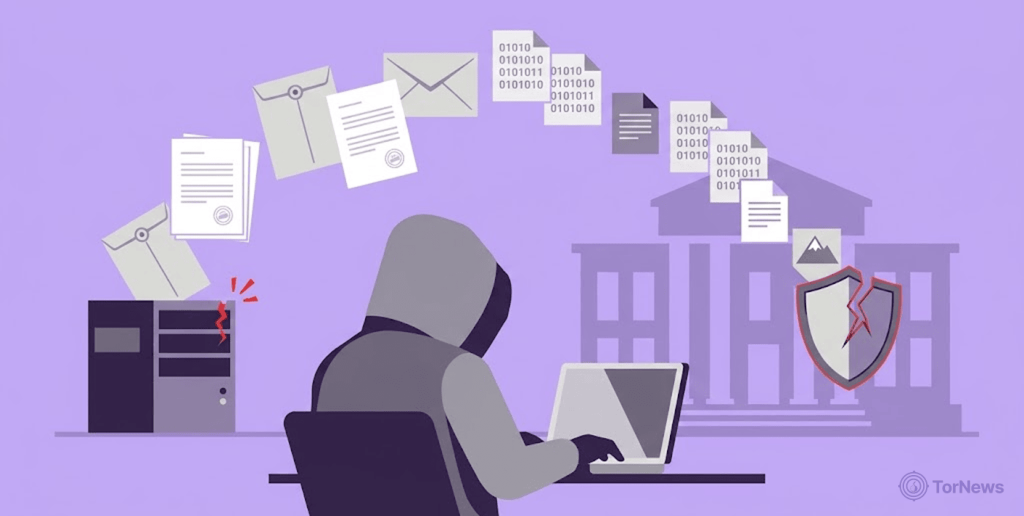
The Everest ransomware group has named a new organisation on its data leak website. The group listed Linebarger Goggan Blair & Sampson LLP, a US law firm that handles government debt collection. The Dark Web Intelligence account shared the claim in a post on X.
It described the firm as the latest organisation the cybercrime group allegedly targeted. A leak website is a page where such groups publish the names of their targets. So far, the claim rests on that listing alone.
Everest Names Texas Law Firm on Its Leak Site
The listing names the law firm, which is based in Austin, Texas. It gives no details about the alleged incident. According to the report, the group shared no data volume. It also shared no file list and no stolen data samples. The listing offers no date for the alleged incident either. Without these items, readers cannot judge how serious the situation is.
Nobody has independently checked the claim. The sources reviewed for this report contain no public statement from Linebarger Goggan Blair & Sampson LLP. A listing alone does not prove the firm suffered a cyberattack. It also does not prove that anyone stole information.
The firm’s official website says it provides collection services to public sector clients. Its work includes collecting government receivables. These include state and local taxes, fines, fees, and tolls. The firm also says it uses database systems and technology to manage confidential records.
These details explain what the firm does. They do not confirm a security incident. The firm’s work simply shows what kind of records it may handle. Those records relate to money that people and businesses owe to public offices.
Why a Government Collections Firm Raises Data Worries
The possible damage would depend on which systems attackers reached. It would also depend on what information, if any, they took or copied. Linebarger works with government agencies and handles collection accounts. A confirmed incident could therefore affect personal details of taxpayers, debtors, or other account holders. Files that belong to government clients could also face risk if attackers reached those records.
However, the reporting contains no verified evidence that any records were exposed. The type, amount, and sensitivity of any affected data remain unknown. No one has said how many people could be involved. No one has named any government client either.
Ransomware groups now use data theft to pressure victims into paying. The US Cybersecurity and Infrastructure Security Agency (CISA) calls this method double extortion. Attackers steal information first and then lock the victim’s systems. After that, they threaten to publish the stolen files.
According to CISA, some criminal groups skip the locking step. They only steal data and threaten to release it. In both cases, the threat of public exposure puts pressure on the victim. A similar extortion tactic appeared in a separate case involving Frost Bank and Citizens Bank, where a ransomware group threatened to leak data within six days.
A listing on a leak site can work as a threat against the victim. Still, a listing is not proof of a successful attack. It also does not prove that the group stole the listed organisation’s data.
What Reports Say About Everest and the Open Questions
Cybersecurity tracking records describe Everest as a ransomware and extortion group. The group has named victims in several countries and industries. These include professional services, healthcare, and technology organisations. Such records track claims made by threat actors. They do not confirm every claimed breach.
Many questions remain open for now. Everest’s listing answers none of them. The available information does not say whether Everest entered the firm’s network. It does not say whether the firm received a ransom demand. It also does not say whether anyone published the data or offered it for sale.
The claim needs checking from the law firm, its government clients, or trusted cybersecurity investigators. Until more evidence appears, reports should treat the listing as a claim. They should not call it a confirmed data breach.
Groups that manage sensitive collection records can lower their risk. CISA recommends several steps as part of its ransomware prevention and recovery guidance. These include keeping tested backups and using multifactor authentication.
Backups are spare copies of files stored safely, and testing shows they actually work. Multifactor authentication asks users for a second proof of identity when they log in. Teams should also watch for unusual account activity. They should prepare a plan for responding to incidents as well. CISA lists these steps in its wider guidance on stopping and recovering from ransomware.
The firm serves public sector clients, so any confirmed incident could matter to government offices that use its services. The situation remains an unverified allegation for now. Further reporting will show whether an incident really happened. It will also show whether any customers, taxpayers, debtors, or government agencies were affected.
