-
A vendor on the dark web is believed to be selling a 7TB database with databases with hundreds of thousands of datasets connected to the Chinese automotive financing industry.
-
Reports suggest that the compromised databases belong to Hangzhou Yuwei Technology and Hebei Juncheng Automobile Sales after the attempted extortion standoff.
-
Experts in cybersecurity believe that these reports require more investigation, despite the potential risks of fraud due to the leaked identification and credit data.
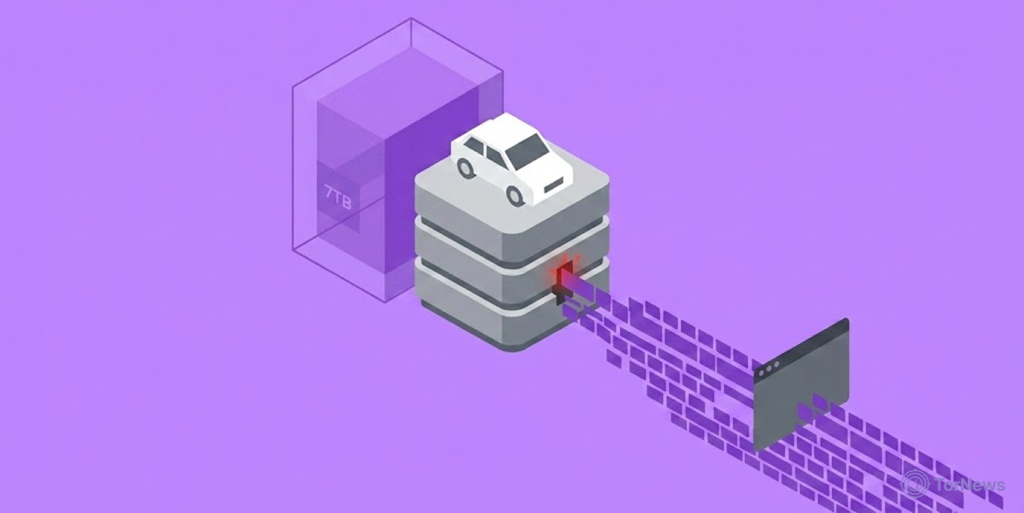
A dark web threat actor is advertising a massive database containing sensitive files from the automotive financing market of China. The seller asserts that the stolen repository spans seven terabytes of digital material from domestic motor sales networks.
The hacker claims the database holds 700,000 unique records containing complete identity portfolios and corporate agreements. Analysts note that extortion discussions between the cybercriminal and corporate executives broke down shortly before the public advertisement appeared online.
Specific Corporate Targets and Failed Extortion Discussions
The post in the dark web forum names two Chinese companies involved in the data breach. The seller gives the name of Hangzhou Yuwei Technology Co., Ltd. as well as Hebei Juncheng Automobile Sales and Service Co., Ltd.
The hacker mentions that he has contacted leaders of both companies in an attempt to privately negotiate payment. However, management of the companies refused to meet the extortion terms during these secret negotiations.
Thus, the angry hacker resolved to put the entire database for sale on underground sites. Cybercriminals tend to search for ways to sell stolen products in case their private negotiations go wrong.
Unprecedented Scope of Sensitive Consumer Documents
The advertised package represents an extensive inventory containing confidential identity documents and consumer contracts. The listing includes high-resolution national ID card scans, personal verification selfies, working phone numbers, physical residential addresses, and official driver’s licenses.
Furthermore, the threat actor claims to possess highly sensitive financial records collected during vehicle purchase applications. The compromised dataset allegedly holds personal credit reports, individual credit scores, property ownership certificates, real-estate deeds, and official marriage registration papers.
The seller also listed full automotive financing contracts, installment payment agreements, complete vehicle insurance policies, and annual coverage records. Security researchers consider this specific mixture of identity assets and financial history exceptionally dangerous for affected individuals.
Critical Security Analysis and Verification Challenges
Independent cybersecurity researchers urge caution because these dramatic dark web claims remain unverified by official auditors. The forum listing alone does not prove that 700,000 unique citizens suffered actual identity exposure during this incident.
Additionally, security analysts have not confirmed whether the advertised seven terabytes of files are completely authentic. Industry experts closely monitor underground forums for inflated claims because sellers frequently exaggerate breach numbers to attract wealthy criminal buyers.
If security teams validate this breach, the exposure will represent an extraordinary threat to consumer safety. Combining government identity documents with private credit information allows bad actors to execute devastating synthetic identity theft schemes and targeted phishing campaigns.
Furthermore, fraudsters can use stolen property deeds and credit histories to apply for fraudulent loans using victim names. Criminals routinely exploit high-value personal profiles to bypass automated fraud filters across commercial banking apps.
Contextualizing the Growing Consumer Security Challenges in China
China has been experiencing numerous huge cybersecurity problems in recent years due to poorly protected consumer data. Previously, cybercriminals have mainly attacked important government databases, one of which involved the breach of the database of Shanghai police.
The lack of secure cloud storage technologies results in exposing private data of consumer markets to the digital space. Foreign cybersecurity researchers previously discovered the enormous database of customer data of many Chinese users that was available to the public internet.
Therefore, Chinese regulatory authorities continue enforcing strict data privacy frameworks to curb corporate negligence. Regulators actively penalize organizations under the Personal Information Protection Law whenever companies fail to safeguard sensitive customer documentation.
The risks of automotive data exposure are not confined to China. In the U.S., fintech company 700Credit confirmed a breach that exposed the Social Security numbers, names, addresses, and dates of birth of 5.6 million consumers after hackers compromised a third-party integration partner and exploited an exposed API used by auto dealerships.
Businesses that work with personal identities have to adopt strong practices for cyber protection throughout their operations. Experts say that car dealerships and financial companies should employ zero-trust access measures, make use of database encryption, and regularly fix network servers connected to the Internet.
Broader Implications for Global Supply Chain Cybersecurity
The automotive supply chains depend strongly on many third-party services which puts the entire industry at high risk in terms of safety and security. Car dealerships, insurance agencies, and loan underwriters constantly share sensitive consumer documents across poorly secured communication channels.
Threat actors recognize that small regional vendors often lack advanced enterprise security tools. Hackers frequently target weaker peripheral service providers to gain lateral access to massive core databases.
Moreover, automotive financing portals handle vast amounts of personal verification data every single day. Weak access controls on dealer software platforms create primary target opportunities for sophisticated international hacking groups.
Experts in the security field advise that organizations apply multi-factor authentication protocols rigorously for everyone who has access to any sensitive network. Companies should perform regular, constant audits on third-party security to make sure that every third party complies with the central cybersecurity regulations.
On the other hand, modern companies have to keep all their incident response procedures constantly updated. This move helps them react quickly to any potential leaks. This means that the sooner they isolate compromised servers, the lower the risk of stolen information will be.
Additionally, stopping large-scale data breach incidents is only possible through constant vigilance, employee training, and monitoring across all enterprise networks.
