-
A dark web actor claims to have leaked Bayut records, including full names, passwords, phone numbers, emails, IP addresses, and physical location data.
-
The alleged breach includes highly sensitive documents such as passport images, UAE Golden Card scans, and property ownership title deeds, creating a full identity exploitation package.
-
Real estate data breaches enable sophisticated fraud schemes including property title fraud, fake KYC submissions, and targeted phishing campaigns against wealthy property owners in the UAE.
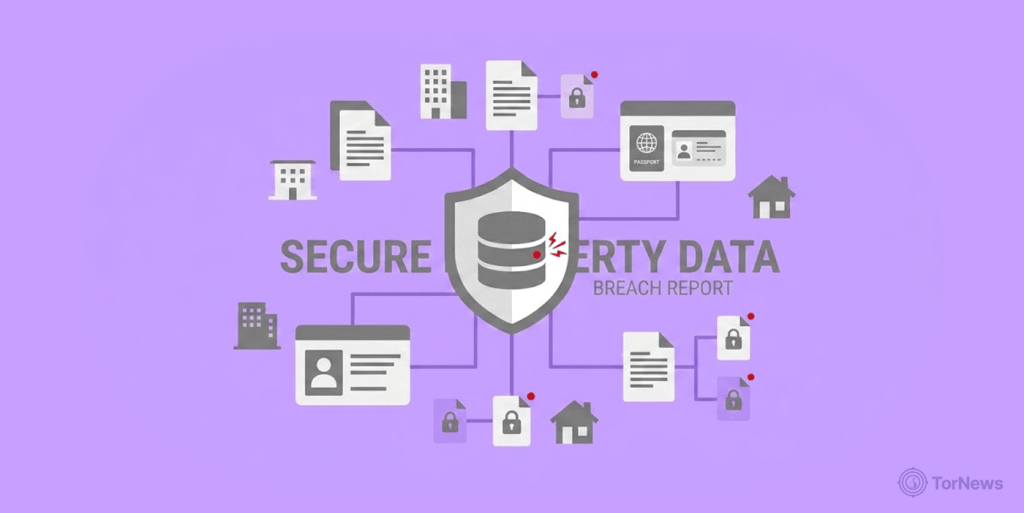
A dark web threat actor who identifies himself as the ‘attackercompany’ claims he leaked a massive database that allegedly belongs to Bayut, one of the largest real estate sites in the United Arab Emirates. The stolen data reportedly includes some very privileged personal and financial information that contains about 986,000 records.
The compromised datasets allegedly include full names, usernames, password hashes, mobile numbers, email addresses, WhatsApp contacts, IP address logs, home addresses, and postal codes. More concerningly, the actor claims to have passport pictures, photos of UAE Golden Cards, and evidence of property title deeds.
If authentic, this data breach would rank as one of the most sensitive real estate data exposures ever recorded. The combination of identity document, property ownership, contact data, and account data combination reflects what researchers labeled a ‘full identity exploitation set.’
Passport Scans and Property Deeds Elevate Breach Severity
The potentially damaging information that the threat actor released is significantly more severe than a typical data breach that consists of an email address and a password. The addition of passport scans, Golden Visa cards, and real estate property deeds elevates the risk of identity theft.
Cybercriminals can use the data in many nefarious ways, including bypassing identity verification, creating fake KYC submissions, committing financial fraud, engaging in synthetic identity creation, and conducting targeted phishing campaigns using luxury goods.
The value of the real estate datasets in underground illicit markets is substantial. Bad actors can use the information to target high-net-worth individuals, commit real estate fraud, steal identities, commit business email compromise, commit SIM swaps, and conduct social engineering against both property owners and real estate agents.
Many factors make the UAE’s real estate sector an attractive target for threat actors. These include the fact that this region has a high volume of international investors; large-value financial transactions; the visibility of wealth; a large number of processed documents via workflow; and the existence of substantial customer databases through which potential clients could be located. Because of these reasons, threat actors consider property platforms to be prime targets for cyber-attack.
The shift from data-stealing attacks that focused solely on email addresses to a new attack form that contains passport scans, Golden Visa cards, and property deeds is no longer simply a data breach. The resulting data now represents a complete identity exploitation package that cybercriminal organizations can monetize in multiple ways.
Other dark web listings are equally concerning. A separate advertisement offers data of 26 million individuals across the U.S., UK, and Australia, proving that complete identity packages are becoming the norm in underground markets.
Real Estate Data Breaches Enable Sophisticated Fraud Schemes
Real estate platforms store some of the most valuable personal information available anywhere. Property ownership records reveal wealth status and asset locations. Identity documents provide everything needed for KYC bypasses. Contact information enables direct targeting of wealthy individuals.
Criminals can use stolen property deeds and ownership records to conduct real estate fraud schemes – they might attempt to transfer property titles or take out loans against properties they do not own. The combination of identity documents with ownership records makes these schemes more convincing to financial institutions.
Golden Card images and passport scans allow attackers to bypass identity verification systems. Many financial services and government platforms rely on document uploads for verification. Stolen images can help criminals create fake accounts or access existing ones.
The alleged breach highlights the unique risks facing the UAE real estate sector; the industry’s reliance on extensive documentation creates more opportunities for data exposure. International investors may face additional risks because they cannot easily monitor UAE-based credit or identity systems.
Organizations and Users Should Take Protective Measures
Organizations handling real estate and residency-related documentation should take immediate protective steps. Companies should encrypt sensitive document storage and isolate KYC systems from public infrastructure. Security teams should audit cloud storage exposure and monitor for credential abuse.
Implementing multi-factor authentication across agent and administrator accounts provides essential protection. Limiting access to documents should restrict the amount of exposure in the case of a breach with role segmentation. Organizations should perform security assessment reviews regularly to identify and patch weaknesses in their systems prior to exploits from attackers.
All users need to independently take additional steps to protect themselves after the alleged breach has occurred, look out for any odd phone calls or messages claiming to be from a real estate agent or local government official; always exercise caution regarding any KYC and document requests, especially those that come unexpectedly.
If the same password appears to be in use on other online platforms, rotate that password immediately. Watch for phishing attacks that appear as banks, brokers, and other UAE governmental agencies. Users who submitted passport images or Golden Card applications to Bayut should consider additional identity monitoring services.
As of now, people should treat all claims as alleged until independent investigations confirm the breach. Security researchers are examining the authenticity of the dataset and the ability to verify whether there is a significant amount of actual data exposure.
