-
The Tor Project just introduced a crowdfunding campaign in cryptocurrency to fund internet privacy and freedom tools facing growing financial pressure.
-
The campaign uses quadratic funding, a model that rewards broad community support over large individual donations, with a $115,000 matching pool already in place.
-
Donations in Bitcoin, Ethereum, Zcash, Monero, and Golem are open until June 18, 2026, across 10 nonprofit internet freedom projects.
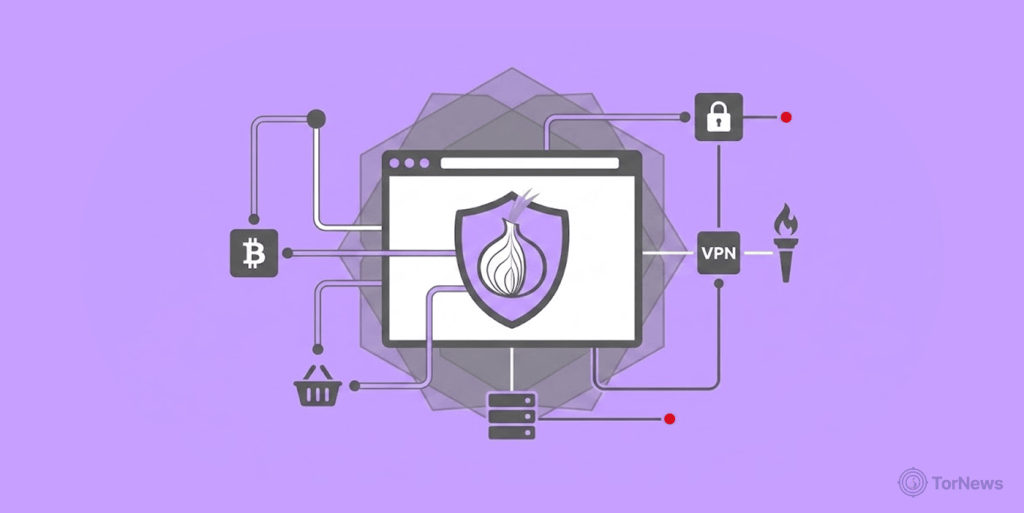
Internet freedom has been declining for 15 consecutive years, and the organizations fighting that decline are running out of money. The Tor Project wants to change that.
The nonprofit behind the world’s most widely used anonymity network just released a new crypto crowdfunding initiative with the intention of keeping privacy and anti-censorship tools funded and operational.
The campaign runs at internetfreedom.torproject.org and is also accessible as a Tor Onion Service, accepting donations through June 18, 2026.
A New Funding Model Built Around Community Support
The Tor Project partnered with Funding the Commons to build this initiative around quadratic funding, a distribution mechanism that prioritizes community breadth over donor size. Under this model, projects that attract many small contributors receive a larger share of the matching pool compared to projects backed by only a few large donors.
The campaign launched with a $115,000 matching pool, contributed by cryptocurrency and privacy-focused organisations including Cake Wallet, Zcash Community Grants, Logos, and Octant. According to the organisers, additional sponsors may still join before the campaign closes.
Accepted currencies include Bitcoin (BTC), Zcash (ZEC), Ethereum (ETH), Golem (GLM), and Monero (XMR). Supporters can donate directly to any of the 10 participating projects or contribute to the general matching pool through the campaign website or its Onion Service counterpart.
Director of “Funding the Commons,” David Casey, elaborated the model as a way for institutional funding to follow community priorities rather than donor concentration. According to Casey, any donation moves the matching pool regardless of size, putting real weight behind the projects Tor users depend on every day.
Why the Tor Project Says This Moment is Critical
The Tor Project is a nonprofit organisation best known for developing the Tor anonymity network, which allows users to browse privately and bypass censorship. Journalists, activists, whistleblowers, researchers, and citizens living under restrictive governments rely on Tor software daily.
The campaign arrives at a difficult moment for the broader internet freedom ecosystem. Many nonprofit organisations in this space are dealing with reduced funding and rising operational costs at the same time. The Tor Project warned that some projects have already cut staff, reduced infrastructure, or delayed development due to financial instability.
The organisation warned that internet freedom has fallen for 15 straight years as censorship and surveillance continue to expand globally.
Governments are also investing in dark web monitoring. South Korea has developed advanced technology to hunt dark web drug dealers, highlighting the ongoing tension between privacy tools and law enforcement capabilities.
The 10 Projects the Campaign Supports
The initiative currently backs 10 nonprofit projects working across internet freedom, censorship circumvention, and secure communication. Each one addresses a specific gap in the privacy and access landscape.
SecureDrop provides journalists and news organisations with a secure platform for anonymous whistleblower submissions. OpenArchive builds privacy-focused archiving tools for journalists, activists, and human rights defenders in high-risk environments.
OnionShare offers open-source anonymous file sharing and hosting over the Tor network. Ricochet Refresh delivers metadata-resistant instant messaging built entirely on Tor infrastructure.
Onion Browser brings Tor-powered private browsing to iOS users looking to bypass censorship. Open Observatory of Network Interference (OONI) tracks internet censorship, interference with traffic, and network shutdowns across the globe.
Paskoocheh (ASL19) provides anti-censorship tools and digital security education for users in restrictive regions. Unredacted supports circumvention of censorship via proxies, encrypted communications, and Tor relay services.
Miaan Digital Security Help Desk delivers internet freedom tools and direct assistance to users in Iran. Osservatorio Nessuno focuses on protecting activists, journalists, and civil society organisations through secure software and privacy-centred technical support.
The 10 projects form a tool network used by millions to communicate securely, access information, and avoid surveillance.
The Tor Project’s decision to use cryptocurrency and quadratic funding reflects a deliberate shift toward decentralised, community-driven support. With traditional funding declining, the campaign bets that users of these tools will help fund them.
