-
Hackers may have copied personal details of many Arizonans from the state’s court records.
-
People with current or past protective orders may have had their confidential addresses copied.
-
The court is working with the FBI and says it has no proof the data was shared.
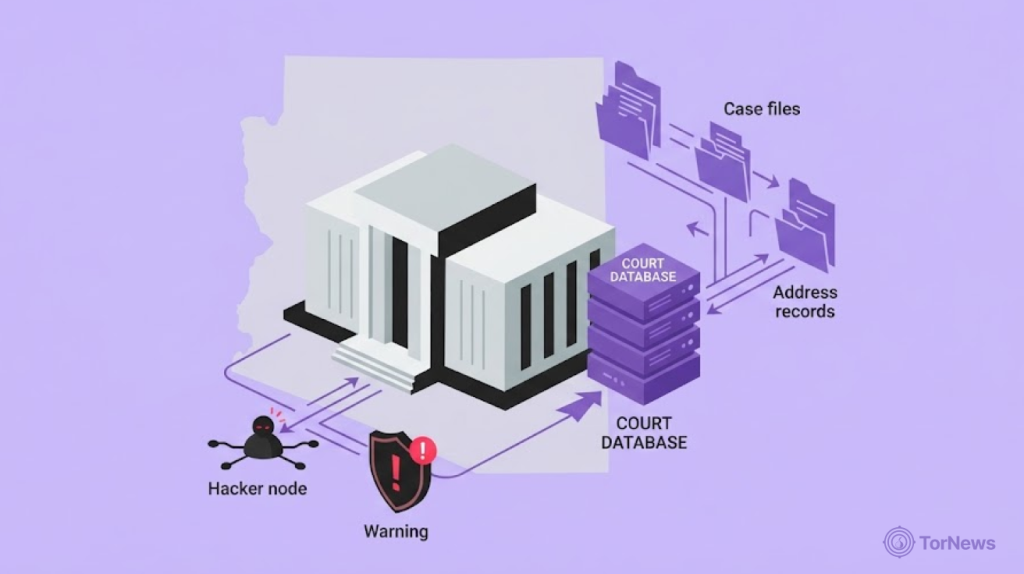
Arizona’s state court system has suffered a cyberattack. Hackers may have copied private details that belong to many Arizona residents. Some of those details may include confidential addresses linked to current and former protective orders.
The court calls the copied data personally identifiable information. That means details that can point to a real person. Court leaders say the hackers took it from court records.
Court Staff Stop the Attack and Warn of Copied Records
The Arizona Supreme Court announced the attack on September 25. Court information technology staff found the intrusion and acted to stop it. Officials believe criminal hackers or automated bots copied personal information from court records. The court’s Administrative Office, a part of the Supreme Court, has started contacting people whose details it thinks were copied.
It sent them an email that blamed criminal hackers or their bots. The email also said court IT staff worked to end the attack as fast as possible. The court also shared an important detail about the stolen data. Officials said it is unclear whether most of the copied information can be read easily.
The format of the data makes that hard to judge. Media houses reported that the court has seen no evidence so far that anyone else received the information. Officials also said the attack targeted court records broadly. Hackers did not aim at one specific person, according to AZFamily.
The same report says court officials believe the attack happened within about 36 hours before people received their notices. Chief Justice Ann Scott Timmer announced the news on Friday night. AZFamily published its first report the next day, on September 26.
Protective Order Holders Learn Their Locations May Be Out
The attack raises special worry for people who rely on protective orders to keep their homes private. Multiple media outlets reported on the notice sent to affected people.
According to that notice from the Arizona Court System, some people with current or past protective orders may have had their confidential addresses copied. The notice told each person that hackers likely copied details about them and their location. It also mentioned the address the court keeps on file.
The court sent it after regular business hours. It reminded readers that their address is confidential. It also admitted that no computer network is completely secure, according to AZFamily.
Courts issue protective orders to shield people from others. The media says these orders cover cases of abuse, harassment, and domestic violence. A protective order can also help someone keep an alleged abuser from learning where they live.
That makes an exposed address a serious matter for these residents. Our research found out that some of them fear the leak could put them at risk.
A second AZFamily story ran on September 27. In it, the outlet spoke with an Arizona woman who holds a protective order against an alleged abuser. She said learning that details about her location may have been copied left her feeling vulnerable.
A New Leaf helps domestic violence survivors get protective orders. According to AZFamily, the group confirmed that it had been alerted to the incident.
FBI Joins the Probe as Key Questions Stay Unanswered
The Arizona Supreme Court said it is working with the FBI. Investigators are trying to learn who carried out the attack. They also want to know how the attackers reached the court system.
Attackers can also use malicious browser extensions to target sensitive information, as shown in a fake Google Notes extension that steals cryptocurrency by swapping wallet addresses.
Timmer said she spoke with the FBI’s top-ranking official in Arizona. She also pledged the court’s cooperation with the investigation, according to the court’s announcement.
The court has not shared detailed information about the attack. Officials said more details could interfere with the investigation. They also said sharing them could create extra risks for the people affected.
The court has not said who is behind the attack. It has also not said how the hackers got into its system. Those answers now rest with investigators. Authorities have not given a final number of affected people. They have also not listed everything that may have been copied.
The court only describes the data as personal information about many Arizonans. Its leaders use careful wording in their warnings. They say they believe hackers copied the data, and they stop short of naming exact records.
Cybersecurity researchers and news outlets have covered the incident. Reports describe it as a breach that took data on many Arizonans. However, no official evidence shows that the attackers have posted or passed on the information, according to media reports.
The court asked people with questions to watch AZCourts.gov for official updates. Anyone who feels in immediate danger because of the incident should call local law enforcement. The investigation continues.
So far, officials have confirmed three main points. The court system faced a cyberattack. Personal information about many Arizonans may have been copied. Some confidential records tied to protective orders may be among them.
