-
A dark web seller using the name Darkode1 claims an effective method for viewing private Instagram posts and stories, he sells it for $500 in cryptocurrency with sales limited to just two buyers.
-
The threat actor references the defunct Postegro Lili service and describes existing market alternatives as scam, but security experts warn that such claims almost always lead to credential theft or malware.
-
Instagram maintains that no authorized method exists to bypass private account controls, the only legitimate way to view locked profiles involves sending a follow request to the account holder.
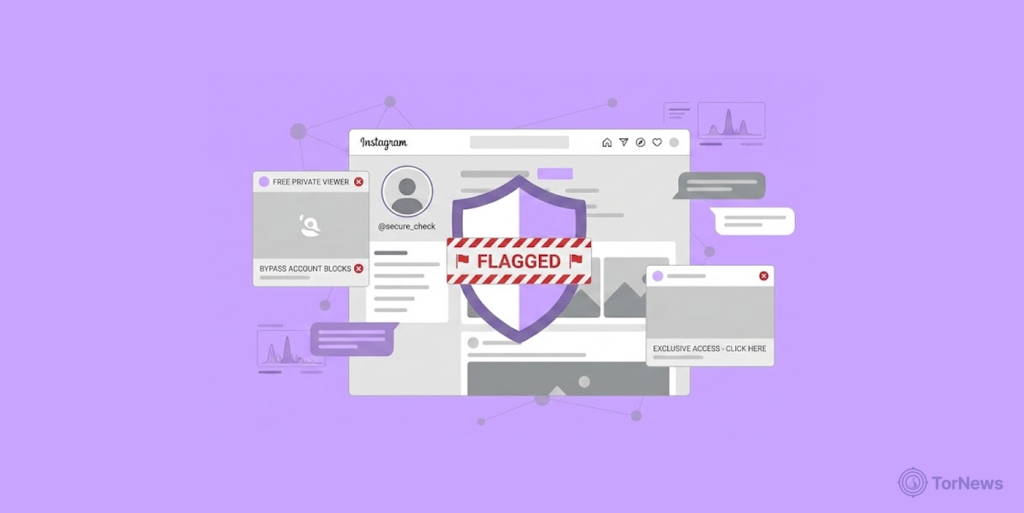
A threat actor on an underground forum claims to possess a working method for viewing private Instagram profiles. The seller advertises the technique as completely effective, allowing buyers to see posts and stories from locked accounts and even interact with the content.
The individual operating under the name Darkode1, described as an MVP user on the forum, offers the method for $500 paid exclusively in cryptocurrency. The seller deliberately limits sales to just two buyers, arguing that restricting distribution will delay Instagram from patching the vulnerability. All communication for the transaction must go through Telegram, the actor stated.
Dark Web Informer, which first reported the listing, included a prominent disclaimer that the claim has not been independently verified. Security experts routinely warn that similar promises of private account viewing almost always turn out to be scams or malware distribution schemes.
Seller References Defunct Postegro Lili Service
The threat actor specifically mentions the now-defunct Postegro Lili service in their sales pitch. That platform previously offered Instagram private account viewing capabilities before shutting down. The seller describes the current market as full of fraudulent clones of that old service.
According to the dark web listing, the actor positions their method as the only working alternative in a sea of worthless imitations. The seller claims to have discovered a genuine bypass rather than the typical survey traps or credential harvesting schemes that dominate this space.
Security researchers note that most tools promising private Instagram access fall into predictable categories. Some run endless survey loops that generate revenue while delivering nothing. Others steal login credentials by asking users to verify through their own accounts. Many distribute malware disguised as viewer applications.
The decision to artificially cap sales at two buyers raises immediate red flags for security analysts. Legitimate vulnerability researchers typically disclose flaws through official bug bounty programs – rather than selling limited access on dark web forums.
Instagram’s Privacy Controls Face Constant Pressure
Instagram provides its users with clear privacy controls so that they can limit their profile viewability to authorized users only. For example, users who have their accounts set to private can not only restrict who can see their posts, stories, and profile, but they also do not allow anyone who has no explicit authorization from them to see any of the information on the user’s account.
The dark web listing comes amid the wider privacy concerns surrounding Instagram. A data breach report about Instagram emerged in January, it alleged a compromise of approximately 17.5 million Instagram accounts. Also, the report claimed that the breached data includes usernames, email addresses, phone numbers, and physical home addresses of users.
Instagram has faced multiple security-related incidents recently. The platform had to address a password reset email panic, denying any data breach after users reported receiving unusual password reset notifications.
Meta, Instagram’s parent company, responded to that incident, stating that no internal systems had been compromised. The company attributed the issue to an external party sending password reset emails to some users. Meta maintained that no direct account access occurred during that event.
Instagram also removed end-to-end encryption from direct messages globally in May this year. However, the platform now only uses standard encryption which allows Meta to view the content of user messages as needed. According to the company’s spokesperson, most users chose not to use the encrypted feature, so the company chose to get rid of it altogether.
The decision received criticism from the Center for Democracy & Technology, as it believes users’ private communications will now be subject to surveillance and possible abuse. On the other hand, some child safety organizations applauded the decision due to their belief that using encryption would allow predators to go undetected.
Users Should Treat Private Account Viewing Claims as Scams
Cybersecurity experts consistently warn users that any tool or service purporting to permit access to private Instagram accounts is involved in a potential scam to steal your identity. As evidence, the Federal Trade Commission reported over 1.1 million identity theft cases in 2024 alone, and many instances of identity theft begin with curiosity-driven clicks on fake viewer services.
The only legitimate method of accessing a private Instagram account is to submit a follow request and await acceptance from the private account holder. Any website or application that promises otherwise violates Instagram’s terms of service and puts the user’s own account and personal data at risk.
Potential buyers should recognize that the $500 cryptocurrency payment offers no recourse if the method fails or steals their information, so security researchers strongly advise against engaging with such sellers, regardless of how convincing their claims appear.
