-
Hackers managed to sneak malicious code into scripts from Optimizely, the web testing platform. The tainted code ended up on websites belonging to at least 178 organizations on Monday, November 16.
-
The program exchanged crypto wallet addresses, stole card information from various checkout forms, and attempted to perform attacks on older iPhones. Researchers were able to follow the money trail and discovered around $7,000 in stolen cryptocurrency.
-
Optimizely has claimed that it has patched the breach but has not clarified how the criminals were able to gain access to the system. If you made a payment on one of those sites that day, check your statements for anything suspicious and make sure your iPhone is updated.
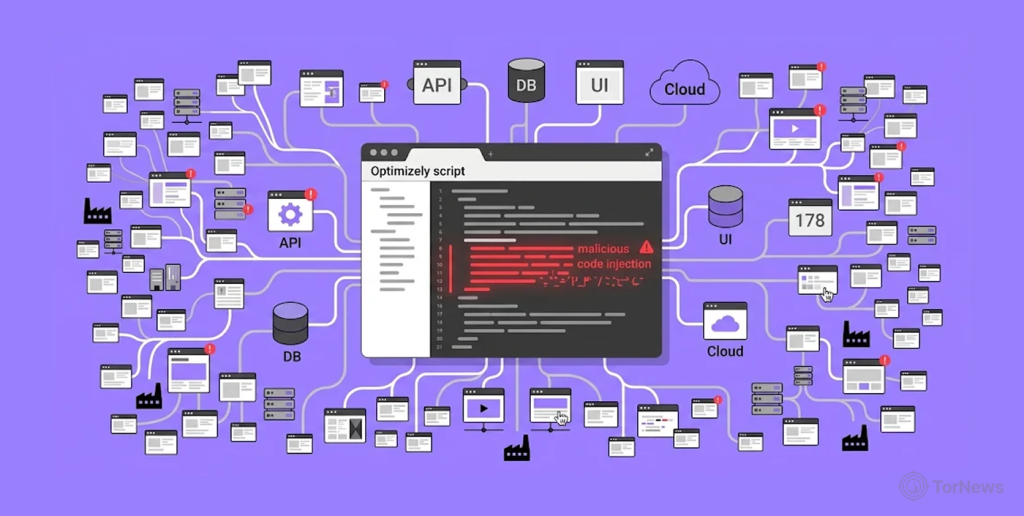
Cybercriminals turned a legitimate website tool into a means of attacking website visitors on Monday. The tool is provided by Optimizely, a company that helps other companies to test changes to their websites. The malicious scripts were embedded on CNN, the BBC, and Zoom.
How the Attack Worked
Optimizely is a company that produces software that facilitates the running of tests on various website versions. The company uses small scripts loaded from its servers. Hackers found a way to put their code into those scripts.
The script attack was difficult to detect since it came from Optimizely’s servers and was trusted by browsers. Some websites even upload the script, and such sites carry the code as well.
Optimizely posted a notice at 01:02 UTC on Tuesday. It said an attacker used a flaw in its Experimentation product to add harmful code to some customer projects. The company says it fixed the flaw and removed the code.
Several Organizations Reportedly took the Hit
Report URI, a security firm that tracks the scripts websites run, checked 1,611 Optimizely scripts. It found the code in 188 of them. Those scripts belong to 178 organizations.
The list includes CNN, the BBC, Zoom, Salesforce, GitLab, IKEA, HSBC, Equifax, Air France-KLM, Ledger and Peacock. Optimizely’s own website carried the code too. Report URI says the true number is probably higher, as it could only check the scripts it found in time.
According to media reports, Salesforce is looking into what happened. Equifax stopped using Optimizely and found no sign of a break-in on its own systems. Cynet researchers also said that a site showing the code doesn’t necessarily mean the site itself has been hacked.
What the Code Did
The code was after three targets. In the beginning, there was an exchange of the crypto wallet addresses. Site visitors who copied any wallet address or an address with a term like “deposit” or “wallet” ended up with the attacker’s address. Polymarket agreed to refund $3.9 million after a third-party attack affected 726 wallets, highlighting the risks external security breaches pose to crypto users.
Secondly, the machine started stealing card details. A skimmer added at 13:43 UTC grabbed card numbers, security codes, and card expiry dates from the site forms. However, it was unable to collect card details from other payment forms such as Stripe and Adyen. The number of cards that the attacker would have obtained remains unknown.
Finally, the last point of attack was iPhones or iPads. The code succeeded in launching the second stage, which contained two different kits to attack iPhones, called Coruna and DarkSword.
These two kits target iOS versions up to 18. Meanwhile, the code only grabbed device information on iOS 26. So, the researchers observed the delivery, but couldn’t confirm any actual breach.
The hacker’s wallets already accumulated around $7,040 by 19:25 UTC on Monday, all in just under nine hours. StepSecurity counted a total of $6,600 that went to the same addresses. StepSecurity analysts note two addresses that were active before the attack occurred, thus, not all transfers came from victims.
The Attack Timeline
Report URI found the first injection at 04:21 UTC on Monday in BBC’s script. The mass cleanup operation kicked off around 20:40 UTC. Hence, the script stayed active for about 16 hours before the cleanup operation started. At 21:52 UTC, the script was present only in TalkTalk’s script.
The cleanup process was not easy. Smartsheet’s script got cleaned, but got injected with the hidden version of the script later. It shows that the attacker continued to have access even then.
Optimizely leaves a lot of unanswered questions. It didn’t explain how the flaw worked, the number of affected projects, or when the fix arrived. It also doesn’t mention whether the attacker still has access to the system or what preventive steps or actions customers should take. In February, Optimizely disclosed a phone phishing attack that exposed business contact information. So far, no report has linked the two incidents.
What’s Next Now
If your visit to a site occurred on Monday, do the following:
- Update to OS version 18.7.3 for iPhone/iPad or something more recent and to OS version 26.3 or higher.
- Compare any crypto payments made on the same day against the address used.
- Keep an eye on your credit card statements, and change your card for any that you posted in one of the compromised sites.
Website owners must also respond to the breach. Search through all Optimizely projects for the phrase “1688360” or “atob(“, and search for any third-party code. Then check your permissions. Finally, ensure that the third-party payment service processes card payments within their payment frames.
