-
France has noted more than 550 verified cyberattacks in the course of this year, establishing a new national historical record on cyber incidents.
-
The attacked organizations represented a number of important government authorities, including the Ministry of Interior, emergency services (SDIS), public tax systems (DGFiP), as well as large private firms.
-
Cybersecurity professionals recommend establishing a zero-trust architecture and apply hardware-based authentication right away to protect government infrastructures.
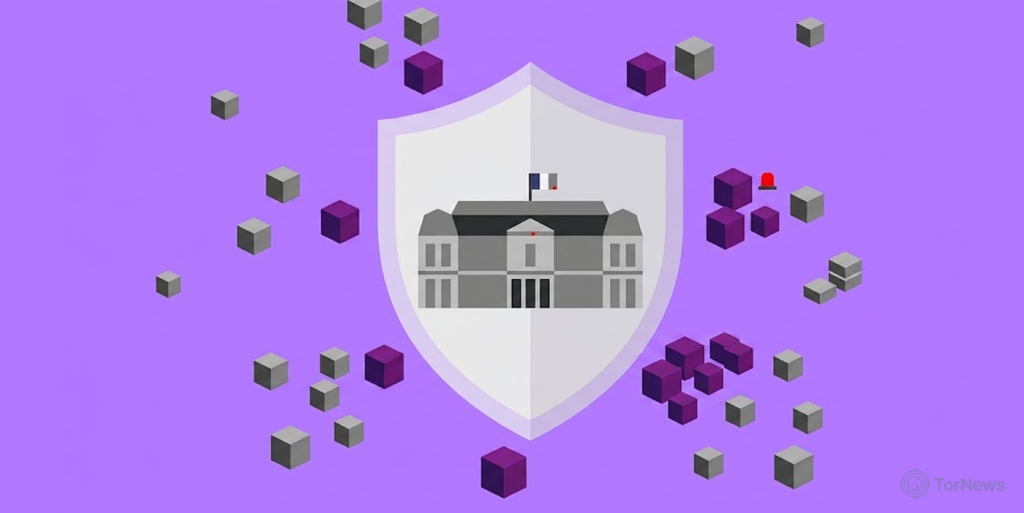
Cybercriminals have released an unprecedented spate of digital security attacks on France since the beginning of the year. Data leaks affecting several important public services, businesses, and sports organizations hit an all-time high.
According to tracking bodies, the reports are over 550 hacking incidents within eight months. The sharp increase in targeted attacks raises urgent concerns about national digital infrastructure stability.
Government Portals and Public Institutions Target Escalation
Hackers breached essential state institutions during the first quarter of the year. The Office Français de l’Immigration et de l’Intégration experienced security failures on its main foreigner registration portal in January. Official administrative services like Service-public.fr and Urssaf reported unauthorized system access during the same period. The breach exposed sensitive user credentials alongside personal files.
By February, the breaches progressed to the most sensitive defense, intelligence, and administrative institutions. The hackers attacked the machinery of the Ministry of Interior as well as the Ministry of Defense. The intruders also penetrated internal networks of the National Gendarmerie through the RESANA platform.
Civil aviation oversight body OSAC confirmed network anomalies. Also, criminal activity targeted research environments, including the Institut National de Recherche en Informatique et en Automatique.
Educational networks and local administration platforms faced severe disruptions in March as cybercriminals infiltrated the Ministère de l’Éducation, alongside the Agence Nationale de la Cohésion des Territoires. Student management databases under CROUS and medical network Cerballiance registered data leaks.
Educational cyberattacks are also rising in India, where schools and universities face over 8,000 attacks weekly, according to the Indian Cyber Crime Coordination Centre. Phishing, ransomware, and data breaches remain the top threats, fueled by growing digital reliance and third-party risks.
The police departments and weapon registry databases like the Système d’Information sur les Armes also reported unauthorized access. Security experts at the Agence Nationale de la Sécurité des Systèmes d’Information launched deep technical investigations to assess overall network vulnerability.
Widespread Infiltration Across Business and Corporate Infrastructure
Private corporations suffered massive data theft alongside state institutions. Logistics and human resource giants Adecco and Relais Colis reported early system breaches in January. Industrial contracting partner AXYON confirmed digital intrusions that affected operational connections with energy giants EDF, Engie, and Renault. Financial security provider Ledger also registered unauthorized database access.
Retail chains and telecom operators became high-value targets as the months progressed. Supermarket brand Darty and delivery carrier Mondial Relay suffered customer database leaks in February.
Major telecom provider Bouygues Telecom faced severe fiber network user record breaches in May, while regional transport system RATP and national statistics agency INSEE reported corporate directory leaks in June. Subsequent intrusions compromised high-street brands like Intermarché and car parts network FranceCasse by August.
With Cetelem announcing server hacks in May, violations have entered further into the financial and hospitality sectors. Booking websites for holiday groups Pierre & Vacances-Center Parcs, Gîtes de France, and MediaVacances underwent simultaneous breaches.
Achat-Or-Et-Argent also suffered information violations in June. Regulatory authorities like the Commission Nationale de l’Informatique et des Libertés made warnings regarding heightened risks connected to identity theft of the accounts of consumers.
Emergency Services and Civil Society Under Attack
Critical emergency response infrastructures faced direct digital assaults throughout the summer. Security incidents hit fire service organizations, including the Fédération Nationale des Sapeurs-Pompiers de France, while multiple regional emergency fire departments across SDIS 06, SDIS 51, SDIS 04, and SDIS 40 reported compromised communications. Municipal police networks in La Tremblade and Joinville-le-Pont suffered system lockouts in June.
Charitable organizations and humanitarian aid groups were not spared. Food banks like Les Restos du Cœur and Banque Alimentaire suffered system disruptions during early spring, while relief group Secours populaire français experienced server infiltrations in June. National athletic bodies faced similar threats, with breaches hitting national federations for tennis, rugby, athletics, skiing, and martial arts.
In August, DGFiP, the public tax service agency, and Santé publique France, the health service agency of France, confirmed a compromise of their respective systems. The public was concerned when sensitive tax information and health records were made available online.
This incident shows that there are some severe security flaws in the administrative systems of the government and raises pressure on government officials to adopt new measures to improve the cyber protection systems in the country.
Technical Analysis of Vulnerability Patterns
Security analysts connect the high rates of data breaches with the outdated security credentials that they are using, as well as their weak multi-factor authentication. Hackers mastered the art of using stolen administrative passwords for accessing secure portals without any alerting measures in the network. This means they could obtain countless citizen records while the technical upgrades in public databases are lagging behind.
Therefore, companies need to switch to zero-trust network access systems to prevent any further loss of data. They also need to substitute their outdated passwords systems with hardware security keys to limit the chances of identity thefts.
The state agencies concerned should regularly audit third-party suppliers. The technical reports from the ENISA European Cybersecurity Agency note that constant security monitoring is necessary to protect organizational networks against organized crimes.
