As you’re busy protecting what’s inside your network, cybercriminals are camping outside having their field day with your data. They steal your brand, impersonate your executives on social media, and sell your employees’ credentials at any chance they get.
You can’t protect against what you don’t see and traditional security tools like firewalls and antivirus won’t do much to protect you. They’re often looking the wrong way. The better solution? Digital risk protection, it’s your organization’s eyes and ears on the parts of the internet where attackers plot their next move.
In this guide, we’ll walk you through all you need to know about digital risk protection in cybersecurity and why companies like yours can’t afford to ignore it anymore.
What is Digital Risk Protection (DRP)?

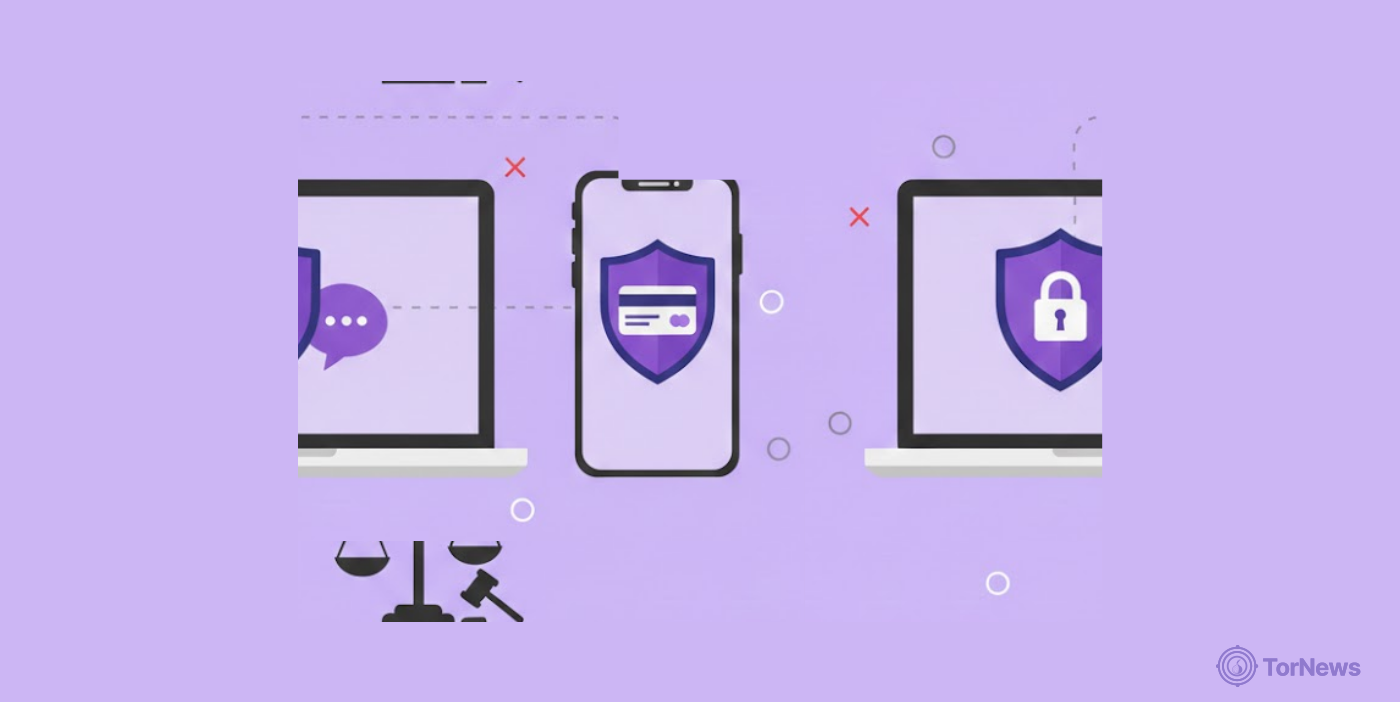
Digital risk protection (DRP) is a solution that helps security teams watch threats that live outside of their network’s walls. By outside, we mean the public internet, mobile app stores, social media platforms, underground forums, and also the dark web.
As opposed to traditional cybersecurity that guards your servers and endpoints, DRP is the watchdog that mounts outside the door, scanning external meeting points. You know, places where attackers convene to plan how to attack, where to attack, and trade stolen data. DRP works as your doorman spotting trouble and informs you before the trouble gets to your doorstep.
What is digital risk protection in cybersecurity all about exactly? DRP is not just one tool, but a combination of both technology and human know-how that monitors external spaces for you nonstop. What it looks for:
- Brand abuse: Fake websites made to look like yours, counterfeit apps, and social media accounts posing as your company.
- Data leaks: Your employees’ credentials, customer data, or proprietary data floating around where they shouldn’t.
- Phishing campaigns: Malicious domains created for the sole purpose of tricking your staff and customers.
- Executive targeting: Personal information about your company’s leadership that could enable attackers to carry out social engineering attacks.
- Threat intelligence: Early warnings about cyber crooks planning to target your company.
When it detects anything it lets you know immediately and you can make preparations to protect yourself. It gives you contextual insights into these external threats, shedding light into how actors operate, their tactics, and the methods by which they execute the malicious campaigns.
Here’s the summary of the whole thing: DPR systems aren’t just sitting around looking for threats. They blend sharp processes, real human know-how, and smart tech to actually get ahead of trouble, blocking bad stuff before it even has a chance to do damage. Whether it’s stopping malicious activity or yanking down harmful content, they’re on it.
How Does Digital Risk Protection Work?
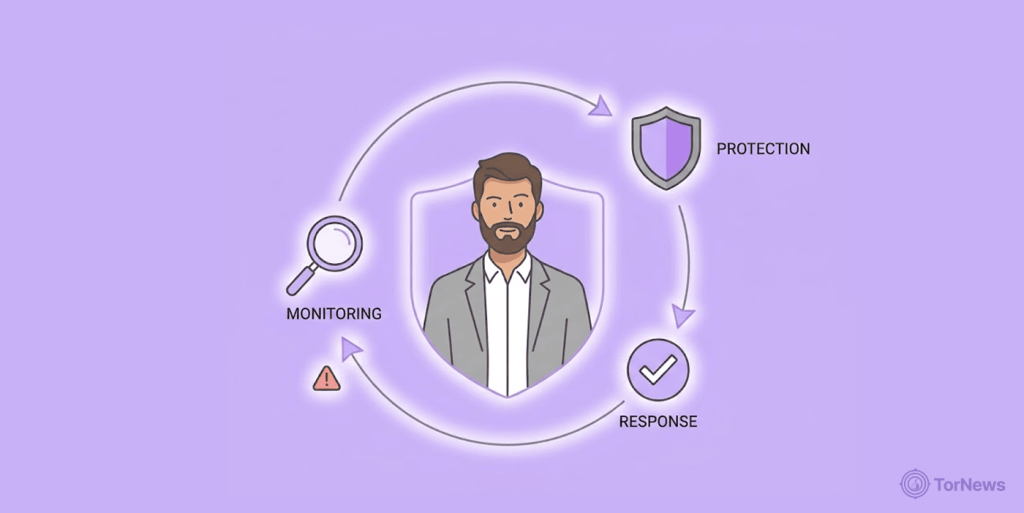
If you want to really get what digital risk protection is all about, you have to look past the jargon and see how it actually works. It’s not just one tool that does everything, rather a combination of technology, intelligence and action.
Visibility
You can’t protect what you haven’t found yet. DRP platforms begin by mapping out your digital footprint. That means everything: your main domains, all the subdomains and IP addresses you own, those official social media accounts your marketing team runs, your mobile apps, cloud services, even those random employee profiles on LinkedIn that mention your company. The list goes on.
This isn’t a manual process. AI-powered tools crawl the web non-stop, scooping up anything tied to your brand (logo, trademarks, names, etc) that’s visible to the outside world, and to attackers. Once the system finishes, you see the big picture, and sometimes it’s a surprise.
Suddenly, you’re spotting shadow IT, old domains you forgot about, or rogue social accounts you never knew existed. That’s the power of a real inventory.
Protection: Detecting Threats Before they Strike
Once you have the map, DRP tools keep watch 24/7. They monitor every layer to gather intelligence. Surface web monitoring. On the surface web, they look for lookalike domains, fake sites, and phishing pages pretending to be you. Someone set up “yourcompany-login.com” yesterday? You found out today.
Social media surveillance. Social media gets the same treatment. These platforms love to breed imposters, fake support accounts, scam giveaways, phishing attempts. DRP systems flag them before they snowball.
Dark web monitoring is where things get even more interesting. Digital risk protection vendors use advanced crawlers to scan shady forums, underground markets, and paste sites for stolen credentials, leaked databases, or cybercriminals plotting against you.
DRP also searches deep web sources such as invite-only forums, private Telegram groups, and closed communities where threat actors trade tools and share intel. DRP providers have spent years building the access and tech to monitor these places, too.
Let’s not forget the app stores; DRP monitors those, too. Fake mobile apps pop up all the time, using your brand to spread malware or steal logins. DRP catches these fast, before they hurt your reputation.
Paste site scanning. Paste sites are where hackers dump data that they stole. DRP scans these corners to get information quickly so that you can lock things down, as quickly as possible.
With AI and machine learning, all of those mountains of data are processed and just the most significant information is presented. Artificial Intelligence (AI) and Machine Learning (ML) assist in identifying threats to your company, while also improving their understanding of which mentions of your company are potential sources of threat.
Disruption Shutting Down Attacks in Progress
But spotting threats isn’t enough. You need to actually shut them down. That’s where disruption comes in and where DRP really earns its keep.
Automated takedowns remove malicious domains, phishing pages, and fake social profiles. DRP providers have connections with registrars and platforms, so they can get things pulled down fast, sometimes in less than a day.
They also submit blocklists, making sure bad URLs get added to browser and email filters. That way, your people and your customers don’t wander onto dangerous sites by accident.
Content removal isn’t just about websites. It covers fake reviews, fraudulent listings, anything damaging your brand. And when things get serious, DRP teams work with law enforcement. They build evidence, pass on intel, and help go after the attackers.
This ability to actually disrupt and shut down threats? That’s the difference between just knowing about a phishing site and getting it wiped out before it snares anyone. That’s what real digital risk protection looks like.
Why You Need Digital Risk Protection

Hackers aren’t sneaking into your network like they used to. These days it’s a simple case of logging in. One recent CrowdStrike report stated that 79% of attacks now make do without any malware at all. That’s like four out of five breaches just involving either login credentials or a phishing email that looks real enough to fool someone who’s already had three cups of coffee.
Why write complex exploits when you can buy a CEO’s login off Telegram for twenty bucks? Or clone a Slack notification template and wait for someone to click it? That email you received 5 minutes ago about an ‘urgent document review’? Chances are it’s a phishing trap.
Here’s the part that messes with security teams, attackers can walk right through. Your EDR sees normal login from a normal account and does nothing. Because there’s nothing malicious to see, just a valid username and password.
The Real Cost of Ignoring DRP
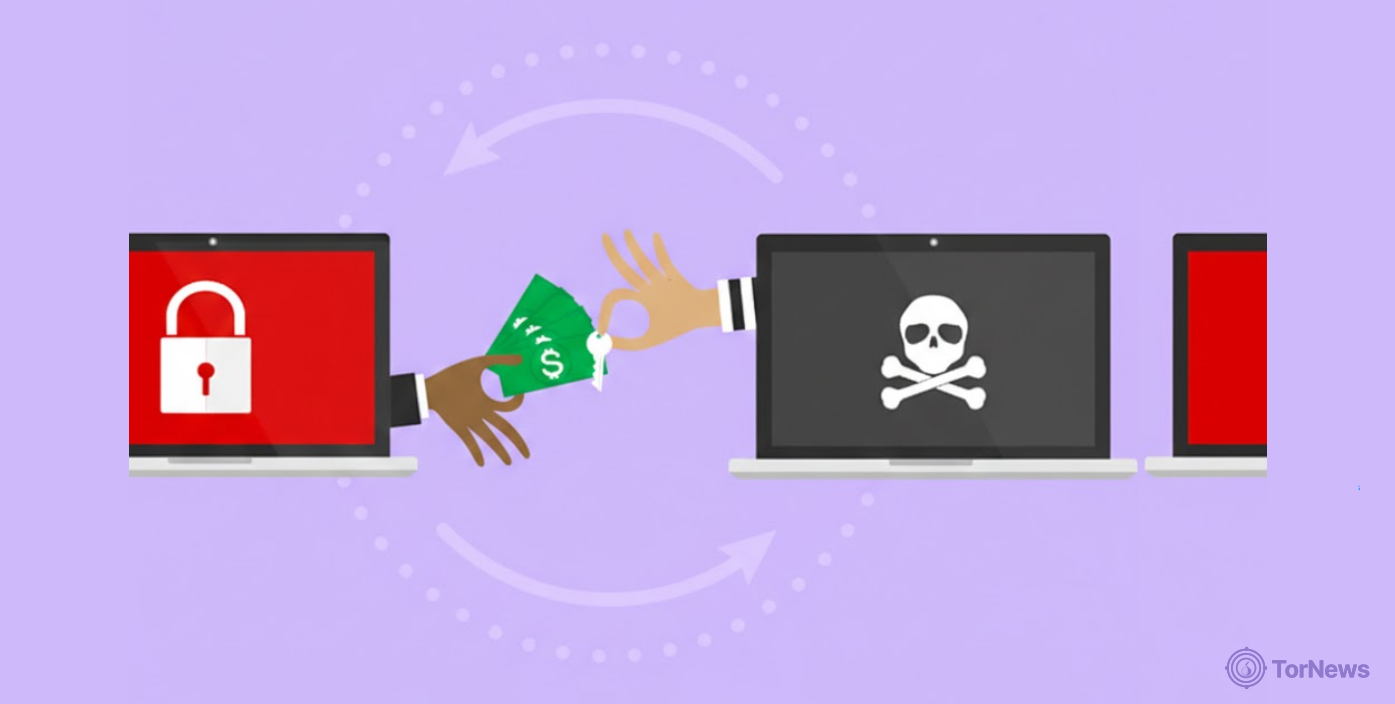
Look away from digital risk and here’s what happens. Let’s talk about the financial losses. One successful phishing email’s all it takes and your bank accounts empty out. Wire transfers you didn’t authorize start flying around. Ransomware hits and before you know it, nobody can access anything, operations grind to a halt.
The FBI’s Internet Crime Report revealed that BEC (business email compromise) attacks cost firms $2.9 billion. That doesn’t include what you spent on lawyers, regulatory fines, and the forensics team you call to figure out how the attacker got in.
Money damage stings, but reputation damage sticks. You can patch up the vulnerability on Monday morning, but once word gets out that ‘customer data exposed in breach’, you bet customers will be heading for the door. Trust will be in tatters, and winning them back might take years.
Some companies never pull through the blow. National Public Data couldn’t; it filed for bankruptcy after exposing 2.9 billion records. 23andMe followed suit breach leaked genetic data, trust gone, company gone. KNP Logistics Groups, Petersen Health Care, Nortel Networks all met a similar fate. These companies didn’t survive a breach and they probably won’t be the last; the list keeps growing.
We could keep going, but the goal here isn’t to scare you, but to let you see just how much blow data breaches deal on businesses and why you need digital risk prevention. Breaches kill companies. Might not always be immediate, but they could eventually kill.
Outside of the financial and reputational damage, regulatory headaches increase when your customer data leaks. Regulators will have your head for failing to protect private info of customers.
GDPR, HIPAA, CCPA, name them, are there to police companies and make sure people’s data is safe. Fail in that area and they come with hefty fines and mandatory breach notifications that’ll make your legal team grow grey hairs overnight.
Operational chaos ensues when you’re trying to respond to threats instead of preventing them. Your security team will be running helter, skelter trying to take down phishing sites, reset compromised accounts, and explain to execs and users how this happened.
And the worst part is, the attack surface keeps widening by the day. As more people go digital, it gives attackers more opportunities to launch their nets. Remote works, cloud services, social media presence, mobile apps, partner ecosystem, you name them. These are all creating new avenues for attackers. Traditional security tools? They weren’t built for this kind of threat so they simply cannot keep up.
DRP fills that gap by watching spaces where the threats emanate from, not just where they land. Now let’s talk about the part you’ve probably been waiting for.
Six Use Cases Where Digital Risk Protection Saves the Day

Now let’s be practical for a second because digital risk protection is something abstract, it has real uses in the real world. We witness these things playing out in organizations, big and small, on a daily basis.
Brand Protection: Catching Imposters Before they Cause Damage
Cybercriminals make it a duty to hijack reputable brands. They have all kinds of tricks up their sleeve, which they use to create an imitation of your brand. Register lookalike domains, create fake social accounts, and even cajole customers into sharing sensitive info.
Researchers recently found more than 150 cloned domains that attackers designed to look like real legal practices. Those sites quietly stole customer logins until someone caught on. If they hadn’t used DRP, those fake sites would’ve kept harvesting credentials for months.
DRP tools spot these fakes fast by constantly tracking new domains, social accounts, and app listings. So when threat actors reach out to your customers using fake ‘customer support’ tweets or emails, you’d get a heads-up instantly. Then you can move fast to block it before it does any real harm.
The goal is clear. To protect your reputation, prevent fraud, and avoid anything that’ll destroy trust and drain your bottom line. Because brand abuse hits both revenue and customer confidence. A study examined how common brand spoofing or impersonation is across industries over three years, and the result is mind boggling.
Top brands like Microsoft, Meta, Adobe, DHL, DocuSign, among others, were frequent targets of threat actors, with Microsoft accounting for nearly 93% of the emails observed, according to the research. And we’ve seen brand impersonation attacks jump 70% in recent year-over-year reporting, with money lost to Business email compromise and deepfakes surpassing $1.5 million.
Domain Monitoring and Protection
Phishing is one trick that works every time because the people targeted are often too busy and distracted to notice anything unusual. Attackers create domains like ‘secure-yourbank-login.com,’ send emails that look really official and legit enough to deceive busy employees.
Digital risk protection vendors stay ahead of this by scanning for new registrations: typosquatting, combosquatting, anything designed to look like your brand. When something suspicious pops up, DRP platforms alert you right away or initiate takedown procedures.
The best tools have deep connections with registrars and hosts worldwide, so they can kill malicious domains fast. That speed is everything, since phishing campaigns can launch within hours of a new domain going live.
Social Media Protection: Watching Your Back Online
Social media is an easy target for attackers. They’ll pose as your company, run fake promos, or pretend to be your execs to scam employees. Some just want to cause chaos and hurt your reputation.
DRP tools scan all the big platforms, Twitter, Facebook, LinkedIn, Instagram, and whatever’s next, for fake accounts, scams, phony ads, and malicious content. If someone creates a fake executive profile to launch a business email compromise attack, you’ll catch it early.
And it’s not just about fakes. DRP also picks up on real accounts that get hijacked, whether it’s your company’s official page or an employee’s profile that could be used for social engineering.
Executive Protection: Keeping Your Leaders Safe
Top executives are prime targets. Threat actors hunt for personal details, where the executive lives, their phone lines, travel plans, even family details. These are pieces of the puzzle – once solved can enable them to send those weirdly specific phishing emails, doxxing people, etc. It can sometimes even escalate to physical threats. We’ve seen reports of such cases before.
Reports show that a lot of Fortune 500 CEOs’ personal information floats around on the dark web. Sometime, one executive’s personal travel itinerary even leaked online, leading to a social engineering attack against their family members. It’s why you see some big shot business execs moving about with physical bodyguards.
Digital risk protection keeps watch by scanning the open web, social media, shady data brokers, and underground forums for any mention of your VIPs. If your CEO’s details pop up in a breach or someone’s plotting on a forum, your security team gets the alert.
This goes way beyond cybersecurity. It’s about protecting your people, not just your network, because the threat is real. One Kroll report found 89% of executives faced some kind of online threat or harassment, and more than a third had credible physical security worries.
Location protection and physical threat intelligence
This is where digital and physical security come together. DRP platforms track online chatter for anything targeting your offices, stores, events, or facilities.
Think about protests brewing on Twitter, threats posted in extremist forums, or even local incidents that could spill over to your workplace. DRP pulls this data together and gives your security team a heads-up. It’s valuable for companies that host big events, operate in high risk regions, or worries that activist campaigns could turn hostile.
Dark Web Monitoring
The dark web is the dump site for stolen data. Criminals convene there to buy and sell databases from breaches. The dark web also provides a meeting point where cybercrooks gather to talk and plot their next move. DRP keeps an eye on these hidden corners so you know when your information turns up. (For a deeper look at how dark web monitoring fits into your overall security strategy, read our full breakdown here.)
Digital Risk Protection Gartner Perspective: Industry Recognition

When people start tossing around the term “digital risk protection,” it’s easy to get lost in the jargon soup. But if you want to know what it really is all about, you have to look at what the industry analysts (like Gartners) have to say.
Digital risk protection Gartner reports been all over this technology, tracking how it has progressed for a while now. According to Gartner, digital risk protection services (DRPS, if you’re into acronyms) are a mix of fancy tools, services and nerdy experts working together to keep your company’s precious data and digital assets safe from external threats.
These services give you visibility across both the clear web, the deep web, and dark web and all those shady corners most people pretend don’t exist. They identify potential threats, size up the bad actors, and figure out their tactics and what they’re up to. Then they arm you up with this information.
Here’s the interesting part: one report Gartner published in 2020 says DRPS adoption is shooting up like it’s on rocket fuel. According to their analysis, back in 2020, hardly anyone was using DRPS, less than 1% of big companies, but they indicated that by 2025, 10% of large enterprises will have jumped on board. Why? Well, traditional perimeter security just can’t keep up with all the new ways hackers are getting creative outside the firewall.
What’s Driving the Growth?
A number of factors are the reason why everyone’s getting onboard DRP services. Broad use case support, DRPS isn’t just for IT geeks and security teams. It appeals to many departments. Legal folks, marketing teams, brand police, even the C-suite, they all want a piece. It’s the Swiss Army knife of digital security.
Then, there’s the accessibility for mid-market. Before now, it was only the Fortune 500 crowd that could afford this level of threat intel. Now, even smaller companies can get in on the action without hiring an army of analysts. Modern DRP platforms spoon-feed you the important stuff, which is actionable insights, so you don’t need a PhD in cybersecurity just to keep up.
Integration capabilities are a huge deal, too. The best DRP solutions play nice with your other security gadgets, SIEM, threat feeds, orchestration tools. No more juggling a dozen separate dashboards like a circus act.
Finally, it offers managed service options. Tons of companies are going for the managed service route. Basically, “Here, you handle it, and just tell me if something’s on fire.” It’s made life way easier for teams who barely have time to breathe.
Top Digital Risk Protection Platforms and Criteria for Choosing the Best Fit
The digital risk protection vendor scene is packed. Like, there’s much competition. You’ve got the big names like SOCRadar, Brandefense, Group-IB and then startups like ZeroFox and Cyberint trying to shake things up.
Gartner’s review says the top dogs win by covering more ground, cranking out smarter intel, taking down threats faster, and plugging into your existing systems without making you want to tear your hair out.
If you’re testing out which DRP solution is a best fit for your organization, Gartner’s framework suggests you access these.
- Does monitoring cover all the right channels.
- Be certain the platform gives quality and accurate threat intelligence.
- Manual vs. automated remediation capability, does it actually do something about threats (not just send you alerts).
- Does it integrate well with your existing security tools.
- The pricing model; is it affordable to acquire.
- Figure out whether you want self-service or managed service approaches.
Who Benefits Most from Digital Risk Protection

It’s not only the Fortune 500 corporations with endless security budgets that can tap into DRP. Every organization, big or small, has something at stake online. The way they benefit just depends on what they do and who’s using the tools.
Industries that Need DRP the Most
Banks and financial institutions, for example, are always under fire. Phishing scams go after their customers, crooks try to steal credentials, and fraudsters are always cooking up new schemes. DRP helps these teams spot fake apps, bogus customer service accounts, and leaked credentials before the bad guys get to them.
Healthcare organizations are on a whole other level of stress. They’re sitting on mountains of private patient data, and they have HIPAA breathing down their necks. DRP monitors for data leaks, detects when ransomware gangs are snooping around, and block phishing attempts targeting hospital staff.
Retailers and eCommerce firms deal with counterfeit goods, payment fraud, and attacks on their customers’ accounts. For them, DRP is about protecting their brand and making sure shoppers actually trust them.
Technology businesses also experience their share of threats, including intellectual property theft, leak of source code, and spies from competitor companies who are looking to obtain proprietary information. DRP scans code repositories, sketchy forums, and anywhere else trade secrets might pop up.
Government Agencies and educational entities are frequent targets of the activities of hackers, activists, and even nation-state actors. The digital risk protection provides these organizations with added visibility into potential attacks and alerts them to keep sensitive research/citizen data secure.
Which Team Actually Uses DRP Day-to-Day?
Look, if you’re wondering who actually works with this stuff on a daily basis, it depends on the company. But generally, it breaks down like this:
- First, you have the security operations teams. They basically live on these platforms because it’s critical for their work. They weave DRP alerts into their daily workflow right alongside their other security tools. For them, DRP is just another essential layer of defense.
- Then you have threat intelligence analysts. They’re the ones digging through DRP feeds looking for patterns. They want to know if there’re new attack tactics or campaigns attackers are using against organizations like theirs. It’s one of their go-to research tools.
- Brand protection is also one other department – Usually those in marketing or legal use DRP to defend the company name. If someone set up a fake instagram pretending to be CEO, they’re the ones to find it and pull it down. They’re on their toes, always, to keep trademark violations in check across the web.
- When it comes to executive protection, specialists use DRP to spot threats to leadership, things like doxxing, impersonation, or even physical dangers.
- If you’re in legal and compliance, you’re going to need DRP logs for lawsuits, insurance claims, and all those regulatory checkboxes. These records prove what happened and how the company responded.
- And let’s not forget the fraud prevention folks. They use DRP to spot scam websites and phishing campaigns BEFORE customers fall for the tricks.
So to keep it simple? DRP does not just serve one group; it serves any person who wants to stay ahead of digital attacks, regardless of what business you’re in.
What’s Required to Run a Digital Risk Protection Program?

Thinking about implementing DRP? To actually make it work, you’ll need these:
Technology Components
At minimum, you need a DRP platform or service that provides:
- Threat intel aggregation automatically pulls data from thousands of sources. No single individual can oversee that much data alone. It’s not just possible. So, you will require the assistance of technologies to perform the bulk of work for you.
- Monitoring and detection systems will continue scanning the internet for brand infringement, registration of domains, data breaches, and social media vulnerabilities 24/7. Identify companies that have customizable rule sets and are using machine learning to reduce false positives.
- Alerting and incident management workflow is needed to deliver threats intel as quickly as possible to the correct people. Plugging DRP into your SIEM, ticketing system or other tools of communication makes sure alerts get to the right people without getting lost along the way.
- Taking down and mitigating risks is what makes detection actionable. Whether automated or through vendor relationships, you need ways to neutralize threats quickly.
People and Skills
So now that you bought the software, who runs it? Here’s the reality of what you need to run DRP inhouse:
- Analysts with the ability to interpret threat Intel data and evaluate the severity of the threat, as well as stimulate and coordinate responses. Analysts can combine external intel data with internal data and determine what information is most relevant to your organization.
- Intel specialists to track the behaviors of adversaries, learn how underground forums operate and supply strategic insight about the actual threat.
- Incident response teams to take action based on the DRP recommendations. This may include taking down phishing threats and patching up compromised accounts and working with law enforcement.
- Cross-divisional collaboration to provide additional value to the DRP. Marketing teams? They help verify brand abuse. Legal provides guidance on takedowns and documentation. Executive protection works with physical security teams.
Processes and Governance
Successful DRP programs establish:
- Clear ownership of different threat types. Who handles phishing domains? Who manages social media takedowns? Define this upfront.
- Response playbooks document steps for common scenarios. When employee credentials leak, what’s the procedure? Having this scripted speed response.
- Escalation paths ensure critical threats reach decision-makers fast. Not every alert needs the CISO’s attention, but executive impersonation probably does.
- Compliance and privacy considerations guide what you monitor and how you use intelligence. Especially in Europe with GDPR, be thoughtful about monitoring employee personal accounts.
The Managed Services Alternative
Not every organization has the resources or expertise needed to run DRP on their own. In such instances, signing up for managed Digital Risk Protection Services becomes the best option.
A good managed provider basically handles all the complex stuff: setting up monitoring, triaging alerts, investigating threats, and executing takedowns. So you wake up protected, without anything like building a whole program yourself from scratch.
Is Managed DRP Suitable for Your Organization?
Put into consideration whether:
- Your security team is already running on caffeine and pure willpower and can’t just take up another monitoring system to their workload.
- You have the expertise required to handle threat intelligence or analyze underground forums, which is on a whole different beast, like knowing the difference between a real threat and some bored kid showing off.
- You need the results yesterday without a long implementation and tuning period.
- How much is your organization willing to spend? Does it have enough money to pay for enterprise security tools and dedicated analysts?
Managed services deliver tailored monitoring for your specific risks, warnings you can actually make sense of, not just critical alerts with zero explanation. This lets your team sleep at night instead of monitoring chat rooms at 2 a.m.You focus on core security responsibilities while experts handle the external threat landscape.
The trade-off? With managed services you have to hand over the reins a bit and trust the vendor to make the right calls when you’re not in the room. But for many organizations, that’s a fair exchange for actually getting DRP protection in place.
Closing Word
Today’s corporate attack surface is chaotic, and much of it is beyond your control. From TikTok to unsanctioned cloud apps and dozens of Slack integrations, convenience has expanded exposure in ways traditional security tools can’t fully manage.
At the same time, attackers are evolving. Why bypass a firewall when stolen employee credentials are sold on the dark web for a few dollars? Why build complex malware when a convincing phishing page can grant instant access?
If this doesn’t feel urgent, it should. Digital risk protection is no longer optional, it’s essential. It helps safeguard your brand, maintain customer trust, and prevent difficult conversations with leadership after a breach.
In 2026, success isn’t about impressive security strategies on paper. It’s about detecting threats early, before they escalate. The real advantage lies in identifying risks while they’re still forming, not after they make headlines.
FAQs
Yes, but DRP doesn’t stop attacks in the traditional sense, like blocking malware or stopping intrusions. Think of it as more like someone watching the street and yelling ‘hey, some ruffians are circling your house.
Don’t replace your existing security tools with DRP, it’s not a standalone solution. Instead, use DRP alongside tools like firewalls to strengthen your overall defense, covering both external and internal threats.
Identify your digital footprint and check for exposed data using Have I Been Pwned. Compare DRP vendors through demos, assess your risk profile and past incidents, and weigh costs against potential breach impact to choose the best-fit solution.
Deployment time depends on the scope. Basic DRP setups can be up and running in about a week, while full-scale implementations may take several weeks to integrate with your existing security systems.