-
A man in Lee County, Florida got arrested after a U.S. The Postal Inspector told deputies about a package he wouldn’t stop asking about.
-
When deputies intercepted the package, they found 50 Xanax pills inside, and upon searching his home, they uncovered hundreds more pills he’d apparently ordered online.
-
Sheriff Carmine Marceno said the man paid with cryptocurrency, which he called part of a growing trend—using the mail and digital currency to try and dodge the system.
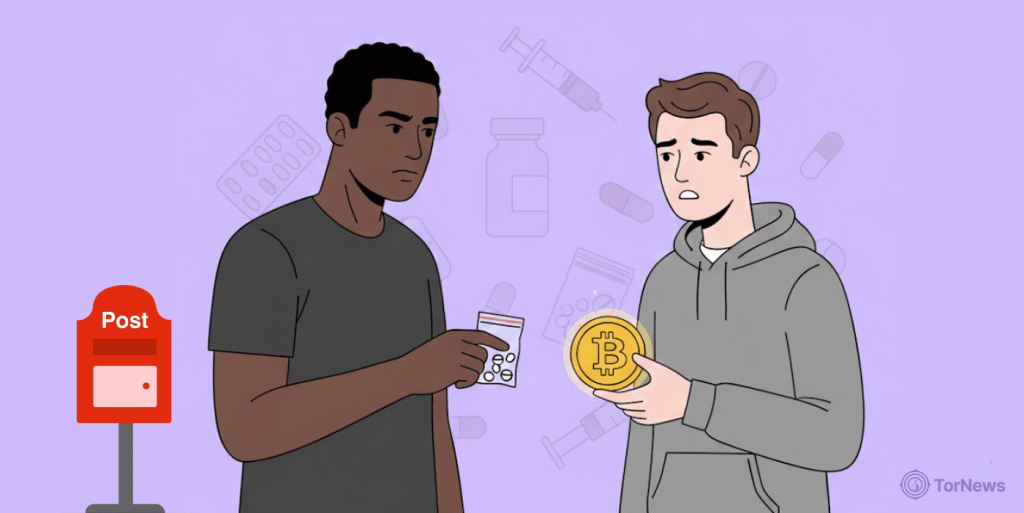
A Lee County man’s own persistence led to his downfall. Daniel Pesantes is now in custody after deputies say he ordered drugs on the dark web.
His repeated calls to the post office about a missing package raised a major red flag. That package became his undoing.
A Package Too Many
The Lee County Sheriff’s Office says everything kicked off when U.S. Postal Inspectors spotted a suspicious package at the processing center near the Southwest Florida International Airport.
Deputies kept an eye on the place on Wednesday. They watched as Pesantes arrived to pick up the package, then the K-9 unit intercepted it. Their dog sniffed drugs in the package and alerted officers.
Inside the packaging were approximately 50 Xanax pills. This alone provided sufficient cause for detectives to apply for search warrants to subsequently search the residence of Pesantes.
At the suspect’s home, deputies discovered a cache of drugs that was much larger than what was found in the package. They listed hundreds of additional pills that were all clearly prescription drugs — including Xanax (under its non-proprietary name Alprazolam), Clonazepam, and other similar medications.
According to Sheriff Marceno, all of these drugs were purchased using cryptocurrency through the dark web.
“They’re always thinking of a way to scam and get away from the system,” Marceno said. “They know in Lee County we don’t play games.”
The arrest report revealed Pesantes called the Postal Service nine times in November. He was asking about the status of his now-intercepted delivery.
Authorities also discovered a history of similar packages. Pesantes has prior convictions for battery and possession of controlled substances.
A Global Crackdown on Digital Drug Markets
This local case mirrors a much larger global fight. The police are really cracking down on dark web markets where people sell drugs.
International operations are seeing record results. A few months back, ICE and Europol announced the outcome of their collaboration in a global sting tagged Operation RapTOR.
It aimed to bring down dark web markets used for illegal trafficking of drugs and was coordinated by J-CODE ( the Joint Criminal Opioid and Darknet Enforcement).
The operation was historic. It resulted in 270 arrests across ten countries. Authorities seized over $200 million in cash and digital assets. They also confiscated two metric tons of drugs.
That haul included 144 kilograms of fentanyl. Over 180 firearms were also taken off the streets.
“Cybercriminals think the Darknet makes them untouchable,” said ICE HSI official Robert Hammer. “We just proved they’re dead wrong.” This multi-front war on digital crime extends beyond dark web markets, with major tech companies like Google also taking legal action against sophisticated cybercriminals, as seen in its recent lawsuit against Chinese hackers as part of its scam-fighting push.
The operation dismantled key darknet infrastructures and seized markets like Nemesis, Bohemia, and Tor2Door, where illicit buying and selling of drugs were carried out.
U.S. lawmakers are trying to keep up with what’s going on and are suggesting some fresh ideas. There’s a new bipartisan bill brought before Congress called the Dark Web Interdiction Act.
The legislation aims to strengthen penalties and specifically targets dealers using the dark web, seeking to ensure convictions in cases like these result in serious prison time, as seen in the 54-month sentence given to a US man for selling counterfeit Xanax on the dark web. It also seeks to make the J-CODE task force permanent. This would ensure continued coordinated global action against online drug trafficking.
