-
A US lawmaker has proposed a new bill that pushes for a FBI team dedicated to tracking and shutting down dark web marketplaces that sell illegal drugs.
-
The bill seeks to beef up penalties for anyone using the dark web to sell controlled substances, like opioids.
-
The legislation points out how the anonymity which the dark web provides has made it challenging for the authorities to fight against drug trade.
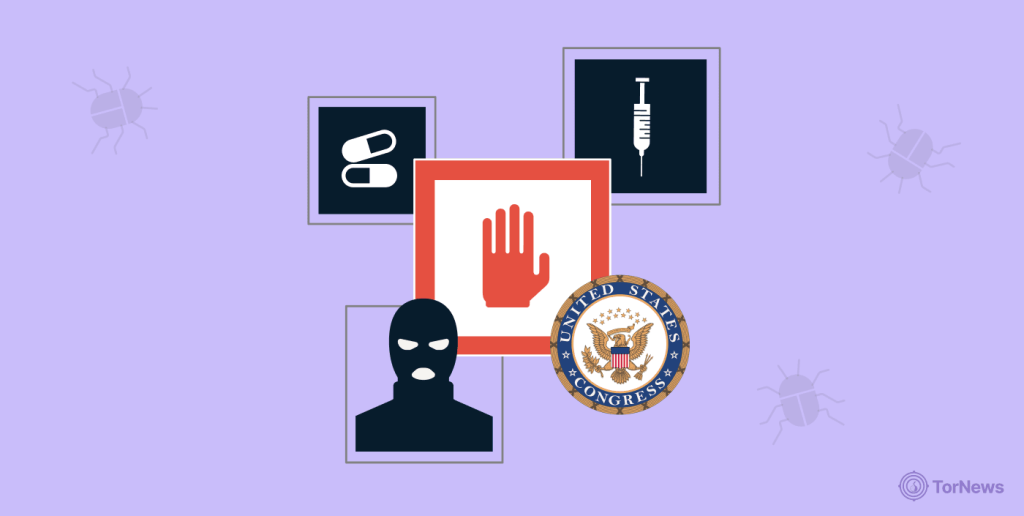
A new bill is taking direct aim at illegal drug sales online. It specifically targets the hidden corners of the internet. The proposed law wants to strengthen the government’s ability to fight this digital drug trade. It also plans to create a dedicated team to lead the charge.
A Fight Against Online Drug Markets
On November 18, Rep. Chris Pappas proposed a new legislation tagged “the Dark Web Interdiction Act of 2025” (H.R. 6104). As of now, the bill has one co-sponsor. Its main focus is to put a stop to opioids and other nasty drugs being sold and sent through the dark web.
The bill’s key findings explain the problem clearly. Accessing the dark web needs special software to keep you hidden. Since everyone’s hidden, it’s hard for the police to keep up. That’s why there are many shady online stores selling guns, drugs, and malware.
The dark web definitely makes the drug problem in the US worse, a fact supported by recent dark web statistics that quantify the massive scale of this illicit economy. It allows for anonymous selling of illicit drugs. The bill states that law enforcement has actually faced real challenges identifying and prosecuting people because of the dark web’s nature.
These challenges are vividly illustrated by the evolving tactics of dealers, who have moved beyond just the dark web to exploit legitimate platforms. A recent federal probe, for example, exposed a dark web ring that used Uber delivery drivers to distribute drugs (now that shows just how brazen and integrated these operations have become).
The official purpose of the legislation is to protect public health. This bill’s all about stopping drug dealing on the dark web, and it arrives amid a global push for updated digital regulations, as seen with the Canadian government’s move to amend its own privacy laws. If this bill passes, law enforcement will get more power to look into online crime, nail the bad guys, and punish them.
It also enables different law enforcement groups – tribal, local, state, and federal – to work together better.
A Push for a New Task Force and Stricter Regulation
The proposed solution has several key parts. First, it clearly defines its terms. It describes the “dark web” as a part of the internet with hidden services. These are not indexed by traditional search engines. It also defines an “illicit marketplace” as websites on the dark web where people buy and sell illegal goods, including drugs.
Second, the bill outlines new penalties. It will be illegal to use the dark web to distribute controlled substances. This is unless the activity is specifically authorized. It will also be illegal to aid any activity that goes against this prohibition. Violators will face increased penalties according to amended federal sentencing guidelines.
Third, the bill suggests forming a Joint Criminal Opioid and Darknet Enforcement Task Force. This team will be part of the FBI, headed by a director picked by the President. Its goal is to detect and shut down illicit marketplaces.
The task force will include representatives from various law enforcement agencies. This will facilitate both proactive and reactive investigations. The Attorney General will allocate funds to support the team’s operations.
The Director must submit annual reports to Congress. These reports will detail the task force’s activities and its effectiveness. Congress will also evaluate the definitions and effectiveness of the measures in the legislation.
This five-year review will ensure the law remains pertinent. The bill also includes a standard severability clause. This means if any part is found invalid, the rest of the Act remains in force.
