-
The police in UAE apprehended 33 suspects from 12 countries and dismantled four international cybercriminal networks.
-
The authorities seized more than $54 million in assets and analyzed more than 3,000 cryptocurrency wallets.
-
The criminals used various methods including social engineering, theft of cryptocurrency wallets, money laundering, blackmailing plus violent intimidation against their victims.
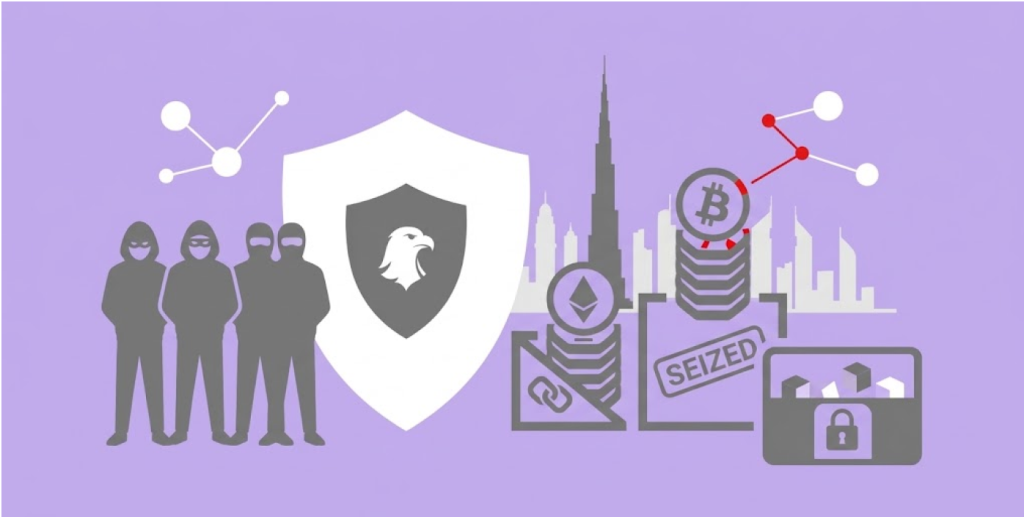
UAE authorities have arrested 33 suspects and seized more than $54 million in a major cybercrime operation. Sharjah Police led the action with the Ministry of Interior.
The operation, called End of Battle, dismantled four connected international criminal networks. Authorities say the groups carried out social engineering, digital wallet theft, fraud, extortion, and money laundering.
What Police Found
Sharjah Police said the suspects came from 12 nationalities. Officers arrested key leaders as well as other members of the networks. Police said the groups worked together across borders. They used closed digital networks to hide their identities and avoid security tracking.
The investigation found that the gangs used artificial intelligence technologies to support their criminal activities. Police did not give full details of how they used those tools.
Officers seized assets worth more than AED 200 million. This equals more than $54 million. Police also examined and verified more than 3,000 digital wallets. They collected evidence from these wallets during the investigation.
How the Networks Operated
Each network handled a different part of the criminal operation. One group carried out cyberattacks and stole customer information and databases. Another group laundered money through virtual assets and other financial channels. Virtual assets comprise cryptocurrencies and other digital tokens.
A separate report highlights another alleged theft involving sensitive financial information in the UAE. The hacker claims to have stolen investor data, including records linked to the country’s Golden Visa program. The claim has not been independently verified.
The next group made use of social engineering to deceive victims. Social engineering refers to influencing people to reveal personal information or to allow access to accounts. This group also misappropriated digital wallets. A digital wallet holds cryptocurrency and allows the owner dominion over their digital assets.
The fourth group used violence and intimidation. Police say its members pressured victims to reveal passcodes for their digital wallets. Additionally, the groups traded stolen information on dark web channels. The dark web is a concealed part of the internet which criminals can use for illegal merchandise.
People Named in the Case
Authorities released a video alongside the operation. The video featured alleged social engineering actors Danish Zulfiqar, also known as Danny, Ibrahim Mustafa, known as Krust, and Cameron Cureton, known as CX. The video did not explain the exact role of each person. However, police said the operation targeted people involved in social engineering and digital wallet theft.
ZachXBT, an on-chain investigator, had previously connected the three men with prominent cases of social engineering. He claimed that they performed crypto thefts, as well as SIM swap and extortion attacks.
A SIM swap attack allows a scammer to take over the phone number of the victim. The attacker can then receive security codes and access online accounts. The UAE authorities have not published a full court charge sheet. Thus, the exact allegations against each named person in the case may still change as the investigations keep going forward.
Why the Operation Matters
Police said the operation protected more than 30 companies and institutions worldwide. It also secured assets worth more than AED 65 billion, or about $17.7 billion. The action reduced possible damage to global digital asset markets. It also stopped further theft of customer data and digital wallets.
The case in question illustrates the ways in which criminals employ both online and offline techniques. They engage in such activities as hacking, stealing data, social engineering, money laundering, & physical threats.
Further, this incident demonstrates the importance of protecting the digital wallet of a user when looking after their crypto. Good security requires the use of a strong password, hardware wallets, and two-factor authentication for safety against taking over a user’s account.
Also, it is imperative that users do not provide their wallet seed phrases or private keys to others. In addition, they should verify any requests made on their accounts via official channels and sites, before completing any transaction.
What Happens Next
Sharjah Police will continue investigating the seized wallets and digital assets. Investigators will try to trace stolen funds and identify more victims. The case may lead to further arrests in the UAE and other countries. Police said the operation involved international cooperation.
The suspects will face legal proceedings in line with UAE law. Authorities have not announced trial dates or final charges. The operation sends a clear message to cybercrime groups. UAE police say they will pursue people who steal digital assets, launder money, or exploit victims through social engineering.
