-
A man receives about 5 years imprisonment for drug trafficking through the use of the dark web.
-
The defendant Davit Avalyan operated illegal drug distribution on the underground market by utilizing different identities.
-
This case represents one of many recent law enforcement actions against increasing amounts of illegal activity occurring in the dark web.
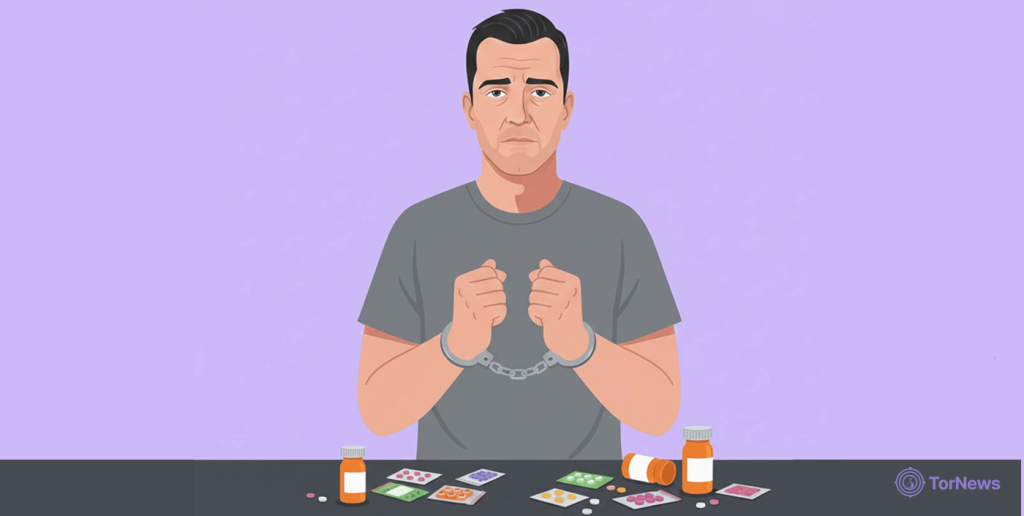
A federal judge in Los Angeles has imposed almost a five-year prison term on a man from Glendale for his part in operating a dark net drug distribution network.
A Drug Trafficker Receives an Imprisonment Sentence
36-year-old Davit Avalyan will serve 57 months in prison after a guilty plea to a charge of conspiracy to distribute controlled substances in October of 2025, before U.S. District Judge Percy Anderson decided this case.
His illegal activity consisted of distributing illegal substances to many customers throughout America via a criminal organization that utilized the darknet’s secretive marketplace to sell cocaine, methamphetamine, ecstasy (MDMA), and ketamine in exchange for payment via Bitcoin and Monero.
Avalyan’s sentence represents the final step in punishing all four defendants in this case. His co-defendants (Hayk Grigoryan, Gurgen Nersesyan, and Hrant Gevorgyan) had all previously received their sentences to date of 24 months up to 10 years based on their individual culpability for this project.
How the Dark Web Scheme Works
According to the prosecutors, Avalyan and the members of his conspiracy operated the drug distribution conspiracy from September 2018 to February 2025.
The group maintained multiple vendor accounts on several darknet marketplaces. Some of the account names were JoyInc, PlanetHollywood, LaFarmacia, WhiteDoc, and DopeValley. The members of the group used several underground marketplaces, such as Empire, Dream Market, Wallstreet, Silk Road 3.1, Darkode, ToRRez, Abacus, Archetyp, DrugHub, Tro2Door, and others, for their sales.
Darknet markets are online platforms that users can’t get to with regular browsers. They utilize special tools like Tor to hide where users are, which makes it tougher to track illegal buys and sells.
Users on these hidden markets paid with cryptocurrency, which made it harder for the cops to follow the money. But law enforcement is getting better at tracing these transactions, as demonstrated in the U.S. government’s landmark $400 million seizure from a darknet money launderer, proving that even cryptocurrency can be tracked and confiscated when investigators have the right tools and international cooperation.
After sales, the group packaged drugs into parcels and mailed them using the United States Postal Service from post offices and mailboxes in Los Angeles County and other places.
Authorities have seen this method of delivery, using the mail, in other dark web drug cases. According to the U.S. Drug Enforcement Agency (DEA), dealers frequently send drugs via the United States Postal Service to try to prevent being detected.
Law Enforcement Efforts and Broader Trends
The FBI’s Joint Criminal Opioid Darknet Enforcement (JCODE) group led the investigation that resulted in Avalyan’s conviction. The group, made up of multiple government organizations, focuses on preventing drug trafficking through the dark web. Also, the US Postal Inspection Service, the Drug Enforcement Administration (DEA), and the IRS Criminal Investigations unit all assisted JCODE in the investigation and apprehended Avalyan.
Officials revealed that the investigation in the case established a large and successful effort to stop the illegal online sale of drugs and other potentially harmful products on the dark web. In May of 2025, law enforcement from both the U.S. and several other countries arrested hundreds of suspects who sold or bought from dark net drugs and vendors during a global operation.
In recent investigations, law enforcement is also going after bigger drug markets using the dark web. For example, a Taiwanese man received a 30-year prison sentence for running Incognito Market, a major darknet drug marketplace connected to over $105 million in illegal drug sales.
Similarly, in January, a Slovakian citizen pleaded guilty to aiding the operation of an underground private marketplace. The platform has existed for over two years and has focused on the sale of narcotics, fake government IDs, stolen personal data, and other cybercrime activities.
Also, another guy from Virginia who helped start the Empire Market dark web market was found guilty on federal drug charges for helping with illegal deals worth around $430 million. The Department of Justice says taking down these sites helps stop illegal drugs and keeps people safer all over the country.
