-
Police raided a Dwarka apartment and found 33 people, arrested one man, Harsh Vardhan, and bound down 32 students from top colleges, including IIT and NIT for their role in an exam cheating racket.
-
Gang used WhatsApp groups and remote desktop software, high-achieving students solved exam papers by subject category and fed answers back through remote connections, manipulating at least 10 online entrance exams over a year.
-
The gang advertised openly on social media and had planned to target a management institute entrance exam in Mumbai before police busted them.
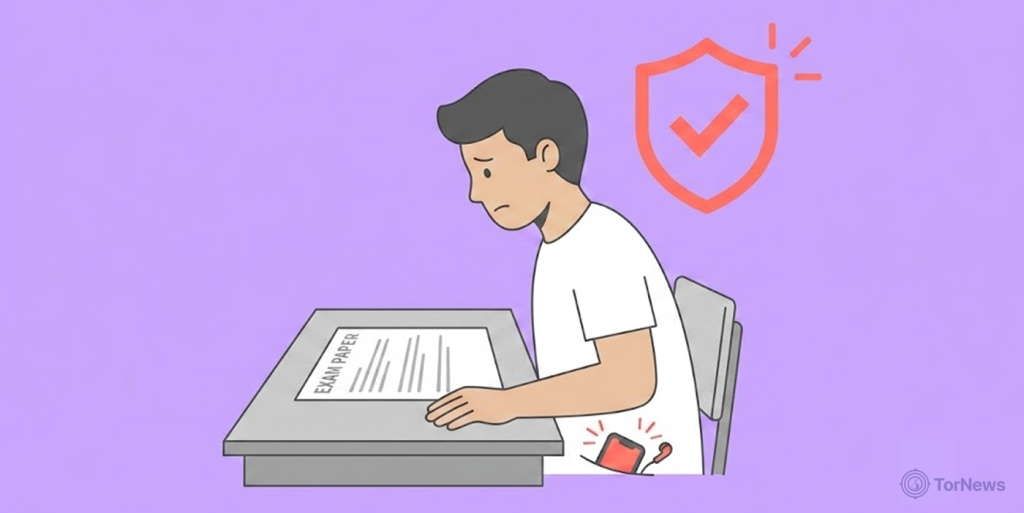
Delhi Police has dismantled a massive examination-cheating racket, the group operated out of an apartment in Dwarka, New Delhi. The scam gang involved intelligent students from premier engineering colleges, such as IIT who assist candidates for admissions by completing their application forms and answering exam questions remotely.
Police believe the organization has conducted these illegal activities for approximately 1 year and has manipulated at least 10 different exams using this methodology.
The police raided a building in Dwarka’s Sector 23 on April 6, after they received information regarding suspicious activity at the building. Officers discovered 33 individuals at that location and arrested one individual, Harsh Vardhan, aged 28, but are going to summon the remaining 32 students due to their involvement in assisting the other individual with his fraudulent actions.
Most of the students are from prestigious educational institutions, such as IIT, Delhi Technological University, the National Institute of Technology, and Maharaja Agrasen College.
How the Cheating Racket Actually Worked
The gang operated like a well-organized business. They used remote desktop applications to access question papers the moment exam centers released them. Someone inside the exam center would photograph the paper and send it to the gang’s WhatsApp groups.
The gang created multiple WhatsApp groups categorized by subject, physics, chemistry, and mathematics. Each group contained high-achieving students who excelled in specific subjects.
These students, mostly second or third year students from top colleges, would solve the questions quickly. The gang then fed the correct answers back into the original candidates’ exams through the remote desktop connection.
The mastermind behind the operation was Pranjal – an engineering graduate who is currently absconding. Police say Pranjal lured his friends and tasked them with recruiting high-performing students from premier institutes.
They told these students they were joining an internship program where they would solve exam papers for payment. The students did not realize they were participating in a massive cheating racket.
Police sources revealed that 15 of the 33 people found at the flat admitted to directly solving exam papers. The remaining 18 claimed they had gathered there for a party, but police are actively verifying these claims.
The Business Side of the Cheating Operation
The group charged people trying to get admission into engineering colleges between Rs 1.5 lakh and Rs 2 lakh to help them with the exams. One of the arrested individuals, Harsh Vardhan, has stated that he had been communicating with four to five people who wanted to gain admission into top engineering universities within the country.
The gang advertised their services openly on social media. They claimed they could secure admissions in any college for candidates who failed to clear competitive exams but were desperate to get into prestigious institutions. Investigators believe the gang had a chain system where different members handled specific roles – from finding clients to recruiting solvers to coordinating with exam center insiders.
Police sources revealed that the gang’s next target was an entrance examination for a reputed management institute in Mumbai, the test was scheduled to take place at an IT lab in Jaipur. The gang had already planned the operation when police raided their Dwarka facility.
Ongoing Investigation and What Comes Next
Kushal Pal Singh, the Deputy Commissioner of Police. Dwarka says they are still probing the case. Law enforcement is in the process of determining how many different tests the gang has already altered and the prospective students who used their services.
Further, another police source noted that they suspected the group’s involvement in at least 10 examinations, although the police are gathering more details in the case. Investigators are also trying to track down Pranjal, the absconding engineering graduate who built this entire network.
The case exposes a troubling trend. Bright students from India’s top colleges willingly participated in this racket without realizing the serious legal consequences. Police bound them down, meaning they must cooperate with the investigation or face arrest.
The scam also raises questions about the security of online entrance exams. If a gang can insert someone inside an exam center to photograph papers and use remote desktop software to feed answers, the entire system needs stronger safeguards.
As cyberattacks on educational institutions surge past 8,000 per week, Indian schools and universities must urgently address both the threat of external hackers and the risk of internal exploitation, ensuring that technology enhances rather than undermines the integrity of the education system.
