-
The US authorities have extradited a Chilean national over stolen credit card data of US consumers.
-
Trafficking of stolen credit card data scales up on several underground and private platforms.
-
The cross-border cybercrime extradition reflects an increase in law enforcement efforts and cooperation.
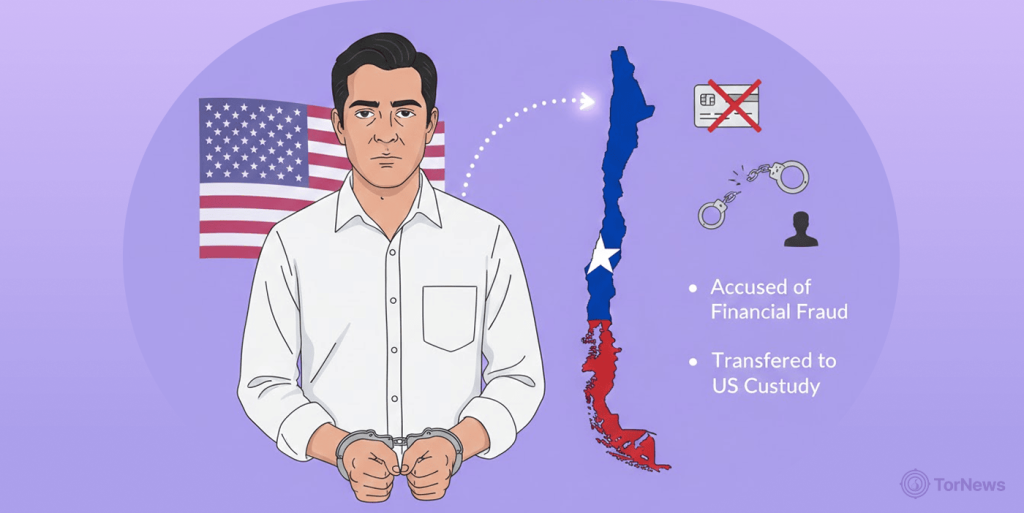
A Chilean defendant was delivered to the USA for prosecution pertaining to an organized scheme wherein he allegedly sold, through various websites, stolen credit cards, of which the number of records he sold to customers is allegedly in the thousands.
U.S. prosecutors accuse 24-year-old Alex Rodrigo Valenzuela Monje, also known online as “VAL4K,” of running Telegram channels that bought and sold stolen credit card information.
The channels Monje operated featured individually identifiable cardholder information: cardholders’ names, credit card numbers, expiration dates, security codes, attributable to the actual cardholder, enabling the fraudulent use of the cardholder’s credit card over the internet or via telephone.
After a lengthy legal procedure, including the required authorization from the Supreme Court of Chile, Monje arrived in the USA. In the Federal District of Utah, he faces federal charges pertaining to trafficking in unauthorized access devices and unlawful transfer of payment card data.
How the Stolen Credit Card Market Operates
Criminals use many ways to steal credit card data online. Cybercriminals hack point-of-sale machines, infiltrate company servers, use phishing to deceive people, and buy stolen data sold by other criminals on dark web marketplaces. Once criminals obtain credit card information, they often package and sell it on underground digital sites, known as card shops, created specifically for trading financial data.
Card shops typically sell card “dumps,” the raw data stored on a card’s magnetic stripe or complete credit card information, including the card number, the cardholder’s name, and the CVV.
Criminals use this data to create counterfeit cards, drain bank accounts, and make fraudulent online purchases. The scale of this trade is staggering. Not too long ago, a UK dark web crisis emerged with 1,800 stolen bank cards found for sale on a single platform, highlighting how these marketplaces continue to thrive despite law enforcement efforts. Cybersecurity experts estimate that similar schemes have compromised tens of millions of credit card numbers worldwide over the past several years.
Prosecutors have indicted Monje for selling thousands of credit card numbers over two years, from 2021 to 2023, on the MacacoCC Collective and Novato Carding Telegram channels. The credit card numbers sold by Monje include credit cards issued by several major U.S. credit card issuers, therefore highlighting the magnitude of the potential loss through fraud.
According to the investigators, Monje had been operating as part of a larger group working within the same organization. These operations typically use encrypted messaging platforms and cryptocurrency to hide their activities, making it harder for law enforcement to track members through financial or communications investigations.
Criminals can easily use cryptocurrency to transfer funds across international borders while maintaining anonymity, which makes it difficult for law enforcement to track or trace the sources of money used in illegal operations.
Credit card fraud and the theft of consumers’ data are no new incidents. There have been some high-profile breaches in the past, including the 2018 British Airways data breach, where hundreds of thousands of customers had their payment card information stolen after the airline was hacked and its systems were breached. This prompted fines from regulatory agencies against British Airways.
Steps Involved with Extradition from Chile to the United States
Chilean authorities extradited Monje following a judicial process that started with a U.S. request and received approval from the Supreme Court of Chile. Monje’s attorney attempted to appeal, but the court upheld the original decision, and U.S. law enforcement officially took over the case in February 2026.
After his arrest by U.S. law enforcement, Monje appeared in the United States District Court for the District of Utah and pleaded not guilty to the charges.
The US prosecution alleges that the crime of trafficking in credit cards constitutes a serious crime against financial institutions as well as the customers of those financial institutions due to the immense damage caused in the form of fraud and the likelihood of identity theft.
The particular violation of trafficking in unauthorized access devices (e.g., stolen credit cards) carries with it some of the heaviest potential sentences for any federal offense in the US, and therefore, the US prosecution must prove to the court beyond a reasonable doubt the fact that Monje knowingly acted as a channel for the sale of stolen credit card numbers through numerous forms of electronic evidence, including financial records and expert witness testimony, many of which will be from law enforcement agencies who investigate cybercrime, in order for the court to declare the defendant as guilty.
What It Means for Consumers and Businesses
The crime of credit card fraud is growing fast – experts believe it’s going to impact both consumers and businesses alike. Many studies confirm that the volumes of stolen cards were at an all-time high on Dark Net sites (a marketplace for illegal items), and that prices have dropped significantly, with some cards selling as low as $17 each in 2025.
The average criminal can use these stolen cards to make unauthorized purchases or fraudulently clone the cards to drain money from owners’ bank accounts. Most banks and financial institutions have anti-fraud measures and alert systems in place to help consumers with their problems, but even so, there will still be some inconveniences that consumers will face.
For example, banks will require customers to cancel their credit cards and/or will need to call several times to receive bank notification of any suspicious activity regarding the unauthorized charges.
Consumers should regularly monitor their bank statements, set up alerts for any suspicious activity, and use the safest available payment methods. (e.g., use your mobile wallet to hide your credit card number). Financial authorities are also encouraging businesses to use very strong encryption and to secure their systems to prevent data breaches.
The urgency of these precautions is highlighted by incidents like the Israeli bank card data leak on Telegram, where thousands of financial records were exposed overnight, reminding us that no country or financial institution is immune to these attacks.
Law enforcement agencies at the local, national, and global levels continue to work together to combat credit card fraud and the criminal organizations that facilitate credit card fraud through the use of international online crime networks.
Global law enforcement joint task forces, such as INTERPOL’s “Operation Chargeback,” exist to target the major criminal syndicates involved in credit card fraud, and this demonstrates that cooperation among law enforcement in different countries can help disrupt enormous financial crime networks.
The U.S. is expected to pursue the case to demonstrate that cybercrimes carry consequences, even when perpetrators think they can evade liability using advanced technology.
