-
A dark web actor claims to have stolen customer data from pintando.com.mx, including RFC tax IDs, emails, phone numbers, and addresses.
-
The alleged leak covers records from last year till this year and is available in CSV, XLSX, and SQL formats.
-
The claims remain unverified, and the company has not confirmed any security breach at this time.
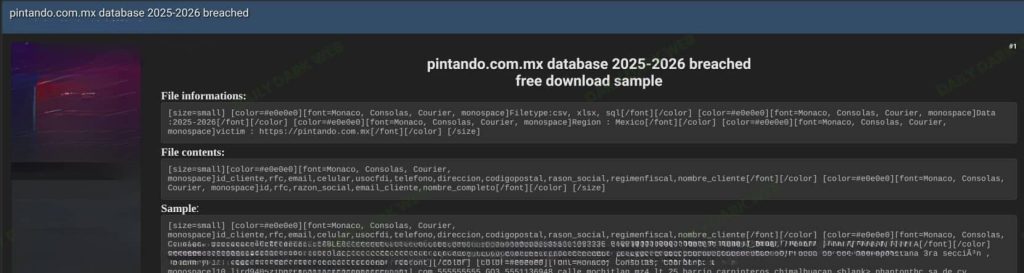
A dark web actor claims to have stolen customer data from pintando.com.mx, a Mexican painting and coatings company. According to the cybercriminal, the stolen files include customer information from last year till date and are ready for anyone to download.
The alleged leak includes customer IDs, RFC tax identification numbers, email addresses, phone numbers, physical addresses, and postal codes. The dataset also reportedly contains company names, tax regime details, and customer names.
The hacker says the files are available in CSV, XLSX, and SQL spreadsheet formats. The poster provided a data sample as evidence of the breach. Our in-house and other known security researchers have not confirmed whether the stolen information is genuine.
The organization has not acknowledged any breach in security. Security analysts advise considering the reports as groundless yet. If claims come out as true, criminals could use the information for identity theft and phishing scams.
What the Alleged Leak Contains
The dataset allegedly includes sensitive personal and business information. Customer IDs and RFC numbers are particularly valuable to criminals. The RFC serves as Mexico’s tax identification number for individuals and businesses. This number is available in tax records, invoices and other official papers. Criminals can use the RFC for committing fraud in the tax sphere or opening bank accounts.
Scammers use email addresses and phone numbers to create special phishing campaigns. They utilize the data in physical addresses and ZIP codes for creating the victim’s profile. Company names and tax regime details reveal business structures and financial status. The combination of personal and business data creates serious risks.
Using these records, the criminals may mimic a company or a person to commit fraud. The offenders may create fake tax declarations or apply for loans. Also, the tax information gives a possibility to define which companies have complex business structures and, therefore, expose them to different kinds of fraud.
The actor claims the data covers records from 2025 to 2026. This suggests the information is relatively recent. Fresher data typically commands higher prices on underground markets. Buyers pay more for current information because it is more likely to be valid and usable.
The availability of multiple formats makes the data easier to exploit. CSV and SQL formats allow criminals to integrate the information into their systems quickly. This increases the potential for large-scale fraud operations. The structured format also enables automated attacks.
How Criminals Exploit this Data
Sometimes, sneaky bad actors steal big lists of datasets from computer systems. They grab RFC numbers, the special tax numbers to file fake papers and steal money from the government. They even use these stolen names to get shiny new credit cards. Because they have real names and private numbers, their tricks look very real to banks.
Tricky phone messages and emails work much better when the bad guys know your true details. They write notes that look totally official by using your real home address and name. When people see their correct information, they trust the message. Then, they accidentally give away their lunch money or password secrets.
This leaked information can hurt businesses, too. Mean competitors might take the stolen lists to trick regular customers into leaving. Other fraudsters pretend to be important company bosses. They call workers and ask them to send money to the wrong place or pay fake bills.
The criminals look for companies with very confusing money rules because they are easier to fool. Then, they take all this stolen data to the dark web and sell the lists to other thieves over and over again, so the trouble keeps going.
The Growing Threat to Mexican Businesses
Right now, lots of companies in Mexico are having a really hard time keeping their data locked up. Retailers, factories, and food places are in the most danger. Many of these companies do not have strong computer guards, which makes them easy targets for bad guys.
Pintando.com.mx breach reflects a broader pattern of attacks in Mexico. A hacker has also claimed to hold 352GB of data from Mexican government agencies and firms, underscoring the scale of the cyber threat facing the country.
This is happening to a lot of Mexican businesses lately, and it exposes private customer data. The Mexican government says everyone needs stronger computer laws; however, enforcement remains inconsistent.
Small and growing businesses are mostly at risk. They often have limited security budgets. They also do not have special tech teams to protect them. Businesses must spend money on computer guards today because fixing a giant mess later costs way more.
Easy Ways to Keep Data Safe
Companies must watch out for strange happenings on their systems and notify customers immediately if there is a data leak. Telling people early stops more bad things from happening. Regular people should check their financial reports to make sure everything looks right. You can even freeze your credit files so a stranger cannot pretend to be you.
Business heads have to teach their workers not to trust weird letters or links – this helps to reduce phishing attacks. They should also implement strong authentication measures and conduct regular security audits to identify vulnerabilities early. Companies should also develop incident response plans.
Authorities in Mexico should investigate the claims. They should also work with affected companies, and cooperating with other countries can help to track down criminals.
Companies should focus on securing customer data. Investing in security is cheaper than dealing with a breach; the long-term costs of a data breach surpass prevention expenses.
