-
Source code linked to Sweden’s e-government platform reportedly leaked online from repositories connected to CGI infrastructure.
-
A hacker group, ByteToBreach has claimed responsibility as it released samples of the stolen material.
-
Security experts warn that leaked government system code could expose weaknesses and pose long-term cybersecurity risks.
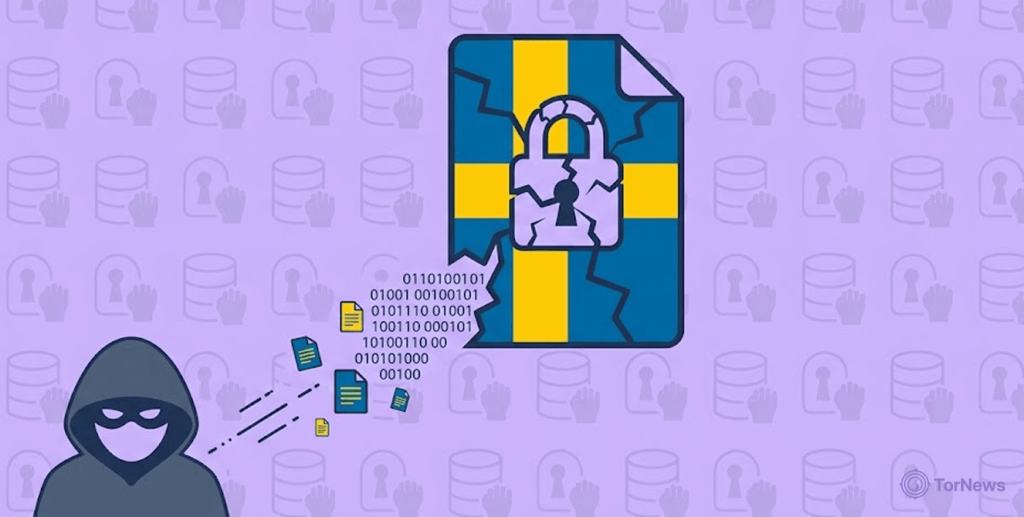
A suspected cyber breach involving Sweden’s digital government infrastructure has raised serious concerns among cybersecurity experts after reports that the attack exposed key source code linked to national online services.
According to cybersecurity monitors who shared the alert on social media, the leaked data reportedly comes from repositories connected to the Swedish e-government platform maintained by the IT consulting firm CGI. Early reports claim the exposed material includes parts of the platform’s source code and potentially sensitive configuration data.
The e-government infrastructure of Sweden supports a wide variety of digital services that citizens use to communicate with government agencies electronically. Examples of digital services the Swedish e-government offers include digital forms, authentication methods, and public administrative software for managing the delivery of services through multiple agencies.
According to security experts, however, if any of the internal source code within these electronic government service delivery applications be publicly available, an attacker may evaluate it to find vulnerabilities and subsequently attempt to exploit them in the future.
At this time, the case is still under evaluation; it is unclear exactly the volume of loss has been or if any personal information of citizens has been compromised.
Source Code Linked to Government Digital Platform
Reports circulating among cybersecurity researchers say the leaked data appears to originate from internal repositories associated with CGI’s infrastructure used for Sweden’s e-government platform.
Initial analysis of the material shared online suggests the leak may include software source code and configuration files. The contents of these files are useful for operating and maintaining government digital services, and may provide key technical information and specifications on how the systems work.
The consequences of leaked source code are always serious; such data could allow a cyber-criminal to understand how a system works and to look for opportunities for exploitation.
Security professionals also indicate that even though there is no exposure of direct user data, leaked system source code, or the code that actually runs the system, it poses a long-term risk to the digital infrastructure, as the attacker may use the code to analyze for vulnerabilities and to plan future targeted cyberattacks against the same infrastructure.
As a result, many government systems have a high level of security, and access to system development environments is available to only certain individuals.
Hacker Group Claims Responsibility for the Leak
The group known as ByteToBreach appears to have masterminded the leak. Reports indicate that the hacker group released the source code of the affected company and has since uploaded portions of the leaked files as evidence of its access.
Social media research from many cyber professionals, including high-profile blockchain educator Ivan Liljeqvist, has helped to create greater awareness of this incident in the cybersecurity world.
Researchers regularly use social media as a way to provide notifications about potential breaches very quickly; these notifications allow security teams to begin analyzing possibly leaked files and assess risks prior to any further impact.
Unfortunately, it is too soon to know from an official standpoint how large this breach is or how exactly the hackers accessed those repositories.
Concerns Over National Digital Infrastructure Security
Following the occurrence of the purported breach, cybersecurity experts are debating the security stance of the national digital infrastructure. Notably, Sweden has become very reliant on using digital governmental platforms to provide public services accurately.
If the breach has compromised these digital governmental platforms through the connected internal systems for providing public services, it increases the likelihood of future attacks on governmental services or sensitive information.
Experts note that this incident demonstrates just how critical it is to have strong security controls in place to protect software development platforms. These include secure repository management, monitoring for unauthorized access, and scanning of code to identify exposed credentials.
The stakes couldn’t be higher, as the Target source code sale showed. When source code leaks, it doesn’t just sit idle; it becomes a commodity on the dark web, available to any attacker willing to pay for the blueprints of major corporate systems.
Authorities and cybersecurity teams will continue to investigate the reported leak, this is to ascertain the extent of the breach and how it may impact the country.
Given that the incident is still unfolding, it illustrates again just how much of a target governmental digital infrastructures will become, especially in the future, with an ever-evolving network of interconnected computers and gadgets around the globe.
