-
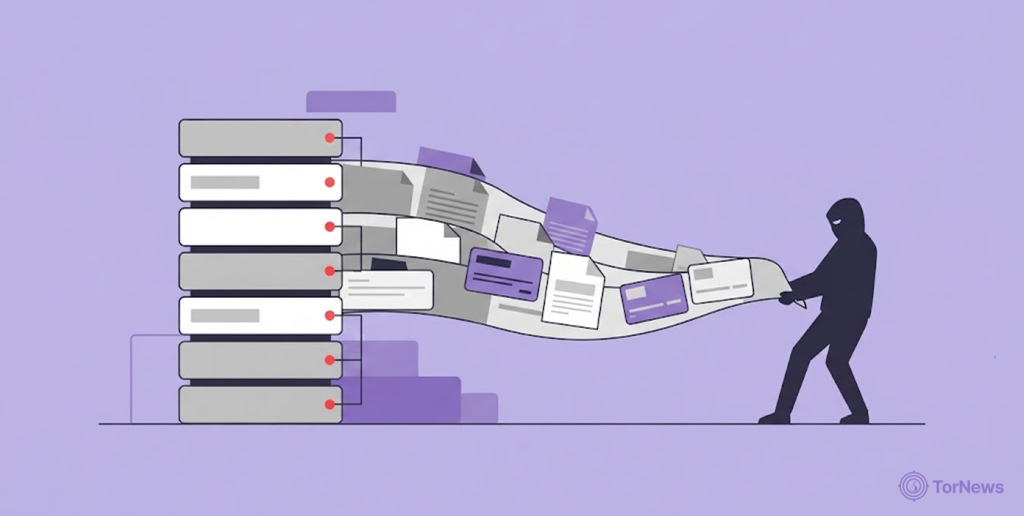
Cybercrime group LAMASHTU claims it stole 65GB of data, reportedly holding close to 80,000 files tied to legal and financial work.
-
FIDUCIAL confirmed a break-in at one customer who runs FIDUCIAL Informatique software on their own systems, but denies any breach of its own network.
-
The alleged data theft is still unproven, and experts warn it could lead to identity fraud, fake payment requests, and targeted scams if true.
A French company called SINEQUAE has been named in a reported cyberattack. SINEQUAE works with commissaires de justice, a type of judicial officer in France who handles legal and debt matters.
A cybercrime group known as LAMASHTU says it broke in and took a large amount of data. The group claims it grabbed 65 gigabytes (GB) of files. That adds up to nearly 80,000 documents, according to the group’s own claims. These files reportedly hold sensitive legal, financial, and personal details.
LAMASHTU’s Claims of a Major Data Theft
According to reports on the alleged leak, the stolen files include judicial and debt-recovery records. Court decisions and identity documents reportedly sit among them too. Bank details, including RIB and IBAN numbers, are also said to be part of the haul. Information tied to debts, payments, and people’s financial situations rounds out the list. If these claims turn out to be true, many people and businesses could be affected.
However, these numbers and file details come only from the attackers themselves. No outside source has confirmed that LAMASHTU actually holds the full dataset. Nobody has verified yet that every listed document truly belongs to SINEQUAE.
SINEQUAE’s own privacy policy states that its work can involve personal ID details, financial records, bank information, and transaction history. This confirms the type of sensitive data the company handles daily. It does not confirm that this specific data was stolen in this incident.
FIDUCIAL Confirms a Breach at One Customer
On October 1, 2026, French business services group FIDUCIAL released a public statement. The company addressed news reports that linked its name to this leak claim. FIDUCIAL said its own systems showed no signs of a break-in. The statement noted no intrusion attempt and no stolen data from its internal network, based on its own checks.
Still, FIDUCIAL admitted something important. One of its customers, who runs FIDUCIAL Informatique software on their own equipment, did suffer a break-in. According to the company’s statement, that customer acted fast.
They put security fixes in place right after the incident happened. FIDUCIAL Informatique also told the customer to report the matter to France’s data watchdog, the CNIL, within the required time limit. You can read the full statement here.
The statement left out a few key details. It did not name the affected customer; it did not name the exact software involved. It also did not explain how the attacker got in. FIDUCIAL never confirmed the claimed 65GB theft. The statement does not link the unnamed customer directly to SINEQUAE either.
A cybersecurity tracking site called DeXpose reported on September 30 that LAMASHTU had listed FIDUCIAL as a victim on its own leak site. But a hacker group listing a name is not solid proof. It only shows what the attackers claim, not what actually happened.
Right now, nobody knows for sure how the break-in happened. No public source has shown whether stolen passwords, a software flaw, or another method opened the door. There is also no proof yet that FIDUCIAL’s software itself caused the problem.
What Could Happen Next
If the leaked files match what LAMASHTU describes, and if the theft gets confirmed, the fallout could be serious. People and businesses named in the files could face identity theft. Criminals could also send fake payment requests using real case details. Scammers often use real information to make their tricks sound believable.
A fake email mentioning a real court case feels far more convincing than a random message. That is why this type of leak worries security experts so much. Businesses should watch closely for odd requests to change bank details or send money. Nobody should trust a payment change just because an email looks official.
People should also double-check any suspicious message. The safest move is to find contact details on your own, not from the message itself. Call the company directly using a number you already trust. Do not use any number or link sent inside a strange email.
For now, only a few facts are fully confirmed. Cybercrime groups can also change operations or disappear after reaching their goals, as LAPSUS$ did when it posted that it was shutting down after reaching its financial goals.
FIDUCIAL has admitted that one unnamed customer suffered a break-in. The claimed 65GB theft tied to SINEQUAE remains unverified by any outside source. The full scope of the damage is still unknown. More facts from SINEQUAE, FIDUCIAL, or French authorities would be needed to know exactly what happened and who it affects.
Readers should treat the 65GB figure as a claim for now, not a confirmed fact. Experts may learn more as the investigation moves forward. Until then, caution remains the best defense against any possible fallout from this incident. For more background, see this UnderCode News report on LAMASHTU’s wider list of claimed victims.
