-
Two massive data breaches rocked Asia’s corporate sector this month. One hit a beverage giant in Japan. The other targeted South Korea’s largest online retailer.
-
Asahi Group Holdings just confirmed that over 110,000 records of business associates and executives leaked in a September cyberattack.
-
An ex-employee of Coupang stole 33.7 million user records in what South Korea calls its worst-ever e-commerce breach.
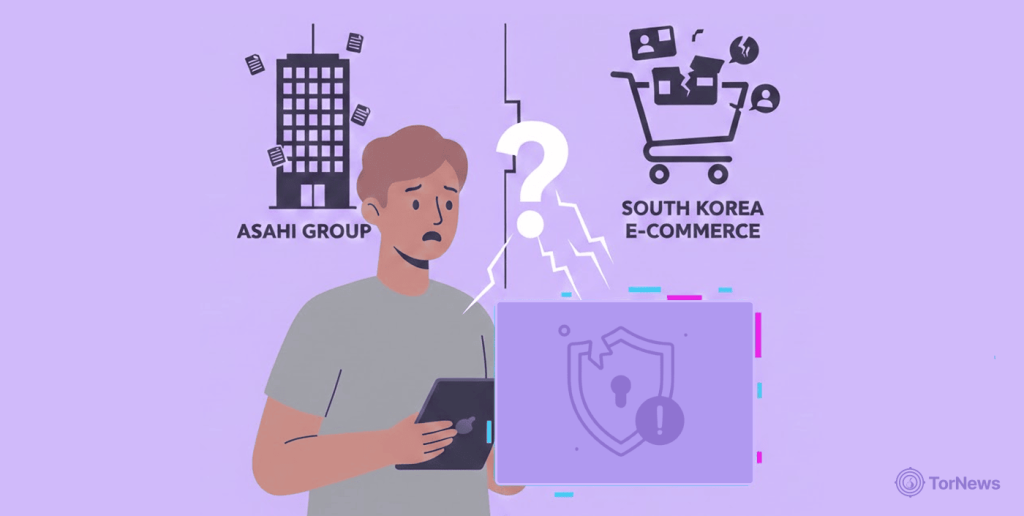
The two massive data breaches on Asia’s corporate sector revealed a growing predicament: companies often take months to discover breaches, and bad groups use this delay to their advantage to steal massive amounts of data.
Japanese Beverage Giant Confirms Data Leak
On February 18, Asahi Group Holdings confirmed that cyber thieves stole personal credentials from more than 110,000 business documents. The firm opened up about the breach several months after it first occurred in September.
The hijacked credentials include names as well as phone numbers of officials and employees at associate companies. Asahi initially investigated whether the cyberattack compromised nearly 2 million customer and employee records back in November.
The September attack didn’t just steal data. It caused a system failure that forced Asahi to suspend beer and food product shipments entirely. The company restored its systems in December. Operations largely returned to normal in January. Asahi intends to spread out the items ready for shipment systematically.
A threat group posing as “Qilin” said they’re responsible for the attack. Cybersecurity sources share that the group published on the dark web that it hijacked employee credentials and internal files. The group’s claim lines up with Asahi’s timeline and the type of data compromised.
South Korea Faces Its Worst E-Commerce Breach
South Korea’s Ministry of Science and ICT publicized findings from a combined investigation on February 10. Officials painted the Coupang breach as the most critical event ever to strike the nation’s e-commerce space. The steep scale of jeopardized data justified that evaluation.
An ex-worker for Coupang went through tens of millions of sensitive records for up to seven months. The attacker forged internal authentication keys to bypass normal security. This gave the individual unrestricted access to user accounts without going through standard login procedures.
The ministry’s findings paint a disturbing picture. Hackers compromised over 33.67 million user records through Coupang’s personal information editing page. The data included names and email addresses. The company’s delivery address list page was viewed more than 140 million times. That exposed names, phone numbers, and street addresses.
The breach gets even more invasive. Attackers viewed a delivery-editing page about 50,000 times. This page includes main-door passcodes for shared building entrances. The page for order history saw approximately 100,000 entries. South Korea’s Personal Information Protection Commission is still verifying the conclusive tally of compromised data.
Ex-Developer Infiltrates and Strikes Hard
The breach ran from April to November 2025. A former developer who worked on Coupang’s user authentication system orchestrated it. The individual obtained a signing key while employed at the company. Investigators referred to this key as an “electronic access badge.”
The attacker used this forged badge to gain access to user accounts. Automated tools scraped large volumes of sensitive data. The abnormal activity continued for months without detection.
This case shows how dangerous insider knowledge can be. The developer understood exactly how Coupang’s authentication worked. That knowledge let them create a nearly perfect forgery. The forged credentials looked legitimate enough to fool the system entirely.
Both breaches share a critical weakness. Neither company detected the attacks quickly enough. Asahi took months to investigate and confirm the scope of damage. Coupang’s systems failed to flag seven months of suspicious data access.
These incidents confirm that even big corporations struggle with common threat detection. Conventional security systems fail to catch sophisticated attacks, and insider threats remain dangerous.
Companies should work with enhanced monitoring systems. Real-time detection of unusual data access patterns could have stopped both attacks much earlier.
