-
The researcher known as Nightmare-Eclipse says GitHub flagged and removed their account after they posted proof-of-concept code aimed at Microsoft products.
-
The researcher also claims Microsoft did not pay for earlier bug disclosures, which they say pushed them to go public.
-
The case highlights the risks of broken disclosure channels, public threats, and the need for fast patching and caution from users.
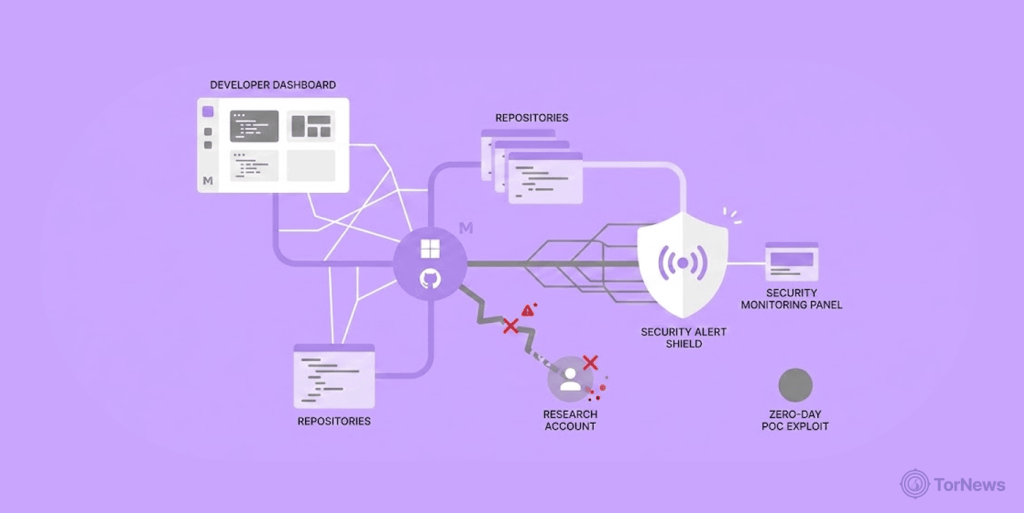
In a recent post, Nightmare-Eclipse, a security researcher, reveals their GitHub account was taken down due to an alleged zero-day Proof of Concept that they shared online which targeted Microsoft products. The case has raised fresh concern in the cybersecurity world, this is because it mixes account enforcement, bug disclosure, and a public threat in one tense situation.
The researcher also claims Microsoft did not pay for earlier bug reports they had submitted, which they say added to their frustration. The dispute now highlights a bigger issue many security teams face: how to handle researchers who believe they were ignored, while still keeping dangerous code from spreading online.
Account Removal Sparks Backlash
The security researcher, Nightmare-Eclipse, reports that someone flagged and removed their GitHub account from existence after publishing zero-day proof-of-concept code targeting Microsoft products. This situation has quickly gained traction due to the unique combination of two subjects that are of constant interest to the cybersecurity community: defects in the software of Microsoft and public retaliation.
According to the post, the researcher had used that same account to report bugs in the past. They now claim Microsoft gave them no payout for those earlier disclosures, which they say added to their frustration. The situation has fueled fresh debate over how major tech firms handle bug reports, rewards, and communication with independent researchers.
The researcher’s public message also ended on a threatening note directed at Microsoft. They marked July 14, as a special day to shatter Microsoft. Also, they stopped any other release for the company.
That part of the post has raised the temperature even more, this is because it shows how quickly a dispute over disclosures can move from technical criticism to outright hostility.
Security teams often say that public zero-day drops can put users at risk, even when the goal is to push a vendor to act faster. In this case, the account takedown has added a second layer to the story: not just whether the code should have been shared, but whether the researcher felt shut out of the normal reporting process.
Why the Clash Matters
A clash of this nature is significant because it represents the foundation of responsible disclosure. Usually, researchers report flaws to the company privately first – then give time for the firm to patch them before deciding whether to make the flaw public. When this process fails, both sides will generally hold one another responsible.
Microsoft has run a public bug bounty program for many years as part of its vulnerability reporting and management processes to incentivize independent researchers who identify vulnerabilities before malicious actors do so.
They have also published guidelines for researchers to use when reporting vulnerabilities and guidance for coordinating disclosures through Microsoft’s security response programs in an effort to minimize the likelihood of this type of public escalation.
Despite these types of programs, researchers do not always feel that they receive proper compensation for their findings. They often feel the companies aren’t compensating them fairly, responding to them in a timely manner, or providing them with the level of recognition that their work deserves.
As frustration grows, researchers will often post proof-of-concept versions of their findings online to ‘prove’ their value to Microsoft, putting themselves and others at risk of facing a potential exploit in the end.
This type of incident poses a huge risk – once a zero-day or working proof-of-concept goes public, anyone can study and modify it; and criminals can use it to find unpatched systems to exploit. That is why groups such as CISA keep warning organizations to patch quickly and to watch for active exploitation when vulnerabilities become public.
Supply chain attacks are another major risk. A GitHub breach linked to Checkmarx demonstrates how attackers can compromise development infrastructure, not just target individual researchers.
What Users Should Do Now
For everyday users, the safest move is simple: keep Microsoft products fully updated. That includes Windows, Office, browsers, cloud tools, and any work devices tied to Microsoft services – security updates often close the exact gaps that public proofs-of-concept try to exploit.
Admins should also check their patching status and confirm that automatic updates are working. If a company uses Microsoft products across many devices, it should review endpoint protection, log unusual activity, and prioritize any advisories tied to active exploitation. Microsoft’s security update pages and advisories remain the main place to track those fixes.
Users should also stay alert for phishing emails that may ride on the back of this news. When a discovered vulnerability or a researcher’s account dispute goes public, attackers often use the attention to send fake alerts, fake patch notices, or malicious download links. That makes basic caution just as important as patching.
The bigger lesson is that the gap between a bug report and a public leak can become dangerous fast. When researchers feel ignored and vendors move slowly, trust breaks down. And when that happens, the people at the most risk are usually regular users, not the companies fighting online.
