The White House Market was a market on the dark web that followed one basic rule: Extreme payments are only accepted through Monero. It did not accept Bitcoin, and there were no exceptions.
This payment restriction distinguished White House Market from many other dark web marketplaces that continued accepting Bitcoin. The platform also required users to encrypt sensitive communications through PGP, adding another layer of privacy protection to its operations.
These processes made the use of the website rather inconvenient at first, but they managed to gain a customer base very quickly. In times when other popular markets disappeared together with their users’ deposits, White House Market continued to grow steadily.
However, in October of 2021, the website made an exception to its own rules as it shut down its operation without any raiding or stealing money from its users.
In this article, we will cover what the White House Market was, how it operated, why nobody was able to use anything else apart from Monero in payments, why it closed down, and what its example teaches every dark web user nowadays.
Disclaimer: We publish this article for informational and educational purposes only, just like the other content on our website TorNews.com. We do not promote, endorse, or encourage the use of illegal dark web marketplaces or any unlawful activity. Our goal is to examine the history, technology, and risks associated with White House Market. Readers should remember that privacy tools do not guarantee anonymity, security, or protection from legal consequences.
White House Market at a Glance
Here is a quick snapshot before we go deeper:
| Detail | Fact |
|---|---|
| Launch date | August 2019 |
| Shutdown date | October 1, 2021 |
| Time online | About two years |
| Payment method | Monero (XMR) only |
| Access networks | Tor and I2P |
| Communication rule | Mandatory PGP encryption |
| Peak size | Roughly 894,000 registered users, 3,450 active vendors, and over 48,000 listings |
| Main goods | Drugs, stolen card data, fraud tools, hacking services |
| Reason for closure | Team said it had reached its goals |
| Exit type | Voluntary and orderly, not a raid or scam |
These numbers come from vendor and market trackers active at the time, including a detailed closure report.
What is White House Dark Web Marketplace?
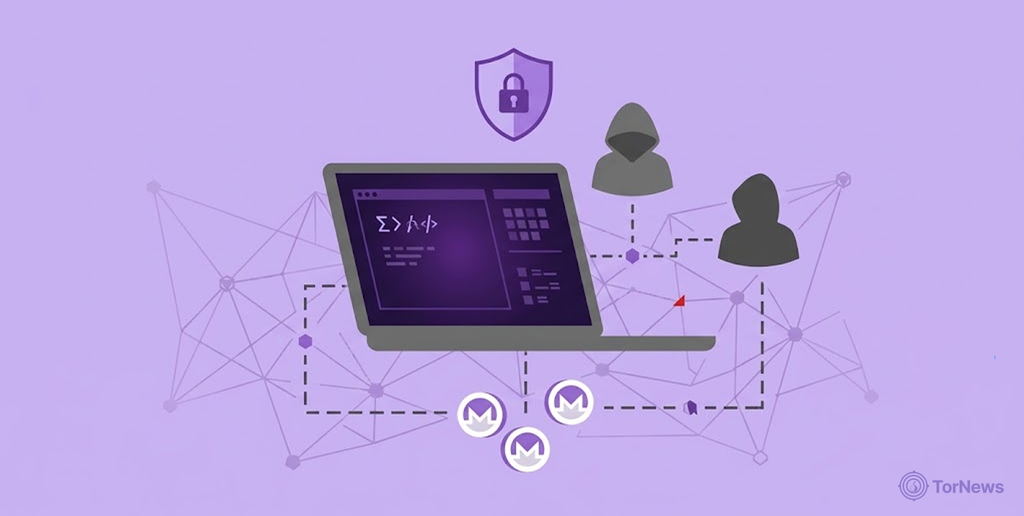
White House Market (WHM) was a dark web marketplace that facilitated the sale of illegal goods and services. It attracted significant attention during its operation between 2019 and 2021, particularly because of its cryptocurrency payment restrictions and mandatory encryption policies. Tor and I2P provide anonymity, which users use to hide their identities.
Within the interface, WHM resembled Amazon or eBay, where sellers placed their listings, buyers selected the items they were interested in, and paid.
All operations, however, took place illegally, with the majority of the marketplace providing illegal substances, while the rest of them were illegally selling stolen bank cards, fake identification cards, and hacking-related items.
Dark web marketplaces have also drawn attention for listings that allegedly offer large volumes of personal data. In a separate case, recently, in September 2026, a seller claimed to be offering 280 million records linked to China’s Housing Provident Fund. The claim concerns a separate incident and does not establish any connection to White House Market.
White House Market launched in August 2019, just months before police closed Wall Street Market. With the launch of WHM came the obligation to prove itself as an entirely different entity.
The main functionality of the marketplace was that users could remain quite anonymous to each other.
Note: Dark web marketplaces carry serious legal and security risks. Buyers and sellers may encounter fraud, stolen information, malicious files, and criminal investigations. Even when a platform advertises strong privacy protections, users should not assume that their identities or transactions remain completely hidden.
A Rapid Rise after Empire Market’s Collapse
White House Market didn’t kick off as the leading prospect. The competition grew fierce since multiple platforms were competing for the same customers.
The breakthrough for this company occurred in 2020 when Empire Market, one of the biggest dark web marketplaces, shut down unexpectedly. People reported that they couldn’t retrieve their funds from escrow accounts and assumed it was an exit scam.
Empire Market’s closure created an opening in the dark web marketplace landscape. White House Market attracted some of the displaced activity, partly because users perceived its privacy-focused policies as more dependable than those of competing platforms. However, that perception did not eliminate the risks of fraud, law enforcement action, or illegal transactions.
By September of 2020, trackers acknowledged White House Market as one of the biggest operating platforms on the dark web. The market continued to grow. It later reportedly registered almost 900,000 accounts before closing. During its existence, it transacted tens of millions of dollars in cryptocurrencies.
Why White House Market Stood Out
The White House Market thrived not just due to the disappearance of its competition; it was the conscious efforts made by the team behind it.
While most markets sought to make joining as easy as possible by allowing for easy signups, limiting the rules that apply to the new users, and minimizing the hurdles they have to jump through, this marketplace chose a different path.
The market made the process harder, requiring new users to use a privacy coin, encrypt their chats, and even learn the basic security principles if they wanted to join.
These requirements made White House Market more difficult to access than some competing platforms. Despite the added complexity, the marketplace attracted users who valued transaction privacy and encrypted communication. Its policies also fueled discussion about how privacy technologies can support both legitimate activities and illegal online markets.
What White House Market was
To truly understand this, people need to look beyond mere product listings. One must understand the very essence of this market.
Unlike other old markets that aimed for speedy growth by eliminating obstacles to attract as many users as possible, White House Market takes a totally different approach by trying to be as difficult as possible during its onboarding process right from the very beginning to reduce the number of users who are not serious about their security.
The design of the site has its own message as well. For instance, the website utilized art associated with Frank Underwood’s character (a cunning politician from the famous TV series).
Security Became the Product
Price and speed are the main competitors of a majority of stores. Trust played an important role in how users evaluated dark web marketplaces. White House Market’s operators appeared to recognize this concern and emphasized encryption, privacy, and internal rules to distinguish their platform from competitors.
After facing many raids and scams throughout the years, people’s trust in dark web marketplaces had significantly declined. Thus, this market had to work hard to regain this trust.
Credential theft remains a major cybersecurity risk, even outside dark web marketplaces. Recently, in a separate campaign, China-linked hackers targeted US AI policy experts through credential phishing, highlighting how attackers exploit trusted communications to gain access to sensitive accounts.
Here are some actions they took:
- They accepted payments in Monero only.
- They required PGP to receive important messages.
- They operated both on Tor and I2P.
- They imposed strict rules on the website.
- They urged their users to adopt safer behaviors.
These policies shaped the marketplace’s reputation among some dark web users, although its technical safeguards could not independently establish that the platform was safe or trustworthy.
A Marketplace Willing to Sacrifice Convenience
When it comes to security and user-friendliness, the two tend to come at the expense of each other. White House Market, however, opted for security every time.
Thus, newcomers often complained. It took time and effort to learn how to use PGP. Those who wanted to buy Monero had to follow additional steps that most people had not been through before.
The crew did not do anything in order to make the rules softer. The explanation was simple. A careless user might have led to risks for buyers, sellers, and the whole market. The operators maintained these requirements despite the added complexity for users. While the policies aimed to reduce certain privacy risks, they could not guarantee protection against scams, compromised accounts, or law enforcement investigations.
The Monero-only, PGP-mandatory Model
If there was anything that characterized this marketplace, it was this principle at work. The marketplace operated under two central requirements: Monero for payments and PGP encryption for sensitive communications. These policies became defining characteristics of its operating model. The two options above formed the fundamentals of White House Market’s Monero-only policy and its larger security plan.
Why White House Market was Using Monero?
The majority of darknet markets would adopt Bitcoin. It was the currency that everybody knew. But this marketplace opted for a more difficult road to take.
During most of its existence, it accepted only Monero, or XMR as it was also called. This astonished many buyers who were already holding Bitcoin and had to exchange it first.
But why did they decide to make that switch? Bitcoin records every transaction in its public ledger. Because of this, anyone wishing can trace the coin. However, Monero operates in a different manner. According to information presented by Monero’s project, it hides the sender, the receiver, and the amount of the transaction. It does so with the help of ring signatures and stealth addresses.
The operators viewed blockchain tracing as a potential threat to users’ anonymity, which helps explain their preference for Monero. However, privacy-focused cryptocurrency transactions can still become part of criminal investigations, and using Monero does not make illegal transactions lawful.
The Trade-off behind the Monero-only Policy
All the options related to safety involve some sort of price, and this one was no exception. Regular Monero users were pleased with the change. Often, new users did not share the same sentiments.
Users found Bitcoin on almost every trading platform, but Monero did require more effort, especially after many sites stopped trading in private coins. The operators maintained the Monero-only rule despite the additional steps it required. Their decision suggested that they prioritized transaction privacy over making the marketplace accessible to a wider audience.
Mandatory PGP Encryption
Monero was responsible for payments. PGP was responsible for messaging. PGP works on the principle of two linked keys. One of them is kept secret. The other is revealed. A message encrypted with the public key can only be decrypted with the secret key.
White House Market demanded that users apply PGP for logging in and conducting sensitive talks. Many previous markets had optional encryption. The site made it mandatory.
This was of great benefit. In case police confiscate their servers, all encrypted messages would be unreadable without secret keys. Every announcement was signed so that no fake admin messages could occur without a signing key. The previous raids on markets revealed many plaintext addresses and conversations. White House Market made sure to avoid that.
Security Over Convenience
Together, Monero and PGP introduced privacy protections that distinguished White House Market from some competitors. However, technical safeguards alone couldn’t eliminate the legal, financial, and cybersecurity risks of an illegal marketplace. They also made it harder to use. New users had to learn encryption basics and to learn to buy and send Monero. They had to check signatures to avoid scam messages.
The team saw this friction as a feature, not a flaw. Careless habits were the real threat, but strict rules filtered those habits out. This mindset shaped the market’s whole reputation. Convenience took a back seat and safety sat in the driver’s seat.
The Voluntary 2021 Retirement

Markets on the dark web usually come to an end in one of two ways. Either law enforcement steps in to dismantle the operation or the owners take off with the money gone.
However, White House Market chose a third option. In October 2021, while still being one of the most prestigious markets, the team stated the end of their operations without any warning or preparation.
The Farewell Announcement
Their team posted a farewell message on the Dread forum, a location for dark web discussion. They expressed gratitude to users for their loyalty and business.
They said they reached their targets. Hence, it was time to close down. Instead of disappearing all of a sudden, they decided to:
- Stop accepting new registrations immediately
- Relax new postings
- Keep the portal running for a short period of time
- Allow active orders to finish
- Help settle obstacles in the course of other disputes
- Enable customers to retrieve their coins.
In this message, the authors warned users about websites for copies that can appear. They informed customers not to believe the projects that do not have their signature key. It turned out to be relevant.
Why Did White House Market Shut Down?
Why did the market terminate its operations? Despite the years gone by, people keep asking themselves this question.
The phrase stated is as follows. The team said it has achieved its purpose. The closure was made voluntarily and at a time when the market is viable, rather than when it starts to collapse.
Some people believe the information. Others think there is something more going on.
Global law enforcement agencies have stepped up the fight against dark web markets by 2021.
The largest sites faced the most opposition from law enforcement forces. It seems that the team sensed the danger and made a decision to leave before the situation with police got worse.
There is no public evidence proving the cuts of police raids. The officials did not say whether shutting down their servers or any theft of servers had happened. None of the organizations, unlike in the cases of AlphaBay or DarkMarket, claimed the success of the operations of this kind.
Was White House Market an Exit Scam?
People have been questioning whether what happened at this marketplace was actually an exit scam.
Exit scams happen often in this environment. The way a typical exit scam goes is that the owners disappear without warning, leaving all their to-be-paid coins and, as a result, the users never see their money again.
The exit of White House Market has been very different from that, as it first revealed what it was doing. They shut down their business gradually, instead of disappearing from people’s sight.
All of those points do not seem to be compatible with the common features of an exit scam. However, outsiders would not be able to confirm everything claimed by the anonymous owners of the site. Based on publicly reported information, White House Market’s shutdown did not follow the typical pattern of a sudden exit scam. Its operators announced the closure and described arrangements for outstanding transactions. However, independent observers cannot verify every financial claim made by the anonymous team, so the available evidence supports a cautious conclusion rather than a definitive one.
What White House Market Proved
The influence of White House Market on the dark web has spread well beyond its two years in existence.
White House Market’s growth showed that strict privacy requirements did not necessarily prevent a dark web marketplace from attracting substantial activity. Its history also raised questions about the role of anonymity tools in facilitating illegal online commerce. Many thought that the rule of using Monero only and compulsory PGP would discourage too many consumers from purchasing.
Nevertheless, the marketplace achieved the status of one of the largest functioning markets of that time. The consumers were ready to master new tools under the belief that they would gain real safety.
The marketplace demonstrated how operators of illegal platforms could use privacy and security claims to attract users. Its growth also showed why researchers and law enforcement agencies continue examining the misuse of privacy technologies. White House Market has regarded safety as a significant feature rather than just a slogan. Later on, other markets used some elements of this model and paid more attention to encryption specifics or the use of privacy coins.
A Different Way for a Darknet Market to End
People are left wondering whether the closure only served as an exit scam. Exit scams occur quite frequently in this area. They usually work in such a way that the owners of the platform seem to vanish overnight. They disappear with all of the coins from the platform users’ accounts.
However, this wasn’t the case here. If it was, it would have fallen victim to something quite unusual for dark web marketplaces. As a rule, dark web marketplaces do not choose the way they cease their existence. Law enforcement confiscates servers, the owners run away with money, servers stop existing.
The White House Market Ended with a Twist
The closure has allowed the team of the marketplace to control the development of the story. Whether fear of raids played a role in decision-making may remain unanswered, the fact that the closure was peaceful unlike previous cases remains evident.
The team made their announcement to the public before anything else. They were not depriving their customers of their funds, and they kept the website active so everyone could finish their orders. These actions don’t look like your usual exit scam. At the same time, nobody who is not an insider can verify all the information provided by those behind the site.
Is White House Market Still Online in 2026? Looking for the Link?

No. The White House Market has shut down since October 2021, as the website has disabled new registrations and allowed existing users to finish their purchases.
Since then, many different markets and different onion links have declared that they are the original White House Market, however all of those statements are false.
Public information sources, including the Wikipedia entry for this market, state that some of the original team members have started a new business under a different name in 2023. However, this business is completely different, and this guide does not get into any of the active dark web platforms.
Why Fake White House Market Links Continue to Appear
There are several reasons for the appearance of copies. There is a chance that the old brand is still on people’s minds. Some former users associated White House Market with strict privacy rules, which may help explain why its name still attracts attention. Scammers can exploit that recognition by creating imitation websites, fraudulent login pages, and misleading onion addresses.
Searchers often type queries like:
- White House Market link
- White House Market onion
- White House Market mirror
- White House Market URL
Many scammers are aware of the fact that searches of this kind happen frequently and that’s why they create fake login pages that have the same design as the latter. In addition to that, they may also provide fake onion addresses in order to mislead new users. Some of these fraudulent websites disappear soon after they steal money or login information.
Should You Trust Websites Claiming to be White House Market?
No! After all, there is no verification of the fact that the resurrected version was from the same original creators according to cybersecurity experts who warn against blindly accepting claims without proof.
White House Market’s Impact on the Dark Web
White House Market operated for only two years. However, its impact on the dark web continued long after its closure.
The market altered the way of thinking about privacy, cryptocurrency and safety rules in dark web marketplaces, and this change can still be seen in the construction of contemporary platforms.
It Started the Trend of Monero Presence in Online Trade
The end of the dominance of the famous cryptocurrency began. As the majority of transactions funded by Monero, users have learned that transactions could be correctly applied without the help of Bitcoin itself.
This Altered Outlook on Operational Safety
Another contribution was that it improved the security standards on a site-wide basis; its predecessors were often satisfied with encryption simply as a pleasant feature. The White House Market adopted the rule whereby messages had to pass through PGP.
Due to this decision, the whole industry understood the importance of powerful safety tools in becoming a brand but not just one of the features of it, which was observed later.
Some later marketplaces adopted similar approaches to cryptocurrency privacy and encrypted communication. Researchers continue studying these developments because they illustrate how technologies designed to protect personal information can also complicate investigations into illicit online activity.
It Proves the Limits of Anonymity
The example of the closing of the website proves that no tool can provide complete security. The website used Monero, Tor, I2P, required PGP, and had very strict internal regulations.
The closure also highlights the limits of relying on privacy tools alone. Our report, White House Market closure highlights limits of Crypto privacy and operational security, explores how the marketplace’s shutdown illustrates the challenges of maintaining anonymity and operational security, even when a platform uses multiple privacy protections.
We do not know what exactly made the team make this choice. It may have been proper strategy planning or the escalation of pressure from law enforcement agencies. Nevertheless, the important lesson learned was that high-quality privacy tools reduce.
It Showed How Important Trust Actually is
There probably isn’t a better lesson that can be drawn from a discussion about trust. Illegal online marketplaces operate without legal protection, as there are no laws covering these transactions.
And this is the point where trust needs to come from somewhere else. In this case, it comes from the track record.
The Future of Privacy Coins After White House Market

The White House Market was shut down in the year 2021. But the discussions concerning privacy coins similar to Monero still continued uninterruptedly. The topic of privacy coins has made its way to existence in the world of crypto in 2026.
Privacy Coins Continue to Stir Debates
The world of crypto has been acutely affected by the existence of privacy coins. Supporters argue that the right of privacy is an essential right for each individual. Privacy coins are understood as instruments with the help of which privacy is brought to the world of virtual currency.
Those who oppose the idea of privacy coins believe that the presence of privacy making tools hampers the process of tracing payments made via such means as ransomware, and fraud. The arguments from both sides shape the global policies regarding the existence of privacy coins.
Monero is Facing Pressure Yet Moving Forward
At present, Monero is one of the active privacy coins available in the industry. Developers continue improving various aspects such as transaction speed, block size, and privacy infrastructure.
However, pressure from external sources appears quite serious during this period of time. A number of exchanges such as Binance, Coinbase, and Kraken decided to delist Monero and limit its trading in certain regions in 2025-2026 because of compliance risk.
The ban of Monero in Japan was implemented in 2018 and turned out to be an example for many countries that followed Japan’s pattern. In the European Union, it appears that new regulations included in the MiCA plan will make using privacy coins more complicated through implementation of tougher regulations until 2027.
At the same time, according to data from TRM Labs, it can be concluded that Monero remains popular and is used on the same level during 2025, presenting its positive dynamics throughout 2025. Despite this and continuous pullback from exchanges, users of Monero network continue demonstrating their demand for the coin.
Intensifying of Regulatory Efforts
Following the closure of White House Market, governments have been introducing new regulations for cryptocurrency rather than eliminating them. Exchanges have become more meticulous in terms of client identity verification. Some exchanges have excluded privacy coins altogether in order to avoid potential legal problems.
This does not mean that privacy coins have disappeared; rather, the concept of trading these types of coins has been modified as the focus shifts from centralized exchanges to small or decentralized platforms.
Regulatory authorities will continue to grapple with how to reconcile competing interests:
- Ensuring genuine financial privacy of users
- Preventing abuse of such privacy by criminals
- Regulators around the world are constantly searching for the right balance, and 2026 has not solved this problem.
The Importance of White House Market in the Field of Technology
White House Market can be looked at as simply another illegal dealer, but this would not help to appreciate its full significance. The appearance of WHM serves as one of the clearest examples of how privacy tech affects even the process of creating a platform.
Though its life was short, White House Market is still often mentioned in discussions that focus on the problems of crypto privacy, blockchain tracking, safe communication, and digital trust. Years after its closure, the marketplace is still being referred to in different discussions to prove that a team can create a safe solution.
FAQs
White House Market, or WHM, was a dark web market that ran from 2019 to October 2021. It stood out for its Monero-only rule, forced PGP encryption, and heavy focus on user privacy.
The team said they had hit their goals and chose to retire. They shut off new signups, kept the site live briefly, and let users finish orders and pull out funds. No public proof shows police forced the closure.
No, based on what is public. Real exit scams involve owners vanishing with user funds without warning. WHM announced its plan ahead of time and let users recover their coins first.
Monero hides the sender, receiver, and amount in every transaction by default. The team saw this as a strong shield against blockchain tracing, far stronger than Bitcoin’s public, traceable ledger.
Vendors listed items. Buyers picked what they wanted and paid in Monero. The site tracked seller ratings and handled order disputes, much like a typical online store, minus the legal goods.
Its security features set the platform apart from most rivals. These included Monero-only payments, forced PGP use, dual Tor and I2P access, and a clean, planned exit instead of a scam or raid.
No. It closed for good in October 2021. Sites claiming to be its comeback should be treated with heavy doubt, since no verified link ties them back to the original team.
After WHM closed, its user base scattered across several other dark web markets active at the time, based on public trend reports. This guide will not list or link to any currently active market, since doing so could point readers toward unlawful and unsafe sites.