-
Investigators in India found several dark web marketplaces advertising kidneys, hearts, livers, and lungs for sale in exchange for Bitcoin.
-
Sellers promised transplants within days, hospitals provision, and donors, but medical experts say they defy India’s transplant laws.
-
Researchers believe many of the listings are likely advance-payment scams designed to exploit desperate patients rather than genuine organ-trafficking operations.
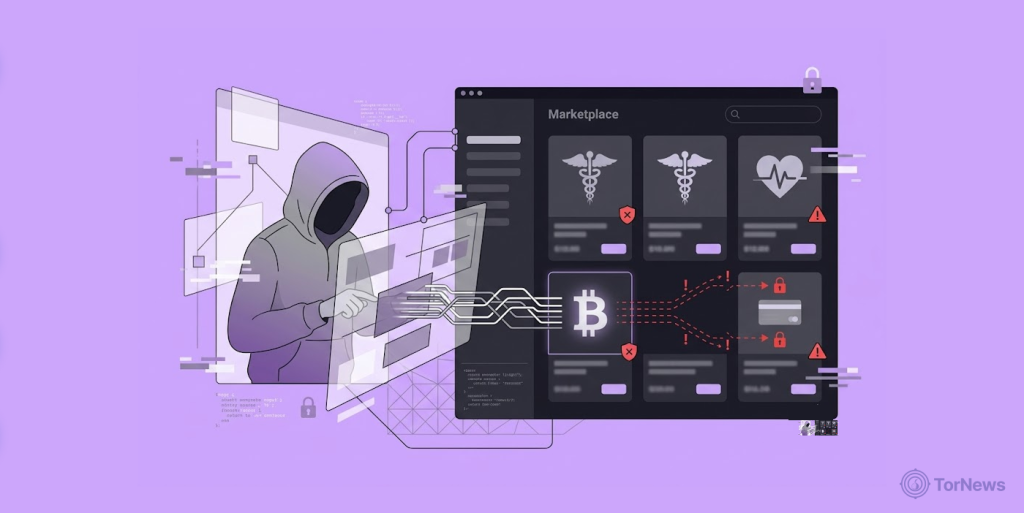
Human organs have appeared for sale on dark web marketplaces in exchange for Bitcoin. However, a recent investigation suggests many of these operations may have less to do with organ trafficking. They may have more to do with scamming vulnerable people in urgent need of medical care.
India Today’s Open Source Intelligence (OSINT) team uncovered at least three onion websites offering human organs with fixed prices. The marketplaces looked remarkably similar to legitimate e-commerce sites, complete with product descriptions, promotional labels, shopping carts, and payment instructions.
Investigators also discovered that sellers encouraged prospective buyers to continue conversations on Telegram, keeping negotiations away from public view.
Vendors Claimed they could Deliver Organs within Days
One marketplace listed a kidney for $85,000, a heart for $69,000, and a liver for $35,000. The website also claimed it operated legally in multiple countries, including India and several European nations.
To verify those claims, investigators contacted one of the vendors while pretending to seek a kidney transplant in India. The peddler presented the platform as a darknet marketplace offering genuine products and services. The peddler insisted that buyers could receive a kidney within two days after completing payment in Bitcoin.
The conversation became even more alarming when the vendor claimed a “freshly harvested” kidney could become available within 24 hours. The seller later said a living donor in Delhi matched the request, a healthy 24-year-old with O-negative blood.
According to the vendor, the entire arrangement would cost $50,000 and would include donor compensation, surgery, hospitalization, and airport transportation. However, the seller demanded a $2,000 Bitcoin deposit before disclosing the hospital’s identity, explaining that authorities closely monitored such information.
The investigators also found that discussions quickly moved from the dark web marketplace to Telegram. The encrypted messaging platform allowed both parties to continue private conversations while maintaining anonymity.
Medical Specialists Say the Promises Do Not Match Reality
Medical professionals rejected many of the sellers’ claims, explaining that India’s legal framework makes such rapid transplant arrangements virtually impossible.
According to Dr. Vikas Jain, Vice President (Surgeon) of the Indian Society of Organ Transplantation, the vendors’ promises directly conflict with the country’s Human Organ Transplant Act.
Dr. Jain explained that doctors cannot complete kidney transplants without extensive medical evaluations and legal approvals. Compatibility testing alone generally takes between six and eight hours before physicians can determine whether a donor and recipient are suitable matches.
He also noted that authorities require living donors to satisfy strict eligibility requirements. In most cases, close relatives serve as donors, while authorization committees examine official records, family trees, and sometimes DNA evidence before approving any transplant procedure.
For deceased donors, the National Organ and Tissue Transplant Organisation (NOTTO), together with state authorities, oversees organ allocation through established legal procedures.
These safeguards make the vendors’ promise of arranging a legitimate transplant within 24 hours highly implausible, according to transplant specialists.
During the exchange, the seller also attempted to gain credibility by providing the name of a respected Mumbai urologist.
Investigators confirmed that the physician practices at a well-known private hospital. However, the vendor refused to identify the hospital involved or provide any evidence connecting the doctor to the proposed transplant. India Today said it could not verify that the physician had any involvement whatsoever.
Cybersecurity experts say scammers frequently misuse the names of respected doctors and hospitals to convince victims that fraudulent schemes are legitimate.
Investigation Points to Advance-Payment Fraud
While illegal organ trafficking remains a serious global concern, investigators stopped short of concluding that the vendors belonged to organized trafficking networks. Instead, the evidence pointed more strongly toward advance-payment fraud targeting desperate patients.
Several warning signs supported that conclusion. Vendors demanded upfront Bitcoin deposits, refused to identify hospitals until after payment, and promised transplant timelines that medical experts described as unrealistic.
These tactics closely resemble common online fraud schemes, where criminals exploit urgency and emotion to pressure victims into sending money before disappearing.
The investigation highlights how cybercriminals continue adapting dark web marketplaces to exploit people facing life-threatening medical situations. By combining anonymous payment methods, encrypted messaging platforms, and the names of reputable medical professionals, scammers can create convincing stories that appear credible to those desperately searching for hope.
The same dark web platforms are used by ransomware groups like Medusa, which has claimed attacks on a U.S. hospital and a New Jersey county, demonstrating the wide range of threats emerging from these underground networks.
Experts advise patients seeking organ transplants to rely only on authorized medical institutions and government-approved transplant systems. They also warn that any online seller promising immediate transplants outside established legal procedures should raise serious concerns, especially when cryptocurrency payments and secrecy become part of the process.
