-
France submitted a new draft to the European Commission specifying which social media functionalities should be unavailable to minors after a court rejection.
-
The French Constitutional Council ruled against the ban under Decision No. 2026-911 DC, indicating its contradictory nature with the free speech and privacy rights.
-
Experts note that filtering out potential minors will require mandatory age verification of adults, citing risks of obligatory digital identity verification.
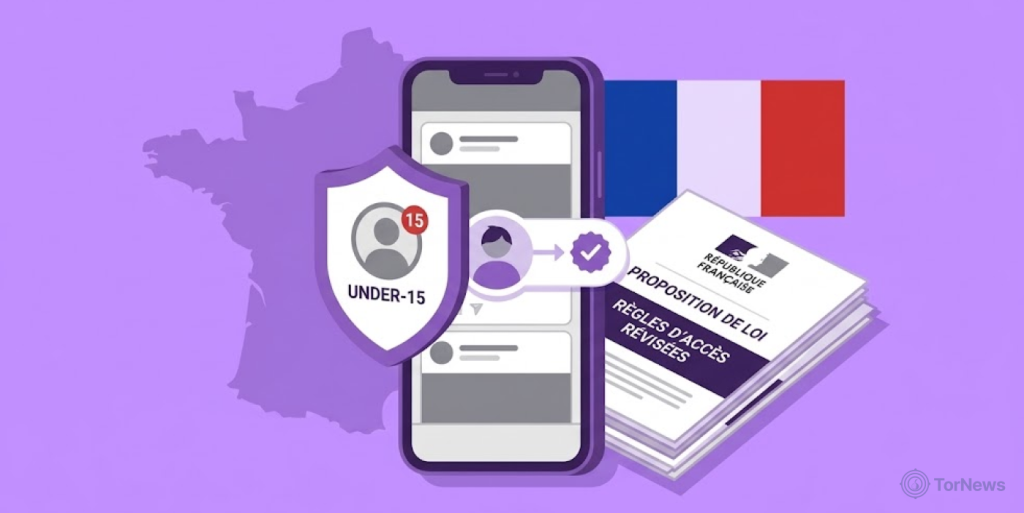
French government has introduced a modified legislative proposal to the European Commission. The new rule aims to interfere with social media usage by minors below the age of 15. Official notifications show the update establishes specific operational rules rather than declaring basic policy intentions.
This legal move comes weeks after high judicial authorities struck down previous platform restriction proposals. The mandate came from President Macron to the ministers to institute the new bill in compliance with the constitutional guidelines.
Regulatory List Expands to Disable Engagement Features and Interactive Platform Tools
The updated legislative proposal targets specific digital features that drive high user engagement on modern social networks. Regulators want platforms to disable automatic video playback, infinite scrolling feeds, and live streaming tools for young users. The policy also covers facial filters, virtual rewards, and digital currencies that trade for real money.
Furthermore, the document targets algorithmic recommendation systems and unapproved account interactions to curb addictive platform features. Regulators aim to restrict targeted push notifications designed to grab attention and boost daily screen time metrics. The new regulations also limit the use of location-tracking devices to protect the privacy of children in the digital space.
Nonetheless, government officials have made an important exception for teenagers between the ages of 13 and 15. Minors in this age bracket can access platforms if they obtain verified parental consent. Therefore, tech firms must adjust platform settings to support parental controls while disabling addictive design elements.
Constitutional Council Ruling Strikes Down Initial Blanket Restrictions
This new regulatory push follows a major legal setback for French lawmakers last month. On August 14, this year, the French Constitutional Court issued a 2026-911 DC decision to eliminate the initial bill from the list of laws. The court stated that total ban on social communication limits the freedom of expression and communication excessively.
The judicial authority noted that original legislation did not provide sufficient legal safeguards for the privacy of users. As indicated in official court documents, blocking children creates unforeseen digital monitoring obligations for general users. By restricting people under the age of 15, platforms are obligated to verify the identity of each adult user.
Legal experts warn that mandatory verifications would also lead to establishing centralized databases of users’ identities. Critics claim that such an obligation to upload documents before browsing public websites violates basic civil liberties. Court cases point to the conflicts between child protection and the right to digital privacy of general users.
Technical Implementation Challenges and European Union Data Protection Rules
Implementing mandatory age verification across commercial platforms presents severe technical challenges for global technology companies. Online services must verify user ages without collecting invasive biometric identifiers or storing government identity documents. Furthermore, individual member state rules must align with overall European Union regulations like the Digital Services Act.
In addition, privacy advocates emphasize that age-checking systems create attractive targets for malicious hackers. Centralized identity databases holding adult credential records increase risk exposure to catastrophic dark web data leaks. Thus, security teams must deploy advanced zero-knowledge proof protocols to verify user age without exposing personal information.
Meanwhile, tech companies must review platform architectures to meet incoming European compliance deadlines. French officials aim to finalize legal frameworks before upcoming national political elections next year. As European Union regulators evaluate the proposal, software vendors face pressure to rewrite core application code.
Safety Steps and Digital Privacy Protection Guidelines
It is essential for parents and caregivers to take the right measures to ensure the digital safety of their households while governments are still working on the creation of legal regulations suitable for this purpose. Families must use parental control options available on mobile devices to reduce screen time. Also, they should block inappropriate internet applications from access.
In addition, the involvement of parents is necessary in educating their children about how to stay safe while using various types of devices, without depending only on automatic filters. Adult web users should also monitor how online platforms handle personal identification data during account registration.
The challenge extends beyond addictive platform features and age restrictions. UNICEF has warned that digital platforms are losing the global battle against child exploitation material, highlighting the need for stronger protections and safer online environments for children.
There is a necessity to apply two-factor authentication options for the possibility of preventing data breaches by third-party databases. Furthermore, users need to adjust their privacy settings to stop online tracking and control of their data by different social networks.
It is important for companies and brands to take steps on privacy regulations that minimize the volume of users’ data they store across global server networks. The removal of unnecessary authentication files enables organizations to reduce the risk of regulatory fines and unwanted data exposure.
Establishing transparent safety policies ensures platforms protect young users without violating fundamental constitutional rights.
