-
A 2017 U.S. forfeiture complaint listed 3,691.98 Zcash and an unknown amount of Monero among Alexandre Cazes’ seized crypto.
-
Authorities also seized 11,993.15882 XMR from an AlphaBay server, giving the old case new relevance in the Monero privacy debate.
-
This evidence presents a significant privacy disparity between XMR and ZEC, but it does not mean Monero is universally “superior” to Zcash.
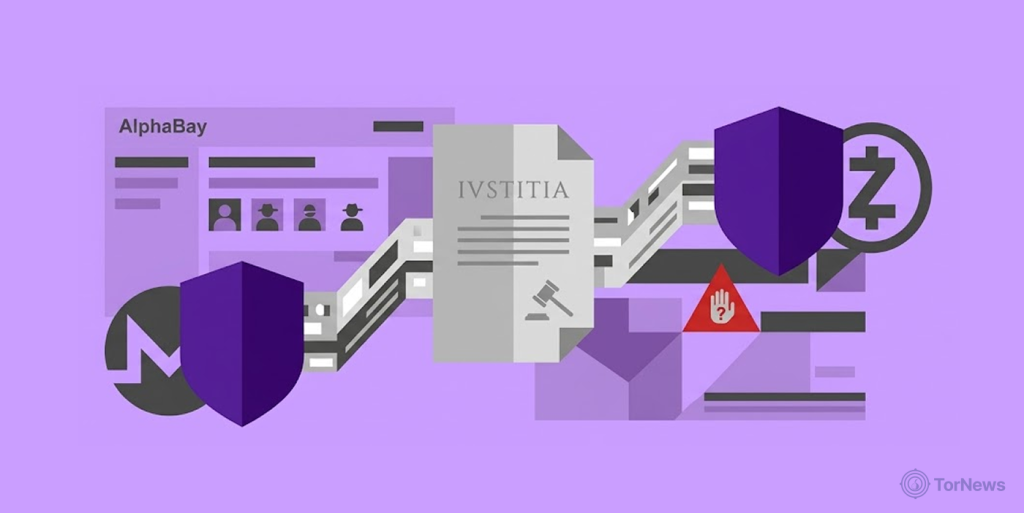
An old court document from the AlphaBay shutdown is in the spotlight again in the ongoing discussion about Monero and Zcash privacy. In the document, the authorities listed all the crypto assets they seized from the AlphaBay operator and founder, Alexandre Cazes.
The revived post says that this confiscation itself proves that Monero provides superior privacy compared to Zcash. There may be something behind this argument. But the court record needs more context.
Details of the Filing
The Department of Justice filed a verified complaint for forfeiture on July 19, 2017. According to them, they found a financial statement on Cazes’ computer with about $6.5 million in crypto. We’re talking Bitcoin, Ethereum, Monero, and Zcash.
The document specifically listed the amount of each individual crypto, approximately 1,605 Bitcoin, 8,309.27 Ethereum, and 3,691.98 Zcash. The investigators priced Cazes’ Bitcoin, Ethereum, and Zcash at around $6 million total as of the time of filing.
Meanwhile, the filing listed the amount of Monero the authorities confiscated from Cazes’ personal computer as unknown. Also, the Monero wallet details remain unknown, according to the court document.
The filing went on to say that, altogether, the crypto controlled from Cazes’ wallets and computer added up to about $8.8 million. That higher number included other assets seized as part of the larger operation. This difference is important when understanding the viral screenshot.
The Monero Detail is Even More Interesting
The case did not end with Cazes’ personal wallets. Investigators also seized AlphaBay’s servers. There was one such server called 10073 that had an unsecured wallet for Monero that had only one address holding 11,993.15882 XMR. This amount was moved into a government-controlled Monero address.
Other servers held Bitcoin and Ethereum wallets. Server 3203 contained about 293.79 BTC. Another server held about 43.26 BTC.
A separate server contained 360.38 ETH. This is important because it shows that investigators could seize Monero when they obtained access to the wallet and its keys. This does not, however, imply that the Monero transactions could be traced the same way as Bitcoin transactions.
Why the Zcash Comparison Matters
The Zcash seized from Cazes presents a different picture. The court records identify the seized 3,691.98 ZEC as being moved to a government-controlled address beginning with “t1.” That is a transparent Zcash address.
Zcash offers transparent and shielded addresses. Transparent addresses expose transaction details on the blockchain. Shielded transactions can hide the sender, receiver and transaction amount. Zcash documentation says a fully shielded transaction keeps those details from public view.
So the seized ZEC does not demonstrate that Zcash itself failed to provide privacy. Instead, it shows that Zcash’s shielded transaction system didn’t protect that particular ZEC involved in the AlphaBay seizure. That is a crucial difference.
Monero Takes a Different Approach
Monero makes privacy mandatory for normal transactions. Its privacy system uses ring signatures, stealth addresses and RingCT. These technologies hide the sender, recipient and transaction amount. Monero’s documentation says users cannot accidentally send a normal transparent transaction on the network.
This makes a big difference when comparing the two technologies. For Zcash, users can send their transactions either in plain view or via the use of shielded addresses. On the other hand, privacy is an inherent part of the Monero transaction process through its design. This is likely the strongest point behind the resurfaced post.
But the Screenshot is not “100% Proof”
The old court document provides useful evidence about how the two systems worked in this particular case. It does not prove that Monero is better in every respect.
The Zcash blockchain network supports shielded transactions, which have been around for quite some time now. Shielded transactions use zero-knowledge proofs to ensure that transaction data stays private without hampering verification of transactions. However, the problem with Zcash is that it relies on user adoption of its shielded technology.
One X user offered a different explanation for why institutions may favor Zcash over Monero. “You people don’t get it,” the user wrote. “Institutions can never use Monero because it would be shielded from the SEC,” adding that this would conflict with KYC and AML requirements. The user argued that this is why institutions use Zcash. That argument is worth considering, but it shouldn’t be a final legal conclusion.
U.S. financial and crypto businesses can face KYC, AML, and other regulatory obligations. However, those rules do not simply state that an institution is prohibited from holding or using every privacy-focused cryptocurrency.
The bigger issue is compliance. An institution may need to identify customers, monitor transactions, and maintain records. A cryptocurrency that hides transaction details by default can make those tasks harder. That creates a practical barrier for regulated businesses, even when the underlying asset is not expressly banned.
Zcash gives users a choice between transparent and shielded transactions. A transparent Zcash transaction can expose its address and value. That choice can make it easier to build compliance-focused services around the network. It also means users can sacrifice privacy when there’s a need for transparency.
Monero takes the opposite approach. Its standard transactions hide the sender, recipient, and amount by default. The increased privacy may be an incentive for users seeking privacy. But at the same time, it can pose additional difficulties for regulated businesses.
So the institutional argument adds another layer to the Monero-Zcash debate. The question is not only which network offers stronger privacy. It is also whether that privacy model can fit the record-keeping, monitoring and compliance needs of regulated financial institutions.
What the AlphaBay Case Really Demonstrates
The strongest takeaway from the case is not that one cryptocurrency is automatically better than another. It shows the difference between optional privacy and mandatory privacy.
The privacy-versus-law-enforcement debate is also playing out in EU politics. Hacktivist group LunarisSec has threatened to exploit EU vulnerabilities unless the bloc drops its Chat Control legislation, which would give law enforcement access to encrypted messages.
Investigators could identify the amount of ZEC held in the transparent address listed in the case. They could also identify the wallet and seize the funds after obtaining control of Cazes’ assets.
The Monero held on AlphaBay’s server was different. The government could seize the wallet because it obtained access to the server and wallet. But the public blockchain did not provide the same transaction history available from transparent Bitcoin or Zcash addresses. That distinction remains central to the Monero versus Zcash debate today.
The 2017 AlphaBay records, therefore, offer a real-world example of Monero’s privacy-by-default design. But calling the document absolute proof that Monero is “superior” to Zcash goes beyond what the evidence shows.
What the record clearly establishes is simpler. Zcash offers privacy, but only if the user opts for its shielded system. Monero made privacy the default.
